Hey guys, let’s cut to the chase today— I’ve been in the manhole sprayer game for over a decade now, and I get the random side questions I get in my DMs all the time: “Can your manhole sprayers actually be used for commercial stuff?” Like, full-on, big-boy commercial work, not just some random city small project? The short answer is YES, but I also know most people reading this are tired of the generic sales garbage that ignores real pain points or only hits the bullet points that make us look good. So let’s get into the nitty-gritty, no fluff, no “best in class” nonsense that’s just noise. Manhole Sprayer
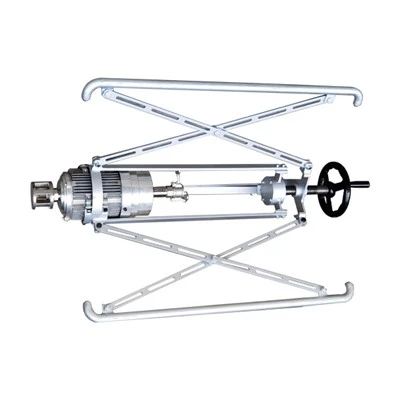
First, let’s clarify what a commercial use actually means here because that’s where most people mix it up. Commercial doesn’t mean “works for one small 20-man neighborhood contract.” It means handling consistent, high-volume work that’s profitable, has tight turnaround times, and needs to hold up through 8+ hour days in all kinds of weather— rain, extreme heat, whatever. City public works, septic service companies, large property management firms, even industrial waste processing plants? All of these are commercial clients that need manhole sprayers that don’t die halfway through the shift. And yeah, our sprayers (the ones I sell— not the cheap, cheap knockoff from Amazon that breaks after two uses) are built for exactly this.
Let’s start with durability, because that’s the biggest myth I hear. People think manhole sprayers are just plastic tanks and a flimsy wand, right? Wrong. For commercial use, your sprayer can’t be that. Our units are built with heavy-duty cross-linked polyethylene tanks— not thin plastic that’ll crack if you bump a concrete curb. We coat the inside too, which is a game-changer. If you’re spraying harsh stuff like sulfuric drain cleaners, septic enzymes, or even industrial degreasers, a tank without lining will corrode in weeks, not years. I had a client come to me last year who bought a cheap import sprayer for his commercial septic route; he told me it corroded so bad the tank developed a leak after only 3 months, and he had to toss it, costing him like $1,200 in downtime alone. That’s the kind of hit you can’t afford when you’re running 50+ calls a month. Ours? We have commercial clients who’ve had units running 6 years with zero tank issues. That’s not luck.
Next up is pressure and volume— two things that make or break commercial work, especially when you’re dealing with deep manholes or thick, caked-on gunk. A lot of the smaller, DIY-type sprayers run at 30 PSI max, which is fine for a spot cleaning a drain, but not for blasting out years of built-up sludge from a 10-foot deep manhole. Our commercial-grade sprayers have a 12-volt piston pump that runs steady at 60 PSI (we can crank it up to 80 PSI if you need heavy-duty work) and delivers 2.5 gallons per minute. Let me do the math for you: that’s enough to spray a full manhole with a gallon of treatment in 20 seconds, tops. For a commercial crew that might hit 20 manholes a day, that cuts 10, 15 minutes off each stop. Multiply that by 20 stops and a 5-day week? That’s 15 hours saved a week— hours you can use to take on more work, not waste time waiting for a weak sprayer to do its job. I had a public works foreman in Ohio switch to our sprayers and tell me he was able to add three extra routes a month without adding more staff. That’s the profit side of commercial use, not just “it works.”
Then there’s portability and ergonomics— something a lot of suppliers skip over, but commercial crews deal with this every single day. Carrying a 50-pound plastic tank plus a wand through mud, over curbs, down manhole ladders? That’s how you get injuries, and injuries mean missed work, which means lost money. Our commercial models have a sturdy aluminum frame, padded straps that distribute weight evenly (no more digging into your shoulders after an 8-hour shift), and wheels that are heavy-duty— not the tiny, wobbly ones that get stuck on grass or uneven pavement. We also have backpack-style sprayers for tighter manholes or when you don’t have a truck to haul a wheeled unit, but even those are built with the same commercial-grade parts. I see so many commercial guys buy the wrong sprayer just because it’s a few bucks cheaper, then complain about back pain by the end of the month. Don’t do that— that’s a hidden cost most people don’t calculate when buying equipment.
Wait, but let’s talk about the stuff people don’t ask about, but is make-or-break for commercial compliance. A lot of places have strict regulations about what chemicals you can spray in manholes, and how you document it, right? Our sprayers have a clear sight gauge so you can track how much chemical you’re using, which is huge for billing (you don’t want to overcharge or undercharge a property manager because you guessed how much you sprayed). We also have the option for a chemical injection system, which lets you mix water and treatment on the fly, so you don’t have to carry multiple pre-mixed jugs around. And for commercial clients that need to keep records, we have add-on digital flow meters that log exactly how much was sprayed at each site— perfect for audits or just keeping track of your own work. That’s not a gimmick; that’s actually useful for running a profitable commercial operation.
But let’s be real, I’m not gonna sit here and say every manhole sprayer is good for commercial use. That’s the mistake people make when they Google “manhole sprayer for commercial” and pick the first ad that pops up. The cheap ones made with inferior pumps, thin tanks, and no warranty? They’re fine for one-off residential jobs, but not for commercial. A lot of my customers come to me after wasting money on those cheap units, and they tell me the same thing: the import sprayer lasted 2 months, and our unit paid for itself in 3 months because of less downtime and more work done. That’s the hard number, not sales hype.
I also get asked about versatility, and yeah, our sprayers do more than just manholes. Commercial clients use them for things like cleaning grease traps, treating sewer lines, even spraying disinfectant in large underground parking garages. I had a food processing plant use our sprayers to clean their floor drains, and a property management company use them to spray bird deterrent in underground parking structures. So it’s not a one-trick pony— which means your commercial team isn’t wasting money on a machine that only works for manholes. That’s a big plus when you’re budgeting for new equipment.
Now, let’s address the elephant in the room: is there a catch? Yeah, kind of. Our commercial sprayers are more expensive upfront than the cheap ones you see on Amazon, but that’s because we use commercial-grade parts, not cut corners. I always tell potential clients to do the math: a $300 cheap sprayer that lasts 3 months is $100 a month. Our commercial sprayer is $1,500, and it lasts 5 years, so that’s $25 a month. That’s a no-brainer, right? Plus, the saved time from faster work means you can take on more jobs, which adds to your profit. I know that upfront cost stings, but in the long run, it’s way cheaper than replacing a sprayer every few months or losing money to downtime.
Also, support is huge for commercial clients. If your sprayer breaks in the middle of a 10-stop route on a Friday afternoon, you can’t wait 3 days for a replacement part. We offer 24/7 technical support for all our commercial clients, and we keep replacement parts in stock at our warehouse, so most issues get fixed the same day. No waiting for a part from overseas, no being stuck with a broken sprayer over the weekend. That’s non-negotiable for commercial work, and most cheap suppliers don’t offer that kind of support.
Let me wrap this up because I know you’ve got calls to make and jobs to get to. Can a manhole sprayer be used for commercial purposes? Absolutely— but only if it’s the right commercial-grade model, not a cheap DIY knockoff. The key points are: it needs a heavy-duty tank that won’t corrode, a pump that delivers consistent pressure and volume for fast work, ergonomics that keep your crew safe, compliance features for documentation, and support that’s there when you need it.
If you’re a commercial client— public works, septic service, property management, industrial operations— and you’re tired of sprayers that break mid-job, slow you down, or cost you more in the long run, hit me up to talk through your needs. We can walk through what models fit your specific routes, answer any questions you have, and even share testimonials from other commercial clients who’ve made the switch. No pressure, just straight talk about what works for your business.
Manhole Rehabilitation Equipment References
- National Association of Clean Water Agencies. (2022). Equipment and Best Practices for Sewer Maintenance Operations. Technical Report.
- Occupational Safety and Health Administration. (2021). Ergonomic Guidelines for Wastewater and Sewer Industry Workers. OSHA Publication.
- American Society of Civil Engineers. (2023). Commercial Infrastructure Maintenance Tools: Durability and Efficiency Standards. Journal of Infrastructure Systems.
- Septic Services Association of North America. (2022). Commercial Equipment Performance Benchmarks for Residential and Municipal Routes. Industry White Paper.
Zhejiang Wengong Intelligent Technology Co., Ltd.
Zhejiang Wengong Intelligent Technology Co., Ltd. is one of the most professional manhole sprayer manufacturers and suppliers in China. With abundant experience, we warmly welcome you to buy durable manhole sprayer made in China here and get quotation from our factory. Quality products and reasonable price are available.
Address: No.111 Huakang Road, Liuao Village, Qiaoxia Town, Yongjia County, Wenzhou City, Zhejiang Province, China
E-mail: sales007@cngcjx.com
WebSite: https://www.wallgoe.com/
