If you’re a metallurgical equipment manager or plant owner looking to upgrade or replace aging furnaces, crushers, or smelting systems, you’ve likely stared at a purchase order and wondered: How on earth do I fund this without tanking my monthly operating budget? As a metallurgical equipment supplier who’s worked with hundreds of mills, refineries, and metal processing plants across North America for over 12 years, I’ve seen first-hand that the right financing structure isn’t just about getting a “yes” on a loan—it’s about aligning your cash flow, tax strategy, and long-term operational goals. A bad choice here can leave you paying 20% more over 5 years, while a good one can let you install new equipment and cut energy costs in the same quarter. Metallurgical Equipment
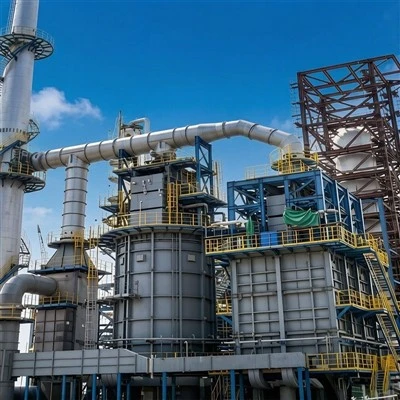
Let’s break this down into practical, actionable steps, not the generic finance jargon you’ll find on bank websites. First, you need to understand the unique constraints of metallurgical equipment purchases: these are high-value assets (think $50k to $2M for a single induction furnace), have a clear useful lifespan (10–15 years for most, sometimes longer for custom builds), and often qualify for industry-specific tax incentives that generic machinery doesn’t. Skip the one-size-fits-all loans—this is a sector where niche financing moves the needle.
Start With a Pre-Purchase Cash Flow Audit (Don’t Skip This)
Before you even reach out to a lender, pull three years of your plant’s operating statements and calculate your free cash flow (FCF) specifically for capital expenditures (CAPEX) versus day-to-day operating costs. Metallurgical plants often have volatile monthly cash flow: you might make 70% of your revenue in the final two months of a quarter when a major client pays, then dip low in the first month of the next. A $300k equipment loan with a $6k monthly payment will crush you if your FCF averages just $8k/month, even if your annual revenue is strong.
I once worked with a steel mill in Ohio that almost skipped a new electric arc furnace because a bank offered a 10-year, $300k loan with $4,200 monthly payments. When we dug into their FCF, they realized their Q1 FCF was only $5,000/month, but Q3 and Q4 averaged $12,000. We swapped that for a 7-year loan with a $3,000 base payment and two “flex” payments in Q3/Q4 that covered the extra $1,200 each quarter. That flexibility let them install the furnace without taking on debt that would have forced them to delay a much-needed maintenance check.
Niche Financing Options Tailored to Metallurgical Equipment
Most equipment buyers default to bank term loans, but for metallurgical gear, three options are far better—especially when you work with a supplier who has relationships with specialized lenders.
1. Equipment-Specific Loans (Not General Business Loans)
Banks will try to sell you a 7-year general business loan, but equipment loans are collateralized directly by the metallurgical gear itself. That means the loan is secured by the furnace, crusher, or conveyor system you’re buying, not your entire plant’s assets. For metallurgical equipment, this is a game-changer because specialized lenders (not retail banks) know the residual value of your gear: even a 10-year-old induction furnace can sell for 60% of its original price, so lenders will approve you with a lower down payment than they would for a general loan.
I recommend this if you plan to keep the equipment for its full lifespan. The key here is to negotiate a “fair market value (FMV)” buyout at the end of the loan, not a “$1 buyout.” For a $500k furnace, a $1 buyout might mean you own it outright at the end, but an FMV buyout (usually 10–15% of the original price) is more flexible if you want to upgrade in 7 years instead of 10. I’ve seen mills use that flexibility to swap a 7-year-old furnace for a newer, more energy-efficient model without taking on a new full loan.
2. Finance Leases (Perfect for Upgrades or Short-Term Needs)
If you don’t want to own the equipment long-term, a finance lease (sometimes called a “capital lease” in accounting) is a better fit than an operating lease. Here’s why: metallurgical technology moves fast—new air pollution controls, energy recovery systems, and automation tools can cut your energy costs by 15–20% in a single year. A 5-year finance lease lets you use the equipment, and at the end, you can either buy it at FMV, extend the lease, or swap it for a newer model.
One aluminum refinery in Texas worked with us a couple of years ago: they needed 3 new bauxite crushers to meet a 2025 emissions deadline, but they didn’t want to tie up cash in assets that would be obsolete once new emissions rules kicked in in 5 years. We structured a 5-year finance lease with $4,500 monthly payments, and at the end, they traded the crushers for a newer, low-emission model that qualified for a $25k EPA tax credit. That’s the kind of strategy only a supplier who understands both equipment and regulations can pull off.
3. Government and Industry-Specific Grants & Incentives
This is the part most buyers miss—and it’s why I always start clients with a check for these funds first. Metallurgical equipment often qualifies for two big categories of incentives:
- Federal and state energy efficiency grants: The U.S. Department of Energy (DOE) has grants for industrial facilities that upgrade to energy-efficient furnaces, smelters, and rolling mills. For example, their Industrial Energy Efficiency Efficiency (IEE) program gives grants covering 10–30% of equipment costs for projects that cut energy use by 20% or more. We helped a small foundry in Michigan get a $45k grant last year for a new induction furnace that cut their natural gas use by 28%—they only had to cover $30k of the $75k equipment cost, instead of the full price.
- Tax credits for emissions reductions: The Inflation Reduction Act (IRA) offers a 30% tax credit for industrial equipment that reduces greenhouse gas emissions. For a $2M custom smelter, that’s a $600k credit—enough to cut your loan amount by almost a third. The catch here is that you have to work with a lender who can structure the financing to qualify for these credits, which isn’t always possible with big retail banks.
Common Mistakes to Avoid
I’ve seen these trips-up hundreds of times, so I’ll spell them out clearly:
- Don’t use a home equity loan for metallurgical equipment: Unless you’re a small shop with no other options, this puts your personal assets at risk. If the equipment doesn’t perform as expected (unlikely, but possible with custom builds), you could lose your house.
- Don’t ignore residual value: Metallurgical equipment depreciates faster in the first 5 years, and specialized lenders will factor that into your loan. If you take a 10-year loan for a piece of equipment that’s only worth 40% of its price after 5 years, you’ll end up upside-down (owing more than it’s worth) if you want to sell or upgrade.
- Don’t skip pre-purchase due diligence on your equipment’s long-term value: A cheap, mass-produced crusher might save you $20k upfront, but it will break down 2 years sooner than a custom-built one, costing you $50k in downtime. The financing option has to match the equipment’s lifespan—not just its upfront cost.
How to Work With Us as Your Equipment Supplier
Here’s the thing: most metallurgical suppliers don’t help with financing beyond offering a basic loan referral. But we do—because we’ve been in this industry long enough to know that a great piece of equipment paired with a bad financing structure is a waste for everyone. When you reach out to us, here’s what we’ll do:
- We’ll review your 3-year operating statements and FCF to map out a financing structure that fits your cash flow, not the other way around.
- We’ll connect you with 3 specialized lenders who understand metallurgical equipment—no big retail banks here—so you can compare offers without filling out 5 different loan applications.
- We’ll handle all the paperwork for tax incentives and grants, because we have a full team that stays up-to-date on DOE and IRA rules specific to metal processing.
For example, a steel fabricator in Pennsylvania contacted us last quarter. They needed a $400k rolling mill to meet a big automotive client’s order, but their bank offered a 8-year loan with a 7% interest rate. We connected them with a specialized equipment lender who gave them a 7-year loan with a 4.5% rate, plus we helped them apply for a $60k IRA tax credit on the equipment. That cut their monthly payment by $1,800 and their total loan cost by almost $100k over the life of the loan—without them having to lift a finger on the paperwork.
The key takeaway here is that financing metallurgical equipment isn’t about picking the lowest monthly payment or the smallest down payment. It’s about aligning the financing with your plant’s cash flow, the equipment’s lifespan, and the tax incentives you qualify for. If you approach it that way, you’ll end up with equipment that drives revenue, cuts costs, and complies with regulations—instead of a debt burden that holds your plant back.
Metallurgical Equipment If you’re ready to talk through your specific needs (whether you’re a small foundry upgrading a crusher or a large refinery investing in a custom smelter), reach out to us. We’ll walk through your numbers, answer all your questions about loans, leases, and incentives, and make sure you get a structure that works for your plant.
References
- U.S. Department of Energy Industrial Technologies Office. (2023). Industrial Energy Efficiency Efficiency Grants: Eligibility for Metal Processing Equipment. U.S. Department of Energy.
- Inflation Reduction Act of 2022, Pub. L. No. 117-169, § 13601-13603 (2022).
- National Association of Metal Finishers. (2024). Equipment Financing Guide for Metal Processing Facilities. National Association of Metal Finishers.
- Equipment Leasing and Finance Association. (2023). Metallurgical Equipment Collateral Value Report. Equipment Leasing and Finance Association.
Jiangsu Dongfang Whole-Set Equipment Manufacturing Group Co., Ltd.
We are one of the most professional metallurgical equipment manufacturers and suppliers in China, also support customized service. With abundant experience, we warmly welcome you to buy durable metallurgical equipment from our factory. If you have any enquiry about pricelist, please feel free to email us.
Address: No. 9, Industrial Park, Xinqiao Town, Jingjiang City, Jiangsu Province
E-mail: dfctwm@163.com
WebSite: https://www.dongfangequip.com/
