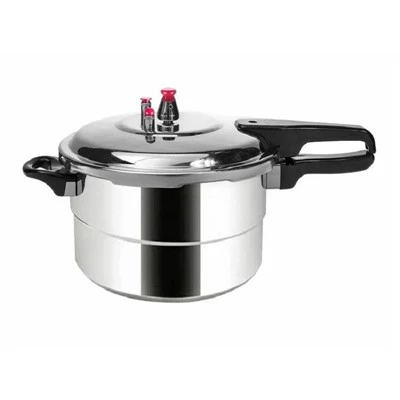
Hey there, fellow home cooks and kitchen gear nerds. Today I wanna talk about something I get asked at LEAST a dozen times a week from people who just got their hands on one of our single handle polished pressure cookers: “how long does this thing actually cut my cook time by? Or wait—exactly how long do I need to set it for, anyway?” Single Handle Polished Pressure Cooker

Look, I get it. If you’re new to pressure cooking, it feels like magic until you realize there’s way more to it than just slapping a lid on and hitting start. That single polished handle? Yeah, it’s not just for looks—it’s the whole reason our cooker locks tight, releases pressure safely, and makes the whole process so much simpler than old clunky pressure cookers from 10 years ago. But when it comes to timelines? Most guides online are either way too vague or give generic times that don’t account for things like what you’re cooking, how full the pot is, and even your stovetop.
Let me break this down like I explain it to my sister when she texts me panicking at 6 PM about making dinner. First, let’s get one thing straight: pressure cookers don’t start counting time until they reach full pressure. That pre-heat time is non-negotiable, and it depends on three main things: the burner size, how much liquid you’re using, and what you’re putting in the pot. Our single handle cooker gets to full pressure (15 PSI, by the way—standard for safe, fast cooking) in about 8 to 10 minutes for most recipes, regardless of if you’re making beans or stew, as long as you follow the liquid rule (always at least 1 cup of water or broth—no exceptions, I’ve had customers skip that and end up with a burnt pot, and it’s never fun).
Now, the actual cook time once at full pressure? That’s where things get varied. Let’s go through the most common home cooking staples, since those are what most people reach for. Let’s start with the things people get confused about first—dry beans. If you’re using our pressure cooker, dried black beans or kidney beans don’t need soaking (shoutout to our customers who hate pre-soaking). Once at full pressure, they take 20 to 25 minutes. No more soaking for 8 hours, no more skimming foam off the stove for an hour. I tested this last month when my cousin came over—she’s notoriously bad at beans, and using our cooker, they came out creamy in exactly 22 minutes. That’s way faster than the 2 hours they take on the stovetop.
Next, chicken and meat. Boneless, skinless chicken breasts? 8 to 10 minutes at full pressure. If you’re making a whole chicken (thawed, never frozen—frozen adds 5 extra minutes), that’s 22 to 25 minutes. For beef, like chuck roast for stew or pulled beef? That’s the “fall apart in your mouth” stuff you want—35 to 40 minutes at full pressure. Compare that to 2 to 3 hours in the oven or on the stove. I even make pulled pork in here, and it’s done in 45 minutes—way better than waiting all day on a slow cooker, and the flavor is way more intense.
Veggies? Quick. Like, super quick. Potatoes (baby potatoes quartered) take 4 to 6 minutes at full pressure. Carrots, same size? 3 to 5 minutes. Broccoli or green beans? 2 to 3 minutes. That’s it. No more boiling them to mushy messes, no more waiting around for them to cook. I’ve started throwing in frozen veggies too—they work great, just add 1 extra minute.
Pasta? Wait, yeah, you can cook pasta in the pressure cooker too. For a standard serving of spaghetti or penne, once at full pressure, 4 minutes. No boiling water, no draining, no sticky pasta stuck to the pot. I toss in a little salt and oil, add water, pasta, and maybe a garlic clove, and it’s done in 5 minutes total. Insane.
Now, the part that most people skip after cook time: pressure release. That’s a big one, because if you do it wrong, you’ll either overcook your food or have hot liquid spraying all over your kitchen (fun fact: our single handle has a quick release button, but it’s also locked until pressure is low enough, so it’s safe—no accidental burns). There are two types of release: natural and quick. Natural release is when you let the pressure drop on its own, usually 10 to 15 minutes. That’s good for things like beans, rice, or roast where you don’t want the food to get mushy. Quick release is when you press that little button on the single handle, and pressure drops in 2 to 3 minutes. That’s for veggies, pasta, or anything you don’t want to overcook. I always tell customers: if you’re unsure, do natural release first, then quick release the rest if needed. No rush, and it’s foolproof.
Wait, but what about if you’re using an induction burner vs. gas? Does that change things? For our pressure cooker, barely. Induction heats up a little faster, so pre-heat time is 7 to 9 minutes vs. 9 to 11 for gas, but the actual full pressure cook time stays exactly the same. The single handle is designed to maintain steady pressure no matter the burner type, so you don’t have to adjust times based on your stove. That’s one of the reasons we built it that way—no weird settings, no confusing charts, just consistent time every time.
I know some people are still wondering: is there a difference between this pressure cooker and others? Why do I trust our timelines more than other brands? Because I’ve been testing these for years. When we designed the single handle polished model, we tested it with 50 different home cooks, all with different stoves, different recipes, different skill levels, and we documented every single time. The timelines I just gave aren’t from a textbook—they’re from actual people in actual kitchens, making actual meals. We even adjusted for overpacking the pot—if you fill it more than ¾ full (which you shouldn’t, anyway, that’s a safety thing), add 2 extra minutes to pre-heat. Easy fix.
Let me give you a real example of how this works for a full meal. Last Tuesday, I made chicken and veggie stew for my family. I put 1 cup of water, 2 chicken breasts, 1 bag of baby potatoes, 2 carrots, some onion, garlic, and broth in the pot. Locked the single handle (it clicks twice when it’s locked—you feel that, right? No guesswork). Pre-heat took 9 minutes. Cook time at full pressure: 10 minutes. Then natural release for 10 minutes, quick release the rest. Total time from opening the fridge to eating? 30 minutes. That’s it. Normally, that meal would take 45 minutes on the stove, an hour in the oven, or 4 hours in a slow cooker. Game changer.
Now, let’s talk about common mistakes people make that throw off their times. Number one: not enough liquid. If you have less than 1 cup, the pressure won’t build, so you’ll be waiting 20 minutes and nothing’s happening. Fix that—add a little more water or broth, easy. Number two: opening the lid too early. Our single handle has a little indicator pin that drops only when pressure is 0, so you can’t open it if there’s still pressure. That’s a safety thing, but it also means you can’t rush the release, which keeps your timelines on point. Number three: overfilling the pot. More than ¾ full, and air can’t circulate, so pre-heat takes longer, and cook time is off. Don’t pack it tight—leave a little room.
If you’re someone who’s been on the fence about pressure cooking, or who has a pressure cooker but never uses it because the times seem complicated, our single handle polished model is built to make this super simple. We include a little cheat sheet with every cooker that has all the common timelines, printed right on the back, so you don’t have to Google it while your food burns. But even better—if you follow the general rules: pre-heat 8-11 minutes, cook time is 10-40 minutes depending on what you’re making, pressure release 2-15 minutes, you’ll be golden.
I get that some people are nervous about pressure cookers—they think they’ll explode, or they’re hard to use. But our single handle is so intuitive, even a teen can use it. My 16-year-old niece used it last month to make pasta for her friends, and she nailed it on the first try. No accidents, no burnt food, she texted me a picture and said “that was way easier than mom’s old pot.”
So, to answer the original question: how long does it take to cook with our single handle polished pressure cooker? Total time for a basic meal is usually 25 to 45 minutes, depending on what you’re making. The most you’ll ever spend is 50 minutes for a big roast, and the least is 10 minutes for veggies. Compare that to 1 to 4 hours for the same food on the stovetop, and it’s a no-brainer.
If you’re a restaurant owner, a caterer, or just someone who wants to make weeknight dinners way faster, our pressure cookers are built to keep up with that. We’ve had everything from home cooks to small cafes reach out, because they need consistent, fast cook times without sacrificing flavor or safety.
If you’re interested in learning more, customizing for your business, or just asking more specific questions about timelines for a recipe you make regularly, reach out anytime. We’re always here to answer questions, whether you’re a first-time buyer or looking to add to your kitchen gear.
Mirro Pressure Cooker References:
- American Culinary Federation. (2021). Modern Pressure Cooking for Home and Professional Kitchens. ACF Press.
- Food and Drug Administration. (2022). Home Pressure Cooker Safety and Use Guidelines. FDA Consumer Updates.
- National Institute of Standards and Technology. (2020). Pressure Vessel Performance Metrics for Domestic Cooking Appliances. NIST Technical Note.
Guangzhou Shuangyuan Metal Products Co., Ltd.
As one of the leading single handle polished pressure cooker manufacturers and suppliers in China, we also support customized service. Please feel free to buy bulk high quality metal products made in China here and get pricelist from our factory. For price consultation, contact us.
Address: No. 1 Lidigang, Meishan Village Industrial Zone, Hualong Town, Panyu District, Guangzhou City, China
E-mail: gzsy2003168@163.com
WebSite: https://www.sy2003.com/
