If you’re reading this, chances are you’re in the market for fireproof boards—whether you’re a contractor specifying materials for a commercial high-rise, a homeowner retrofitting a basement for a rental unit, or a facilities manager updating a school’s fire safety systems. As a fireproof board supplier with 12 years in the industry, I’ve seen firsthand how choosing the wrong product can turn a small fire incident into a catastrophic loss. I’ve also seen how a well-chosen fireproof board doesn’t just check a safety box—it saves money, time, and lives. Today, I’m breaking down the science behind fireproof boards, the common mistakes buyers make, and the practical steps to pick the right one for your project. Fireproof Board
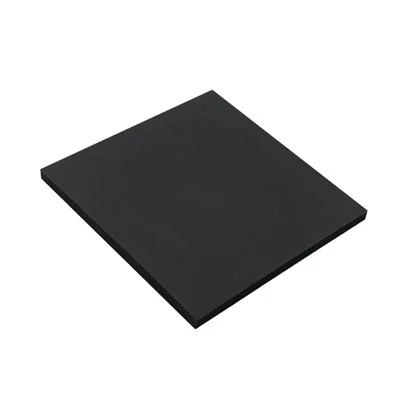
First, let’s clear up a common misconception: fireproof boards aren’t actually “fireproof.” No building material is 100% immune to fire. The more accurate term is “fire-resistant,” meaning they slow the spread of flames, resist heat for a specified period, and don’t release toxic fumes when exposed to high temperatures. That specificity is key. A board that works for a kitchen backsplash might fail miserably in a steel-framed office building where structural integrity is non-negotiable.
Let’s start with the core technical specs you need to evaluate, because this isn’t a “one-size-fits-all” decision. The first and most critical is fire-resistance rating, which is measured in hours (1-hour, 2-hour, 3-hour, etc.). This rating tells you how long the board can withstand a standard fire test without failing—meaning it won’t collapse, won’t allow flames to pass through, and won’t generate excessive heat on the opposite side. For example, 1-hour rated boards are standard for interior walls separating residential units in multi-family buildings, while 3-hour rated boards are required for structural steel encasement in high-rises. I’ve had contractors come to me with a 1-hour board for a 2-hour wall assembly, and it’s a costly mistake—inspectors will fail the project, and you’ll have to tear out and redo the work.
Next, check for smoke and toxic emissions. When a board burns, it doesn’t just add to the fire—it releases gases that can kill faster than the flames themselves. The National Fire Protection Association (NFPA) reports that 80% of fire-related deaths are from smoke inhalation, not burns. That’s why you need to look for boards tested to standards like ASTM E119 for heat release rate and ASTM E1354 for smoke density. Low smoke and zero halogen (ZOH) boards are ideal for public spaces like hospitals, schools, and retail centers, where people might not know how to evacuate quickly. Last year, a school district in the Midwest switched to ZOH fireproof boards after a local hotel fire killed two guests from toxic fumes—they told me it was a “no-brainer” for their students.
Then there’s thermal stability, especially for projects in extreme climates. If you’re working in a desert, where temperatures can hit 120°F during the day and drop to freezing at night, the board needs to resist thermal shock—sudden changes in temperature that can cause cracking or delamination. I once supplied a project in Arizona where the contractor used a low-quality gypsum-based board; within a year, temperature swings made the boards crack, exposing the underlying framing. Now, we recommend mineral fiber or calcium silicate boards for those regions, as they have a higher tolerance for thermal fluctuation.
But technical specs aren’t the only consideration—you also need to match the board to the project’s unique needs, and that means asking the right questions before you buy. Let’s walk through the most common applications and the boards that work best for each:
-
Residential Kitchens and Bathrooms: Kitchens have high heat from stovetops, while bathrooms have moisture. For this, gypsum-based fireproof boards with a water-resistant core (often called “green board” but specifically fire-rated) are a great balance. They’re lightweight, easy to cut, and cost-effective. I recently worked with a home builder in Texas who used our 1-hour fire-rated green board for 120 townhouse kitchens—they’ve had zero issues with heat or moisture over two years. Just make sure it’s not used in a shower stall; that requires a cementitious fireproof board, which is more water-resistant.
-
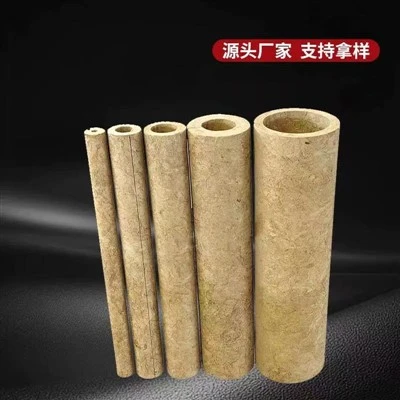
Commercial Wall and Ceiling Assemblies: For offices, retail, and warehouses, you need boards that balance fire resistance with ease of installation. Mineral fiber boards are a top pick here—they’re lightweight, can be cut with standard tools, and have good soundproofing benefits too. We’ve supplied these to a chain of grocery stores across the Southeast, where they use them in stock rooms and around elevator shafts—areas where fire spread is a big risk. For warehouses storing flammable materials (like paint or chemicals), you’ll need a higher rating—2-hour or 3-hour calcium silicate boards, which are more dense and can contain fires longer.
-
Structural Steel Encasement: This is where the highest fire resistance matters most. Steel loses 50% of its strength at 1,000°F, so you need a board that can insulate steel until firefighters can get the blaze under control. Calcium silicate boards are the gold standard here; they can withstand temperatures up to 2,000°F for 3+ hours, protecting structural steel from collapsing. I worked on a 40-story office building in New York City, where the architect specified 3-hour calcium silicate boards for all steel columns—this isn’t just a code requirement, it’s a safety net for the 50,000 people who work there.
Now, let’s talk about the red flags to watch out for as a supplier—because not all “fireproof boards” are created equal. The first is fake or inflated ratings. Some manufacturers will stamp a 2-hour rating on a board that only passes a 1-hour test. How to avoid this? Ask for third-party test reports from accredited labs (like Underwriters Laboratories, or UL). A legitimate supplier will have these ready to share—if they hesitate, walk away. Second, be wary of low prices. A $5 sheet of fireproof board that’s 25% cheaper than the competition is almost certainly cutting corners on materials. It might have less fire-resistant core, or binders that release toxic fumes. I’ve had a client who bought a cheap board from another supplier for a basement renovation; when we tested a sample, it only resisted fire for 20 minutes, not the 1-hour they needed. It cost them twice as much to replace it than if they’d bought the right board in the first place. Third, ignore specialty requirements at your peril. If your project is in a coastal area with high salt air, you need a fireproof board with corrosion-resistant facings—standard gypsum board will degrade over time, even if it’s fire-rated.
Another key factor is sustainability, which is becoming more important for both commercial and residential projects. Many buyers don’t realize that fireproof boards can be made from recycled materials. Our company, for example, makes 60% of our fireproof boards with post-industrial recycled mineral wool, diverting 12,000 tons of waste from landfills each year. If sustainability is a priority (and it should be, for LEED-certified projects), look for boards with third-party certifications like GREENGUARD or UL Environment. Last year, a developer in Portland chose our recycled-content boards for a net-zero apartment complex—they told me the certifications helped them secure a tax credit for green building.
Installation is just as important as choosing the right board. Even the best board will fail if it’s installed incorrectly. For example, gaps between boards can let flames and heat pass through, so you need to use the right joint compound and tape. I always tell contractors to hire installers who are experienced with fire-rated assemblies—cutting corners on installation is as bad as cutting corners on materials. We offer free installation training for our clients, because we know that a safe product is only safe if it’s put in right.
Let’s wrap this up with a simple checklist you can use the next time you’re buying fireproof board:
- Confirm the fire-resistance rating matches your code requirements (check local building codes—they set minimums for every space).
- Ask for third-party test reports to verify the rating.
- Match the board to your environment: moisture, temperature, and whether the space is public or residential.
- Check for low smoke and toxic emissions if the space has frequent occupants.
- Avoid “too good to be true” low prices, and verify certifications if sustainability matters.
- Plan for proper installation—don’t skip that step.
At the end of the day, choosing the right fireproof board is about balancing safety, cost, and practicality. I’ve spent 12 years in this industry, and every project I’ve worked on, the best decisions were the ones that prioritized both code compliance and real-world performance. If you’re not sure which board is right for your project, don’t guess. Reach out—we’ve helped thousands of clients, from small residential jobs to large commercial builds, pick the right product, and we’d be happy to walk you through the options.
Glass Wool Series References:
- National Fire Protection Association (NFPA). (2022). Fire Protection Handbook, 21st Edition. Quincy, MA: NFPA.
- American Society for Testing and Materials (ASTM). (2021). Standard Test Methods for Fire Tests of Building Construction and Materials (ASTM E119). West Conshohocken, PA: ASTM International.
- Underwriters Laboratories (UL). (2023). Fire Resistance Ratings for Building Materials. Northbrook, IL: UL LLC.
- U.S. Green Building Council (USGBC). (2022). LEED v4.1 Reference Guide. Washington, DC: USGBC.
Langfang Aolesi Thermal Insulation Materials Co., Ltd.
As one of the most professional fireproof board manufacturers and suppliers in China, we also support customized service. Please feel free to buy bulk high quality fireproof board made in China here from our factory. For pricelist, contact us now.
Address: Dongwang Village, Dacheng County, Langfang City, Hebei Province
E-mail: Lfaolesibaowen@outlook.com
WebSite: https://www.lfaolesi.com/
