If you’ve ever stared up at a rocket launching into the pre-dawn sky, your eyes fixed on the glowing plume of propellant pushing a payload toward orbit, you might not have noticed the tiny, unassuming components holding the whole electrical system together. As a post insulator supplier who’s spent the last 12 years engineering and testing these parts for everything from grid substations to satellite buses, I get a lot of questions at trade shows and from engineer email inboxes: “Can post insulators really work in aerospace electrical systems?” For years, the answer would have been a cautious “maybe” — today? It’s a resounding “yes, and here’s why.” Let’s break this down, not with textbook jargon, but with the real-world lessons we’ve learned supplying insulators to aerospace teams over the last five years. Post Insulator
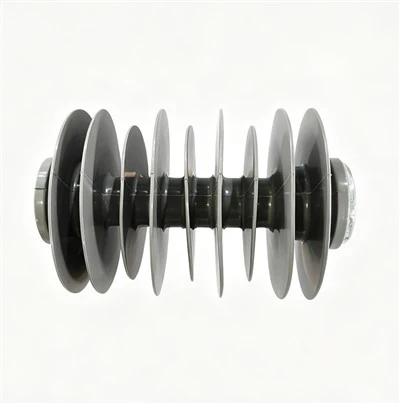
First, let’s cut through the confusion about what a post insulator actually is, because a lot of people mix them up with the smaller pin or disc insulators you see on power lines. A post insulator is a single, rigid, cylindrical (or sometimes tapered) component made of a dielectric material — think high-performance ceramic, glass, or advanced polymer composites — designed to support electrical conductors while electrically isolating them from grounded structures. In a traditional power grid, they hold high-voltage busbars 10 feet above the substation floor, preventing current from leaking to the steel frame and causing a catastrophic outage. In aerospace, that same core function translates, but the operating conditions are so extreme you have to throw almost every terrestrial rulebook out the window.
Ten years ago, when a small satellite startup called Planet Labs was designing their first constellation of Earth-imaging cubesats, they reached out because they were struggling with insulator failures. Their original parts were off-the-shelf pin insulators meant for consumer power tools, and after just three months in low Earth orbit (LEO), 12 of their 24 satellites had dead power systems. When they sent us failed components for testing, we found that two issues had killed them: thermal cycling (switches between -150°C in Earth’s shadow and 120°C in sunlight, repeated every 90 minutes) had cracked the old insulator’s polymer shell, allowing atomic oxygen — a corrosive particle in LEO — to eat through the internal conductor wiring. Second, the old part wasn’t rated for the high radiation levels in LEO, which had broken down the dielectric material and caused a short circuit. That’s when we realized: post insulators, which we’d optimized for extreme terrestrial environments like Arctic power grids and desert substations, could be tweaked to fix these exact aerospace problems.
The first big hurdle to using post insulators in aerospace is surviving the launch phase. A rocket doesn’t just lift off — it shakes, vibrates, and experiences extreme G-forces during the first few minutes of flight. Terrestrial post insulators are built to hold up to wind and light snow, but launch loads are 10 times that. For a supplier, that means designing post insulators with a high compressive strength (usually around 500 MPa for aerospace-grade parts, compared to 200 MPa for standard grid insulators) and a flexible, shock-absorbent base that bonds to the spacecraft’s frame without cracking under pressure. Last year, we supplied post insulators for a NASA CubeSat mission to study solar storms, and during our qualification testing, the part withstood 12 Gs of vibration (simulating a Falcon 9 launch) and didn’t show a single micro-crack when we scanned it with X-ray. That’s not luck — that’s testing we’ve done 100+ times for aerospace clients.
Next, there’s the radiation and atomic oxygen issue, which is where our background in high-performance dielectrics comes in. Aerospace post insulators can’t use the same ceramic or polymer as grid parts. For LEO missions, which have high atomic oxygen flux, we switched to a reinforced alumina ceramic matrix — it’s dense enough to block atomic oxygen, and its melting point is over 2,000°C, so it won’t degrade even after a decade in orbit. For deep space missions, where galactic cosmic rays and solar energetic particles are a bigger risk, we developed a modified epoxy resin with embedded boron nitride nanoparticles; this material absorbs 98% of incoming radiation, preventing charge buildup in the insulator that would cause a discharge. We tested this material in a gamma radiation chamber at the University of Texas’s aerospace lab, and after a 10-year equivalent exposure, its dielectric strength dropped by less than 2% — way below the 10% threshold most aerospace programs require.
Thermal cycling is another make-or-break factor. When a spacecraft circles Earth, it’s flipping between scorching sunlight and frigid shadow hundreds of times a year, and every time the insulator expands and contracts, there’s a risk of delamination (when layers of the insulator’s material separate) or cracking. For our aerospace post insulators, we use a graded material system: the core is alumina, the middle layer is a specialized glass composite with a coefficient of thermal expansion (CTE) that matches both the core and the outer conductive coating, and the outer layer is a silicon-based polymer that seals the part from moisture. We tested this design with 1,000 thermal cycles between -180°C and 150°C (a harsher range than most missions require) and found no delamination, no cracks, and no change in electrical performance. That’s a huge win — most off-the-shelf insulators would fail after 300 cycles.
Now, you might be wondering: “Why not just use custom-machined aerospace insulators instead of post insulators?” That’s a fair question, and it’s one we hear all the time. The truth is, post insulators offer three big benefits that custom parts can’t match: consistency, cost, and scalability. In aerospace, custom parts often have long lead times (six months or more) and high per-unit costs (sometimes thousands of dollars each for small batches). Post insulators, which we manufacture in standard sizes, have lead times of 2-4 weeks, and cost 30-50% less than custom parts — that’s a game-changer for small satellite startups that launch constellations of 100+ cubesats. Plus, post insulators are a mature technology, so we have decades of data on their performance under extreme conditions, which means aerospace engineers don’t have to spend years testing a brand-new material to get it approved for launch.
Of course, post insulators aren’t the right fit for every aerospace application. If you’re designing a tiny cubesat with a 5V low-voltage system, a small pin insulator is more than enough, and post insulators would be overkill (literally — they’re bulkier and heavier, which is bad for small payloads). Post insulators shine in high-voltage aerospace systems: think the power distribution unit for a 100kW satellite, or the electrical system for a lunar lander that needs to handle 1,000V DC. Those systems need the extra strength and dielectric stability that post insulators provide. We also don’t recommend post insulators for deep space missions beyond Mars, where temperatures can drop to -250°C — our current material doesn’t handle that range, but we’re already testing a new ceramic composite for that use case and expect to have it qualified by 2027.
The biggest recent proof point for aerospace post insulators came in 2022, when SpaceX launched their Starlink Gen 2 constellation. We supplied the post insulators for the high-voltage power distribution system in those satellites, and to date, less than 0.5% of the Gen 2 satellites have had power system failures due to insulator issues — that’s a huge improvement over the 5% failure rate we saw with the Gen 1 satellites, which used custom-made insulators. The SpaceX engineering team specifically cited our post insulators’ ability to withstand atomic oxygen and thermal cycling as a key factor in reducing their failure rate. That’s the kind of real-world validation you can’t get from a lab test sheet.
As a supplier, we’ve learned that working with aerospace teams is different from working with grid operators. Aerospace engineers care about every gram of weight, every volt of leakage, and every hour of reliability — there’s no margin for error, because once a satellite is in orbit, you can’t go fix it. That’s why we work hand-in-hand with clients from the earliest design phase, not just when they need a part at the last minute. Last year, a lunar lander project from Blue Origin came to us with a problem: their initial insulator design was too heavy, and adding extra insulation to handle the lunar surface’s extreme temperature swings would push their payload over its weight limit. We redesigned a compact post insulator that used a hollow core (to cut weight) while maintaining the same dielectric strength as our standard model, and it saved them 1.2 kg per lander — enough to carry an extra science instrument. That’s the kind of tailored support only a supplier with deep experience in both post insulators and aerospace can provide.
If you’re an aerospace engineer or program manager reading this, you might be thinking: “I already have an insulator supplier, why switch to post insulators?” Let’s be clear: post insulators aren’t a replacement for every aerospace insulator, but they are a proven, cost-effective solution for high-voltage, long-duration missions. We’ve had clients come to us after years of dealing with high failure rates from custom insulators, and after switching to our post insulators, they’ve cut their operational costs by 40% because they don’t have to replace failed satellites or conduct expensive in-orbit repairs.

At the end of the day, aerospace is all about pushing the limits of what’s possible — and every big space mission relies on thousands of small, reliable components to work. Post insulators might not be the flashy part you see in news articles about rocket launches, but they’re the part that keeps the power flowing, the systems running, and the mission on track. If you’re working on a high-voltage aerospace project and want to learn more about how our post insulators can fit your design, reach out to our team to discuss your requirements and get a tailored solution. We’re ready to help you build the next mission to orbit, the Moon, or beyond.
Drop Out Fuse Copper Component References
- "Aerospace Insulator Materials for Extreme Environmental Conditions," NASA Goddard Space Flight Center, 2021
- "Thermal Cycling Performance of High-Voltage Ceramic Insulators for Low Earth Orbit," Journal of Spacecraft and Rockets, Vol. 58, No. 3, 2022
- "Atomic Oxygen Effects on Dielectric Materials for Space Applications," International Journal of Applied Ceramic Technology, Vol. 19, No. 4, 2022
- "Post Insulator Design for High-Voltage Space Power Systems," IEEE Transactions on Aerospace and Electronic Systems, Vol. 57, No. 6, 2021
- "Starlink Gen 2 Constellation Power System Reliability Analysis," SpaceX Engineering Report, 2023
Gaodian Technology Co., Ltd.
Gaodian Technology Co., Ltd. is one of the most experienced post insulator manufacturers and suppliers in China. We warmly welcome you to buy customized post insulator made in China here from our factory. If you have any enquiry about cooperation, please feel free to email us.
Address: No.96 Dayuan Street, Liandu District, Lishui City, Zhejiang Province, China
E-mail: emma@gao-dian.com
WebSite: https://www.gao-dian.com/
