If you’ve ever worked in oil refining, natural gas processing, or even chemical manufacturing, chances are you’ve encountered an absorption column at some point. But what is it, exactly, and how does it actually work? As a supplier of these systems, I get this question all the time—usually from new plant operators who are still learning their way around process equipment, or from engineers looking to upgrade an old setup. Let me break this down without the stuffy jargon, because I know most of you just want the clear, practical stuff that applies to your day-to-day work. Absorption Column
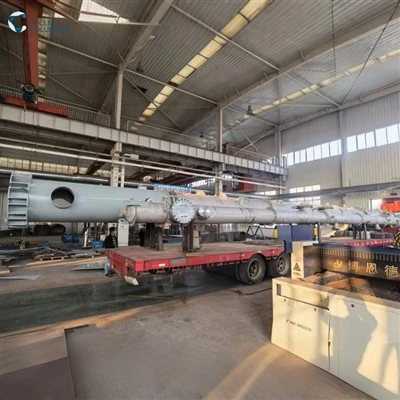
First, let’s start with the basic problem absorption columns solve. Imagine you have a mix of gases or vapors, and you need to pull one specific component out of that mix. Say, for example, natural gas straight from the well has methane (that’s the good stuff you want to sell) plus water vapor, hydrogen sulfide, and carbon dioxide—those are the impurities you need to remove before you can ship it through pipelines. Or maybe you have a stack of industrial exhaust, and you need to grab volatile organic compounds (VOCs) before they get released. That’s where absorption comes in: it’s a mass transfer process where one component (called the solute) moves from the gas phase into a liquid phase (called the solvent). The column is just the vessel designed to make that transfer happen as efficiently as possible.
Let’s walk through how a typical column operates step by step. First, you’ve got two inputs: the gas feed on one end, and the solvent on the other. The gas feed is pumped into the bottom of the column, usually at a slight pressure to help it rise upward. The solvent, meanwhile, is introduced at the top of the column, often chilled a bit because lower temperatures make the solvent more likely to grab the solute (remember that rule: colder = more soluble for most gases). Here’s the key: the gas and solvent flow opposite each other. That countercurrent flow is non-negotiable for good efficiency. If you ran them in the same direction, the gas would hit the solvent at the top and would already have most of its solute removed before it even reaches the lower, fresher solvent—wasting the bottom half of the column. Countercurrent means the dirty gas is meeting the cleanest solvent at the top, and the almost-pure gas is meeting the solute-saturated solvent at the bottom. That way, every inch of the column is being used for mass transfer.
Now, inside the column, you can’t just have gas and liquid floating around—they’d never mix enough to transfer the solute. So most columns have internal components to create lots of surface area between the gas and liquid, which is exactly where the solute moves. The two most common internals are trays (like the metal plates you see in old distillation columns) and packing (small, irregular shapes or structured grids). Trays work by forcing the gas to bubble up through a layer of liquid sitting on each plate, so every time the gas hits a tray, it gets another chance to dump its solute into the liquid. Packing, on the other hand, is a solid material that fills the column; the liquid flows down over the packing surfaces, and the gas flows around the packing, creating a thin, turbulent film where mass transfer happens. I’ll be honest with you: packing is usually better for smaller to medium-scale operations, while trays hold up easier for high-flow industrial setups. We supply both, depending on what the client’s needs are.
Let’s test this with a real example to make it concrete. Say a natural gas processing plant uses an absorption column to strip out H2S (hydrogen sulfide) from raw gas. The raw gas (with methane, H2S, and some CO2) is fed into the bottom of the column at around 100 psi and 80°F. The solvent here is usually amine—specifically methyl diethanolamine (MDEA), which is cheap and really good at grabbing H2S. The MDEA is chilled to around 60°F and sprayed into the top of the column. As the raw gas rises, it hits each tray (or the packing) and meets the cold, fresh MDEA at every stage. The H2S, being more soluble in the amine than methane is, dissolves into the liquid. The clean methane (now almost H2S-free) exits the top of the column, ready for drying and pipeline shipment. The amine, now loaded with H2S, drains out the bottom. That saturated solvent doesn’t go to waste, either—it goes to a separate stripping column where you heat it up and release the H2S, so you can reuse the amine over and over again. That’s the whole process, in a nutshell.
Wait, but what affects how well this works? I get asked that a lot too. The main factors are pressure, temperature, solvent choice, and flow rate. Higher pressure makes gases more soluble, so that’s why most absorption columns operate at elevated pressures. Too high, though, and you risk the liquid flooding the column—when the gas is moving so fast it pushes the liquid back down, instead of letting it flow the way it’s supposed to. Temperature: as I mentioned earlier, colder is almost always better for solubility, but you can’t chill the solvent so much it gets too thick to flow through the column. Solvent choice matters a ton—using water would work for ammonia, but it’s terrible for H2S, so amine is better. Flow rates: if your gas is moving too fast, it’ll carry the liquid out the top (that’s called entrainment, and it’s a big headache). If the solvent is moving too slow, there’s not enough liquid to grab all the solute. It’s all a balance, which is why a good absorption column isn’t just a metal pipe—there’s engineering behind matching your setup to your specific process.
Now, let’s talk about common mistakes people make when operating these columns, because even a well-built column can go bad if you’re not paying attention. First, fouling: over time, the solvent can pick up solid impurities, like scale from the gas feed, and that builds up on the trays or packing. Fouling reduces the surface area for mass transfer, so your column stops working as efficiently. We recommend routine cleaning—usually with a mild acid wash for packing, or mechanical cleaning for trays—every 6 to 12 months, depending on how dirty your feed is. Second, solvent degradation: some solvents, like amines, break down when they’re exposed to high temperatures or certain impurities in the gas. That means you have to top off the solvent or replace it every few years, which is a cost people often forget to budget for when they install a new column. Third, incorrect countercurrent flow: if the solvent pump is too weak, or the gas pressure is too low, the two streams start moving in the same direction, and your removal rate drops off a cliff. It’s not a super visible issue, so we always help clients calibrate their flow rates when the column is first set up.
As a supplier, I’ve seen all kinds of absorption columns—from small, skid-mounted units for pilot plants to massive 100-foot-tall columns for refineries. The biggest difference between a good column and a bad one isn’t just the metal it’s made of, it’s how the internals are designed for your specific application. For example, a column for VOC removal from paint fumes needs different packing than one for removing CO2 from biogas. We don’t sell a one-size-fits-all unit; we work with clients to figure out their feed composition, required removal efficiency, and existing infrastructure to build or modify a column that works for them.
Let me wrap this up with a quick recap to make sure it sticks. Absorption columns separate solutes from gas mixtures using countercurrent flow and mass transfer between gas and solvent. The key steps are: feed gas in at the bottom, solvent in at the top, countercurrent flow creates lots of contact, solute dissolves into the solvent, clean gas exits the top, loaded solvent exits the bottom. Efficiency depends on pressure, temperature, solvent choice, and proper maintenance to avoid fouling and degradation.

If you’re looking to upgrade your existing absorption column, or you need a new unit for a new project, let’s connect. I’ve worked with everything from small food processing plants to large chemical manufacturers, and I can help you figure out the right setup for your needs. Don’t hesitate to reach out to discuss your requirements.
Distillation Towers References
Geankoplis, C. J. (2018). Transport Processes and Unit Operations. Pearson.
Kister, H. Z. (1992). Distillation Design. McGraw-Hill.
McCabe, W. L., Smith, J. C., & Harriott, P. (2005). Unit Operations of Chemical Engineering. McGraw-Hill.
Beijing Cycle Columbus Environmental Science & Technology Co., Ltd.
Beijing Cycle Columbus Environmental Science & Technology Co., Ltd. is one of the most professional absorption column manufacturers and suppliers in China. We are committed to providing high quality customized products with competitive price. Please feel free to buy advanced absorption column made in China here from our factory. Also, quotation is available.
Address: 1201, 12/F, Tower B, Bldg 8, Guancheng Garden, Haidian District, Beijing, China
E-mail: Info@saikekanglun.com
WebSite: https://www.cycle-columbus.com/
