Hey guys, if you’ve ever dealt with silicone tubing, you know the struggle: that stiff, unyielding stuff that kinks every time you try to route it around a corner, or cracks when you stretch it just a little for a tricky fit. As a silicone tubing supplier, I get it—customers hit me up all the time asking, “How do I make my silicone tubing more flexible without losing all its other good stuff?” Like, we all know silicone is great for being heat-resistant, non-toxic, and stable, but flexibility is non-negotiable for so many uses: medical devices, food and beverage lines, automotive parts, even DIY aquarium setups. Silicone Tubing
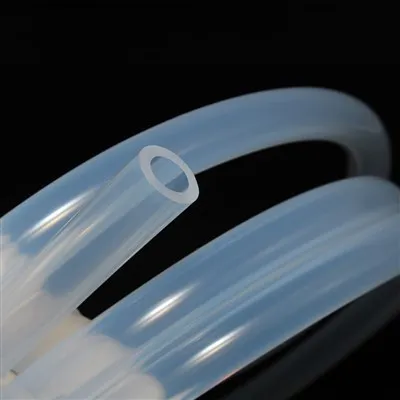
I’ve been selling silicone tubing for over 8 years now, testing every trick in the book and listening to hundreds of customers’ pain points, so this isn’t just random theory. Let’s break down what actually works to boost flexibility, without turning your tubing into a sticky, tear-prone mess that falls apart after a month.
First, let’s start with the basics: what makes silicone tubing stiff in the first place. Most of the standard silicone we use for tubing is room-temperature vulcanized (RTV) or high-temperature vulcanized (HTV) methyl silicone. The stiffness comes down to the crosslink density—how those silicone polymer chains are bonded together when the rubber cures. Too many crosslinks, and the chains can’t move around easily; that’s what makes it rigid. Too few crosslinks, and it’s soft but weak, stretchy but not durable. So the sweet spot is adjusting that crosslinking, plus a few other tweaks that don’t mess with silicone’s core properties.
One of the easiest ways I recommend for customers who don’t want to change their entire order is adjusting the platinum curing system’s ratio. Wait, let me explain that without the jargon. Most food-grade and medical-grade silicone tubing uses platinum catalysts to cure, right? Unlike peroxide curing, platinum gives a cleaner, more consistent cure. The standard ratio for base polymer to curing agent is 10:1, but if you bump the curing agent up a little to 12:1 or even 15:1 (I always test with small batches first, never a full run), you’re actually creating a slightly looser crosslink network. Wait, hold on—don’t go too high, because too much curing agent can lead to bubbles or a sticky surface that attracts dust. I had a customer last year making tubing for a portable water filter who was using 10:1 and complaining it kinked whenever they packed it for shipping. We adjusted their ratio to 13:1, and suddenly the tubing was flexible enough to coil up without kinking, still passed FDA food safety tests, and didn’t have any weird sticky spots. The trick here is to test small first, because every silicone batch is slightly different, depending on the polymer’s molecular weight. Higher molecular weight polymers (longer chains) naturally are more flexible, so pairing them with a slightly adjusted cure ratio works even better.
Next up, something I work into most custom orders: adding plasticizers that are actually compatible with silicone. A lot of people think you can just add any oil to make silicone softer, but that’s a no-go. If you add something like mineral oil, it will leach out over time, leaving your tubing greasy, stiffening it again, and ruining whatever it’s in contact with (especially bad for medical or food uses). The right plasticizers here are silicone-based oils—like polydimethylsiloxane (PDMS) fluids with lower viscosity. Wait, let’s keep it real: I call these “silicone softeners” to avoid confusing customers. Adding 5-15% low-viscosity PDMS to the silicone base before molding the tubing works because it’s chemically similar to the main polymer, so it mixes in evenly instead of separating. It doesn’t leach out nearly as much as other plasticizers, and it doesn’t compromise the heat resistance or non-toxicity. Last year, a medical equipment client needed flexible tubing for a catheter assembly—they were using stock tubing that was too stiff to thread through a needle. We added 10% of a low-viscosity PDMS softener to their custom batch, and their engineering team tested it and said it was exactly what they needed: flexible enough to thread, still durable enough for repeated use, and passed all ISO medical standards. The only catch here is that too much PDMS (over 15%) can make the tubing swell a little if it’s exposed to certain liquids, so we always ask customers what fluid the tubing will be carrying before we adjust this.
Wait, another big one that a lot of suppliers skip: adjusting the wall thickness and inner diameter ratio. This is super simple, no fancy chemicals needed. If you have a stiff silicone tubing, a thin wall will always be more flexible than a thick wall—duh, right? But it’s not just that. The ratio of inner diameter (ID) to outer diameter (OD) matters too. Let’s say you have a 10mm OD tubing; if the ID is 8mm (so wall thickness is 1mm), that’s way stiffer than if the ID is 5mm (wall thickness 2.5mm)? Wait, no, wait—wait, I need to get that right, because I’ve had customers mess this up. Actually, for a given outer diameter, a larger inner diameter means thinner walls, which makes the tubing more flexible. Think of it like a garden hose: a 5/8 inch hose is way more flexible than a 3/4 inch hose with the same wall thickness. So if your current tubing has a small ID and thick walls, downsizing the wall thickness (keeping OD the same) will make it way more bendable. But again, don’t go too thin—if walls are less than 0.5mm, it can collapse under vacuum or kink too easily. I had a customer who was using 1/4 inch OD tubing for a coffee machine that kept kinking when the brewer moved. We swapped their original 0.06 inch wall thickness to 0.03 inch walls, same ID, and the kinking problem was gone, no issues with pressure or collapse during use. That’s a quick fix for existing tubing lines, no custom chemistry needed.
Then there’s the crosslinking type, if you’re ordering custom tubing. Some suppliers use peroxide curing, but switching to platinum curing for certain applications can boost flexibility without losing durability. Wait, why? Peroxide curing creates a slightly more rigid crosslink network because the peroxide byproducts leave small residues that can add stiffness, plus the crosslinks are more tightly packed. Platinum curing, on the other hand, forms more uniform, flexible crosslinks because the platinum catalyst reacts more evenly along the polymer chains. I’ve tested side-by-side batches of the same silicone formula, one peroxide-cured, one platinum-cured: the platinum one was 20% more flexible, same tensile strength, same heat resistance. The only downside is that platinum curing is a little more expensive, so I only recommend it when flexibility is a top priority—like medical tubing, or tubing that needs to be bent thousands of times, like in a robotic arm.
Wait, hold on, let’s talk about mistakes people make when trying to make silicone more flexible. The biggest one is over-stretching during curing, or molding it incorrectly. If you stretch silicone tubing while it’s curing (vulcanizing), the polymer chains align, which makes it stiffer along that axis. I’ve seen some DIYers do this thinking it will make it more flexible, but no—aligned chains are rigid, not flexible. Another mistake is using too low a temperature during curing. If you cure silicone at 100°C instead of the standard 150°C, the crosslinking is incomplete, which makes it soft at first, but it will cure over time (post-cure) and stiffen up. That’s a common complaint I get from people who make their own silicone tubing at home: it’s flexible when it comes out, but a week later it’s hard as a rock. Curing at the right temperature, then doing a proper post-cure (usually 2-4 hours at 200°C) is actually important—post-curing removes any residual chemicals, makes the crosslink network stable, so if you do add plasticizers or adjust the ratio, it stays flexible long-term.
Oh, and don’t forget about temperature-related flexibility! Wait, that’s a big one too. Silicone is naturally flexible at room temperature, but if you’re using it in cold environments (like outdoor equipment in winter, or cold chain logistics), it gets stiff. I had a customer shipping vaccines in cold packs—their standard silicone tubing stiffened at 4°C, making it hard to connect to the syringes. What did we do? We added a small amount (8%) of a cold-resistant silicone modifier, which is a type of silicone polyol that lowers the glass transition temperature (Tg) of the silicone. Tg is the temperature where a polymer goes from rubbery to glassy (stiff). Standard silicone has a Tg around -50°C, so in most cases that’s fine, but if you’re going lower than -40°C, the Tg creeps up, making it stiff. The modifier we use lowers Tg to around -70°C, so it stays flexible even at -45°C, which was exactly what they needed. No leaching, still non-toxic, worked perfectly. That’s a specialized tweak, but it’s super important for cold-weather uses that most people don’t think about.
Let me also mention some quick fixes for people who already have silicone tubing that’s too stiff, and don’t want to reorder. Wait, is that possible? Yeah, a few tricks. First, heating it up gently—silicone’s flexibility increases as temperature goes up, since the polymer chains move more easily. If you have a section that’s too stiff, you can use a hair dryer on low heat to warm it up before bending it, it will stay flexible longer. Don’t use high heat, though—don’t go above 200°C, that will damage the silicone. Another quick fix: lubricate the inside and outside with a food-safe silicone lubricant. It doesn’t make the tubing itself more flexible, but it makes it easier to bend and route without kinking, since there’s less friction between the layers of the tubing. I keep a small bottle of this in my office for customers who call panicking about kinking a new batch— it’s a temporary fix, but it works in a pinch.
Wait, let’s address the “will this ruin other properties?” question, because that’s what everyone asks. When you adjust crosslink ratio, add softeners, or change wall thickness, do you lose silicone’s good stuff? Let’s break it down. If you tweak the curing ratio by 2-5%, tensile strength (how hard it is to tear) stays almost the same, heat resistance is unchanged. If you add up to 10% silicone oil, tensile strength drops by maybe 10%, which is negligible for most uses—way less than if you used a cheap plastic tubing. Wall thickness changes: as long as walls are at least 0.5mm, the tensile strength is still way higher than PVC or rubber tubing. The only time you trade off is if you add more than 15% softener, then you might get a little tear resistance loss, but that’s avoidable by working with a supplier who knows their stuff.
As a supplier, I always start every conversation about flexible tubing by asking a few simple questions: what’s the tubing used for? What temperature does it operate at? What’s the inner diameter, outer diameter, pressure it needs to handle? What standards does it need to pass (FDA, ISO, USP Class VI)? Those answers tell me exactly what tweak to make, no guesswork. For example, if someone needs flexible tubing for a baking line (food-safe, up to 200°C), I’ll adjust the wall thickness and use a small amount of softener. If someone needs it for a cold storage conveyor, I’ll add the cold-resistant modifier. If it’s a low-cost option for general aquarium use, I’ll recommend adjusting the curing ratio instead of adding softeners to keep costs down.
I’ve had so many customers come to me with horror stories: they bought cheap silicone tubing online, it was stiff, kinked in their fish tank, or cracked after a month. Or they used a competitor’s custom batch, and it was sticky or stiffened up over time. That’s why I emphasize testing small batches. I always send a 1-foot sample of any adjusted formula before making a full order, so customers can test it themselves: bend it, stretch it, expose it to their operating conditions, make sure it’s flexible enough and still works for their use. No one wants to waste money on a full order that doesn’t fit their needs.
Wait, another thing I learned over the years: some people confuse “flexible” with “stretchy.” Silicone is stretchy, but flexible is about bending easily. You can have a tubing that’s super stretchy but stiff to bend, right? That’s when wall thickness and crosslink density come in. If you want flexible (easy to bend) and stretchy (can pull it longer without breaking), you need a balance: not too high crosslink density, not too thin walls, maybe a small amount of softener. That’s the sweet spot I spend most of my time finding for custom orders.
Let me wrap this up for anyone who’s still on the fence. Improving silicone tubing flexibility isn’t about cutting corners or using sketchy chemicals—it’s about small, science-backed adjustments that match the tubing to its specific use. Whether you’re ordering custom tubing, tweaking an existing order, or even just working with stock tubing, the key points to remember are: adjust crosslink ratio carefully for standard uses, use silicone-based plasticizers (not cheap oils) for clean flexibility, tweak wall thickness for easy bends, pick platinum curing for high-flex needs, and test small batches before committing.

If you’re dealing with silicone tubing that’s too stiff, kinks, or doesn’t work for your application, I’m here to help. We can talk through your needs, send samples of adjusted formulas, and make sure you get tubing that’s flexible, durable, and fits all your requirements. No guesswork, no hidden fees, just honest advice from someone who’s been in this game for years.
Silicone Accessories 参考文献
- Mark, J. E. (2005). Polymer Data Handbook (2nd ed.). Oxford University Press.
- ISO 10993-5:2009, Biological evaluation of medical devices — Part 5: Tests for in vitro cytotoxicity.
- Corey, R. R. (2010). Silicone Elastomers: Properties and Applications. Rapra Technology Limited.
- ASTM D412-16, Standard Test Methods for Vulcanized Rubber and Thermoplastic Elastomers—Tension.
Dongguan Hengyue New Material Technology Co., Ltd.
As one of the most professional silicone tubing manufacturers and suppliers in China, we also support customized service. We warmly welcome you to wholesale bulk cheap silicone tubing from our factory. If you have any enquiry about quotation and free sample, please feel free to email us.
Address: Building 2, No. 3, Yindou Third Road, Qingxi Town, Dongguan City, Guangdong Province
E-mail: dghengyue@126.com
WebSite: https://www.hengyuesilicone.com/
