When I first started working in carrier tape manufacturing 12 years ago, I made a rookie mistake that still makes my skin crawl. We’d just finished a bulk order of 8mm embossed carrier tape for a medical device client, and I stored the unopened pallets in the back of our shipping area—right next to a stack of cardboard boxes that had been sitting there for months. When we unloaded them at the client’s cleanroom a week later, our quality team found tiny cardboard fibers wedged in the tape’s pockets. The client was furious, and we spent three days sorting every reel, re-packaging it, and driving the whole order cross-country to make sure their production line didn’t go down. That mistake taught me a lesson that’s stuck with me ever since: storing carrier tape in a cleanroom environment isn’t just about following rules—it’s about protecting the parts that sit inside those tapes, and the clients who rely on them to build life-saving devices, aerospace components, and consumer electronics. If you’re a cleanroom operator, procurement lead, or even another carrier tape supplier trying to get this right, let’s walk through what actually works, what doesn’t, and why the small details matter more than you think. Carrier Tape
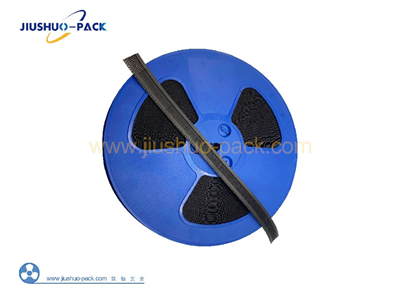
First, let’s get one thing straight: carrier tape storage in cleanrooms isn’t a one-size-fits-all process. The type of carrier tape you’re working with defines every rule you follow. Let’s break down the main types I see most often, because storing a thin polycarbonate embossed tape for semiconductors is way different from storing a conductive acrylic tape for medical sensors. Conductive and static-dissipative tapes, for example, are engineered to prevent electrostatic discharge (ESD)—the silent killer of microchips. If you expose them to dust or improper humidity, their conductive additives stop working, turning a tape that’s supposed to protect a $10,000 microchip into a static trap that fries it before it even reaches the assembly line. Then there’s thin-wall embossed tape, used for surface-mount devices (SMDs), which have delicate leads that bend or break if the tape is stored under uneven pressure. And of course, medical-grade carrier tape, which needs to meet ISO 13485 requirements—no exceptions, zero contaminants, period.
Let’s start with the big one: cleanroom classification awareness. A lot of the new operations I work with think that “cleanroom” just means a space with filtered air. But ISO 14644-1, the international standard for cleanroom particulate counts, divides cleanrooms into classes based on the number of particles 0.5 microns or larger per cubic meter. Class 100 (now Class 5) allows 100 particles or less, Class 10 (Class 4) lets in 10, and Class 1 (Class 3) is the strictest. If you’re storing carrier tape, you need to match the storage space to your product’s cleanliness requirements. I recently worked with a client that stored their Class 4 medical carrier tape in a Class 7 shipping closet because it was “good enough”—until we found 1.2 micron lint fibers on the tape’s sealing layer, which would have gotten into their sterile medical devices. That’s why step one: always confirm the cleanroom class required for your carrier tape, then reserve storage space that matches—or exceeds—that class. You don’t want to risk a $100,000 production line shutdown over a mislabeled storage area.
Next, packaging integrity. This is where a lot of people cut corners, and it’s the first line of defense for carrier tape. When we ship tape, we use two layers of static-shielding polyethylene (SPE) bags, heat-sealed completely, not just tied shut. The inner bag has a desiccant pack rated for 10% relative humidity (RH) to prevent moisture buildup, and the outer bag has an ESD barrier layer. But here’s the thing: desiccant packs expire. I’ve seen clients leave unopened reels in storage for 18 months, only to find the desiccant was fully saturated, leaving the tape with 20% RH—enough to make adhesive seals fail and parts corrode. So when you receive tape, don’t just stick it on a shelf. Inspect every bag for tears, holes, or loose seals immediately. If a bag is compromised, re-seal the reel in a new SPE bag with a fresh desiccant pack before putting it away. No exceptions. I once had a client send back 20 reels because a forklift driver nicked a bag during delivery, and they’d stored the nicked reels without re-sealing—each reel had picked up enough dust to fail their incoming inspection. That’s a $5,000 mistake that could have been avoided in 2 minutes with a heat sealer and a new bag.
Now, storage conditions: temperature, humidity, and pressure. Let’s get the science right here. Carrier tape is made of plastic, and plastics degrade if exposed to extreme temperatures. The ideal range for most standard carrier tapes is 18-24°C (64-75°F), with relative humidity between 30-50%. If it’s too hot, the plastic embossment softens, and the pockets can deform—meaning your SMDs won’t seat correctly, leading to misplacement on the assembly line. If it’s too cold, moisture can condense on the tape when you move it from the storage area to the production line. We recommend letting reels acclimate to the production room temperature for 2 hours before opening their bags—even in a cleanroom, that small step prevents condensation. Pressure is another big one. Cleanrooms have positive air pressure, right? The air inside is cleaner than outside, so it flows out to keep contaminants from getting in. But if you store your carrier tape on shelves near doors, air locks, or equipment that blows high-velocity air (like a laminar flow hood), the pressure difference can suck unfiltered air through the gaps in the storage, or even tear the tape bags. We advise storing tape at least 1 meter away from any air outlets, doors, or maintenance hatches in the cleanroom.
Then there’s storage organization and handling—this is the part that’s messy, because it relies on human discipline, not just equipment. I’ve walked into dozens of cleanrooms where carrier tape is stacked haphazardly on shelves, reels leaning against each other, boxes of different tape types mixed together. That’s a disaster waiting to happen. First, rotation: use FIFO (first-in, first-out) inventory management. Carrier tape has a shelf life, usually 12-24 months from production, depending on the material. The desiccant’s effectiveness drops over time, so older reels can lose their ESD protection or moisture control even if their bags are intact. When I visit a facility, the first thing I do is check their inventory labels—if I see a reel marked “Production Batch 2022” next to a new Batch 2024, the old one is going to get stuck on the shelf and cause issues. Second, vertical storage: never stack more than 4 reels high, and make sure the stack is centered to avoid putting uneven pressure on the bottom reels. For embossed tape, especially thick-wall types, that uneven pressure can cause pocket deformation. We’ve had clients send back reels where the bottom 2 layers of tape had pockets that were 0.5mm deeper than the top ones—all because they stacked 6 reels high. Third, separation: keep different types of carrier tape separated by at least 15cm (6 inches) on the shelf. Why? Because some conductive tapes can leach small amounts of static-dissipative compounds over time, and if a regular tape is sitting right against it, those compounds can transfer onto the regular tape, compromising its ESD protection. I’ve also seen cross-contamination between tape that holds solder paste and tape that holds bare microchips—small solder particles transfer to the bare chips, causing short circuits. That’s why even in a cleanroom, dedicated shelf space for each tape type is non-negotiable.
Wait, let’s talk about common mistakes that even experienced cleanroom operators make, because that’s where the real lessons are. First, using regular cardboard boxes for storage. I know, cardboard is cheap, but it’s full of lint, microfibers, and residual chemicals that can outgas into the cleanroom and onto the carrier tape. We’ve tested cardboard from 12 different suppliers, and all of them emit at least 0.2 microns of particulate per square meter when exposed to cleanroom air—enough to contaminate 5 reels of tape in a month. Instead, use polyethylene or polypropylene storage bins, which are inert and don’t emit particulates. Second, opening carrier tape bags inside the production line’s entry airlock. Airlocks are designed to transition between cleanroom classes, but they’re not fully filtered. If you open a bag outside of the actual production cleanroom, you’re letting all the air from the airlock, which has higher particulate counts, into the bag. The right practice is to take the unopened bag to the production line’s staging area, open it only at the work surface, and immediately inspect the reel before loading it into the tape feeder. Third, forgetting to label reels with critical information. Every reel should have the batch number, production date, ESD rating, and cleanroom class on it. I once worked with a client that had 50 reels of unlabeled tape—they didn’t know if they were Class 5 or Class 7, so they had to run a full particle test on each reel, which cost them $8,000 and delayed their order. Labeling takes 10 seconds per reel, and it saves hours of troubleshooting later.
Now, what about special cases? We’ve worked with a lot of clients that handle ultra-delicate parts—like quantum dot displays or medical implants—that need Class 1 cleanroom storage. For those clients, we recommend adding a static-shielding rack with closed doors, not open shelves. The closed rack creates a micro-environment within the cleanroom, with its own filtered air that’s maintained at the same temperature and humidity as the main cleanroom, but with zero exposure to the surrounding air. We also work with clients that store carrier tape for long periods—up to 3 years. For those, we recommend vacuum-sealing the reels after the initial heat-seal, to eliminate any remaining air that could hold moisture or particulates. We tested this last year: a set of reels stored in standard sealed bags lost 10% of their ESD protection after 18 months, while reels that were vacuum-sealed retained 98% of their protection over 3 years. The extra step only adds 30 seconds per reel, but it’s worth it for long-term storage.
Let’s circle back to that mistake I made 12 years ago, because it still shapes how we approach every order we ship. After that incident, we implemented a strict pre-shipment check for every reel: we inspect the packaging, verify the desiccant, test the ESD rating, and confirm that the tape is labeled correctly. We also started including a storage guide with every order—something that’s become our most requested document, even more than the technical specs. Last month, a client emailed us saying that the storage guide helped them avoid a contamination issue that would have shut down their entire line for 2 days. That’s the impact of getting this right. Storing carrier tape in a cleanroom isn’t just a procedural step—it’s part of quality control, part of customer service, and part of protecting the products that millions of people rely on every day.
If you’re struggling with carrier tape storage, or you need guidance on setting up a cleanroom storage area that meets your specific needs, don’t guess. Reach out to our team of cleanroom and carrier tape experts—we’ve worked with thousands of operations, from small medical device startups to Fortune 500 aerospace companies, and we can help you tailor a storage plan that fits your class of cleanroom, your tape type, and your production timeline. We don’t do one-size-fits-all, because we know that every client’s needs are different. All you have to do is connect with us, and we’ll walk through every step with you—from initial inspection of your storage space to creating a rotation schedule that keeps your tape in perfect condition until it’s ready for production.
Paper Carrier Tape References
ISO 14644-1: Cleanrooms and associated controlled environments — Part 1: Classification of air cleanliness by particle concentration. International Organization for Standardization, 2015.
ISO 13485: Medical devices — Quality management systems — Requirements for regulatory purposes. International Organization for Standardization, 2016.
Fundamentals of Electrostatic Discharge Control. ESD Association, 2021.
Carrier Tape and Reel Packaging Guidelines. Institute of Printed Circuits, 2020.
Plastic Material Degradation in Controlled Environments. Society of Plastics Engineers, 2019.
Dongguan Jiushuo Industrial Co., Ltd.
As one of the most professional carrier tape manufacturers and suppliers in China, we also support customized service. Please feel free to buy high quality carrier tape made in China here from our factory. Contact us for more details.
Address: 11th Floor, Building 2, Chuangfu Center, Chashan Town, Dongguan City, Guangdong Province, China
E-mail: sales06@zaidaiw.com
WebSite: https://www.carriertape-pack.com/
