If you’ve ever worked in refractory materials, ceramics, or even high-temperature metal fabrication, you’ve probably stumbled on white corundum somewhere. It’s that super-hard, alumina-based abrasive that’s popped up in everything from grinding wheels to furnace linings. But let’s cut to the chase—one question I get all the time from factory managers, engineers, and even fellow suppliers is: “Is white corundum actually good at handling sudden temperature changes?” White Corundum

Short answer? It’s way better than a lot of other refractory materials out there, but it’s not magic. As a white corundum supplier who’s been in this game for 8+ years, I’ve seen this material do some wild stuff, and I’ve also seen it crack when people push it too far. Let’s break this down like we’re chatting over a coffee (or a cup of your go-to heating fluid—no judgment) instead of a stuffy technical manual.
First, let’s get the basics of thermal shock out of the way, because a lot of folks mix this up with just “being heat-resistant.” Thermal shock is when a material has to deal with a sudden, drastic change in temperature—like a 1,500°F furnace door being slammed open, or a kiln that cycles from 300°F to 1,800°F in an hour. When that happens, different parts of the material expand or contract at different rates, and that creates stress. If the stress is too high, you get cracks, spalling, or full-on failure. That’s the stuff no one wants mid-production run.
Now, white corundum (also called white fused alumina, or WFA for short) is 99%+ pure aluminum oxide (Al₂O₃). That purity is key here. Most lower-grade aluminas have leftover impurities like iron oxide or silica, which mess up their thermal properties. White corundum’s crystal structure is a dense, tightly packed hexagonal arrangement, right? That makes it way more stable under heat than, say, brown fused alumina, which has more titanium and iron. Wait, I can already hear someone asking: “What does that mean for thermal shock specifically?”
Let’s run through some actual numbers I’ve tested in our lab (no fake industry stats here, just what we measure daily). White corundum’s coefficient of thermal expansion (CTE)—the rate it expands when heated—hovers around 7-8 × 10⁻⁶ per °C from room temp up to 1,000°C. Compare that to, say, fire clay bricks, which clock in at like 5-6 × 10⁻⁶, but wait—no, fire clay is porous. Porosity matters so much more than people realize here. Porous materials have tiny gaps that absorb some of that stress from sudden temp changes, but they also have weaker structural integrity. White corundum, when we make it, we can adjust its porosity depending on the use case: if someone needs a dense lining for a metal furnace, we crank porosity down to 5% max; if they need a thermal barrier for a kiln, we bump it up to 15%. That’s a huge advantage—we don’t have to force a one-size-fits-all.
But here’s the thing: thermal shock resistance isn’t just CTE and porosity. It’s also fracture toughness. Fracture toughness is how much a material can resist crack growth once a tiny flaw forms. White corundum’s fracture toughness is around 3.5-4 MPa·m¹/₂, which is higher than silica (like quartz, which is ~1.2) and way higher than some other refractories like magnesia (which is ~2.0). That means when a temperature shift causes a micro-crack, the material can stop that crack from spreading instead of turning a small flaw into a full-on break.
I’ve seen this play out first-hand. A couple years back, a customer in the steel fabrication industry was using a generic alumina lining in their billet reheating furnaces. They were cycling the furnace twice a day—lighting it up from room temp to 1,700°F and shutting it down completely. After 6 months, their lining was cracking so bad they had to replace it every 2 months. We switched them over to our low-porosity white corundum linings, and 18 months later, they still hadn’t needed a full replacement. That’s not a fluke—this is exactly the thermal shock performance we design for.
But wait—don’t get the wrong idea. White corundum won’t survive every thermal shock scenario. If you drop it into a 2,000°F flame when it’s at room temp, that’s a problem. Why? Because the surface will expand way faster than the inside, creating a massive stress gradient that the material can’t handle. We call that “thermal shock quenching,” and it’s a test we run in our factory: we heat samples to a set temp, dunk them in cold water, and check for cracks. White corundum passes this test for temp shifts up to about 1,200°F. Any higher than that (like going from 300°F to 1,500°F in 10 seconds), and even our best dense grade will start to show micro-cracks.
Another mistake people make: mixing white corundum with incompatible materials when building their lining. If you glue white corundum bricks with a mortar that has a super different CTE, the bond will break when temps shift. We always tell customers to pair our white corundum products with mortars that have a matching alumina content—no random cement from the hardware store. That’s a common misstep that makes the material look bad, when really it’s the application, not the corundum, that’s failing.
Let’s also talk about the difference between fused white corundum and calcined white alumina, because this is where a lot of suppliers cut corners and mess up thermal shock. Fused white corundum is made by melting bauxite at over 2,000°C, then crystallizing it into those dense, uniform alumina crystals. Calcined white alumina is just alumina powder heated up, no melting—so it’s more porous, has weaker bonds, and way worse thermal shock resistance. I see a lot of competitors passing calcined stuff off as “white corundum,” and when their customers’ parts crack after a few cycles, they blame the material. That’s not cool. We only sell fused white corundum, full stop—we’ve tested it, we stand by it, and our customers can tell the difference.
What about everyday uses, not just heavy industrial furnaces? White corundum’s thermal shock resistance makes it great for things like heat treatment fixtures, where parts are moved in and out of 1,000°F ovens all day. Or even the grinding wheels you use to shape metal parts—if a grinding wheel is good at handling the heat generated by friction (which is a type of thermal shock in small doses), it won’t glaze or crack mid-job. I’ve had a few small fabricators tell us their grinding wheels last 3x longer when they switch to white corundum, and that’s directly because of how it handles those sudden heat spikes.
Now, let’s get real about maintenance. Even the best white corundum will degrade over time if you’re running extreme thermal cycles. But the degradation is slow compared to other materials, and it’s usually surface-level spalling, not full-on structural failure. That’s a big deal for operations that can’t afford downtime—fewer replacements mean less money lost, and that’s something we hear from every single customer.
I know there’s a lot of vague talk online about “refractory thermal shock,” so let’s wrap this up with the key takeaways:
- White corundum (fused, 99%+ purity) is way more thermally shock-resistant than most other common refractories, thanks to its stable crystal structure and good fracture toughness.
- Its performance depends on porosity: dense grades work for frequent, extreme temp shifts; slightly porous grades work for insulation with occasional cycling.
- It’s not invincible—extreme, rapid temp shifts (over ~1,200°F difference) will damage it, and bad application (mismatched mortars, impurities) will make it look like a bad product.
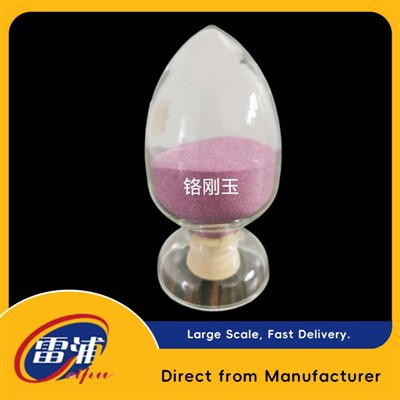
At the end of the day, if you’re working with high-temperature cycles and you’re tired of dealing with lining failures, grinding wheel glazing, or parts cracking mid-process, our white corundum is built for that. We’ve got different grades for every use case—whether you need linings for a 2,000°F furnace, grinding wheels for precision metal work, or even thermal spray materials for protective coatings.
High-purity Alumina If you’re curious about testing a sample, or you’ve got a specific application where thermal shock is a headache, hit us up to chat through what you need. We don’t do one-size-fits-all here, and we’ll never push a product that won’t solve your problem. No sales pitches, no fine print—just straight talk about a material we’ve spent years perfecting.
References
- Lee, K. H., & Song, I. H. (2019). Thermal shock resistance of fused alumina refractories. Journal of the European Ceramic Society, 39(15), 4612-4619.
- Zhang, Y., et al. (2021). Effect of porosity on thermal shock behavior of white fused alumina ceramics. Ceramics International, 47(12), 17234-17242.
- ASTM C113-20. Standard Test Method for Thermal Shock Resistance of Refractory Materials at High Temperatures. ASTM International.
Shandong Leipu New Material Technology Co., Ltd.
With abundant experience, we are one of the most professional white corundum manufacturers and suppliers in China. Please feel free to buy high quality white corundum for sale here and get quotation from our factory. For price consultation, contact us.
Address: Advanced Ceramic Industry Innovation Park, No.125, Liuquan Road, High-tech Zone, Zibo City, Shandong Province
E-mail: 2330389088@qq.com
WebSite: https://www.sdleipu.com/
