If you’ve ever ordered disposable coveralls for work sites, medical facilities, or industrial cleanups, chances are you’ve paused to examine the small details that make a disposable garment useful or a total waste of money. As someone who’s spent the last 12 years running a disposable safety apparel supply business, I get it—when you’re outfitting a crew of 20 painters who work 10-hour days in a spray booth, or a team of lab techs handling hazardous reagents, every tiny design feature matters. And one question I hear more than any other from first-time buyers (and even some repeat customers who swear they know exactly what they need) is: Do disposable coveralls have thumb loops? Disposable Coveralls
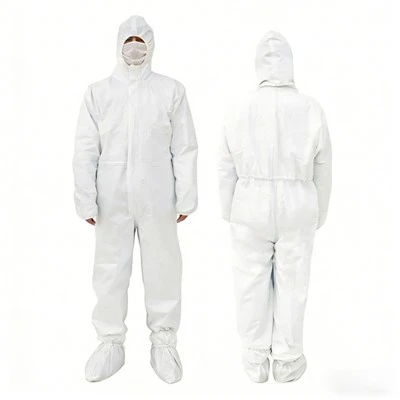
The short answer? It depends. But the full story is way more nuanced than a simple yes or no, and it’s shaped by everything from the material of the coverall, the industry it’s designed for, and even the cost constraints small businesses face when ordering in bulk. Let’s break this down, because skipping these details is how you end up with coveralls that ride up your arms mid-spray, leave exposed wrists, or force you to stop every 10 minutes adjusting your gear—costing you time, money, and even putting workers at risk.
First, let’s define what a thumb loop is, for anyone who’s not deep in the safety apparel weeds. A thumb loop is a small, fabric (or sometimes elastic) loop stitched to the inside of the sleeve cuff at the wrist. You slip your thumb through it when you put on the coverall, and it tucks the cuff securely around your wrist, keeping the sleeve from riding up when you lift your arms, bend, or reach. For industries where exposed wrists mean exposure to chemicals, paint overspray, or biological contaminants, this isn’t a “nice to have”—it’s part of the personal protective equipment (PPE) compliance.
Now, not all disposable coveralls are made equal. I see this confusion all the time when a customer orders a basic coverall for a one-time job and then comes back a month later frustrated because the new set doesn’t have the thumb loops they thought they needed. The mistake is assuming every disposable coverall is designed the same way. Let’s go through the main categories of disposable coveralls we supply, and whether they include thumb loops:
-
Basic, Entry-Level Disposable Coveralls
These are the ones most people reach for when they need something cheap, single-use, and designed for light, non-hazardous tasks. Think: a weekend homeowner painting a deck, a food processing worker handling bulk produce and needing to keep clothes clean, or a construction crew prepping a site for a quick cleanup. These coveralls are usually made from lightweight, non-woven polypropylene, with loose, simple cuffs that just stretch around the wrist—no extra features, no elastic, no thumb loops. Why? Because adding a thumb loop adds a few cents per unit, and for entry-level buyers who’re ordering 1,000+ units at a time, those pennies add up fast. I’ve had customers argue with me that basic coveralls should have thumb loops, but the reality is that for light, occasional use, the extra cost just isn’t justified. If you’re only going to wear that coverall once and throw it away, paying more for a feature you’ll barely notice makes no sense. -
Industrial-Grade Disposable Coveralls for Medium-Risk Tasks
This is the sweet spot for most of our commercial and industrial clients. These coveralls are still disposable, but they’re made with heavier, more durable non-woven fabrics—like SMS (spunbond-meltblown-spunbond) or microporous film laminated non-wovens. They’re designed for tasks like spray painting, general chemical handling, or mild asbestos abatement (not full remediation, but the light stuff). Now, here’s where the thumb loop question gets interesting. Many of these medium-risk coveralls do have thumb loops—but not all. It’s usually a choice baked into the design based on the expected movement of the wearer. For example, coveralls made specifically for spray painting almost always have thumb loops. When you’re holding a paint gun for 8 hours straight, your arms are moving up and down, side to side, and a sleeve that rides up exposes your wrist to overspray and makes it hard to grip the gun. A thumb loop tucks that cuff right in, so you don’t have to adjust it. On the flip side, some medium-risk coveralls designed for tasks like material handling or equipment assembly skip the thumb loop to keep costs a little lower, since those workers aren’t doing constant overhead or extended arm movements. -
High-Grade, Medical or Hazardous Duty Disposable Coveralls
This is the category that’s gotten a lot of attention in the last few years, thanks to the pandemic and more strict OSHA (Occupational Safety and Health Administration) guidelines for hazardous material handling. These coveralls are the ones used by first responders, lab techs handling infectious agents, or workers involved in full-scale hazardous waste remediation. They’re made with advanced, protective materials like Tyvek, Barrier-coated non-wovens, or even laminated films that block liquids, chemicals, and particles. And nearly all of them do have thumb loops—often double, sometimes reinforced. Why? Compliance is a huge factor here. OSHA and the CDC’s guidelines for PPE require that hazardous duty coveralls cover the entire arm to just above the hand, leaving no gaps where contaminants can get in. A thumb loop is the easiest, most reliable way to seal the cuff without adding bulky elastic that can irritate skin or break after a single use. I remember during the early days of COVID, hospitals were scrambling to get coveralls that met these guidelines, and thumb loops were non-negotiable. We had a client who ran a chain of urgent care clinics call us at 2 a.m. because their previous supplier had sent coveralls without thumb loops that didn’t pass inspection—if those were used, their workers could have been exposed to COVID, which would have shut down half their locations. That’s how important that tiny loop is, even if it’s easy to overlook when you’re ordering.
Wait, but let’s talk about the exceptions, because there are always outliers. Some high-grade disposable coveralls, specifically those designed for use with gloves, skip thumb loops. If a worker is going to be wearing thick, chemical-resistant gloves over their coverall, a thumb loop can make it hard to pull the glove on over the sleeve, or it can bunch up and create a gap between the glove and the coverall cuff. In those cases, the cuff is usually elasticized, which stretches to fit over gloves and still stays in place. It’s not that thumb loops are bad—they’re just not the right choice for every scenario.
Now, I know what some of you are thinking: “If thumb loops are so important, why don’t all coveralls have them?” The answer is simple: not every use case needs them, and not every customer wants to pay for them. As a supplier, my job isn’t to push coveralls with thumb loops on someone who only needs them for a one-time paint job. It’s to make sure they get the right coverall for their specific task, even if that means explaining that the cheaper option doesn’t have a feature they might not need, or that the slightly more expensive option with thumb loops is worth the extra cost for a job that requires it.
I’ll share a story that illustrates this perfectly. A few years ago, a small painting contractor named Mike came to us with a complaint. He’d ordered 500 disposable coveralls for his crew, and they were all missing thumb loops. He was furious, said his guys refused to wear them, and that we’d messed up his order. I pulled up his order, and I saw he’d ordered entry-level polypropylene coveralls—$0.80 each, no extra features. When I called him, I didn’t argue. I just asked him what kind of jobs he was using them for. He said mostly interior residential painting, touch-ups, and small commercial jobs. I told him that entry-level coveralls don’t have thumb loops because they’re designed for light work where the sleeve is long enough to stay put, and that adding thumb loops would have cost him an extra $0.25 per unit—$125 total for 500, money he probably wouldn’t have wanted to spend on a job he was already underbid on. I offered to send him a sample of our medium-grade coveralls with thumb loops, so he could test them on his next big exterior paint job, and explained that for his interior work, the entry-level ones were fine. He ended up taking a sample pack, and a month later he called back to order 1,000 medium-grade coveralls for a 6-unit apartment building he was painting. He told me his guys loved the thumb loops—no more adjusting sleeves mid-job, no more wrists covered in paint. That’s the key here: matching the product to the job.
Another common point of confusion: reusable vs. disposable coveralls. Wait, no—disposable coveralls, by definition, are designed to be worn once and discarded, so they don’t have the durable features of reusable coveralls. Some reusable coveralls have thumb loops too, but that’s a different product. I always make sure to clarify that with customers, because they often mix the two up.
Now, if you’re in the market for disposable coveralls, how do you tell if they have thumb loops without guessing? The best way is to check the product description, obviously, but if you’re ordering from a supplier like me, ask. Any reputable disposable coverall supplier will be able to tell you exactly which products have thumb loops, what material they’re made of, and what tasks they’re designed for. If a supplier can’t answer that question, that’s a red flag. I’ve had customers come to me after ordering from a big-box store or a random online supplier who sent them coveralls that were mislabeled—said they had thumb loops, but they didn’t, or said they were industrial-grade but were actually lightweight polypropylene that wouldn’t block even light overspray.
Let’s also talk about the practical downsides of thumb loops, just to be fair. For some people, especially those with smaller hands or wrists, thumb loops can be uncomfortable. If you’re wearing a coverall for 8 hours, a tight thumb loop can rub a blister, or if it’s made of a rough material, it can irritate the skin. That’s why some medium-risk coveralls have elastic cuffs instead of thumb loops—they give a little more give. For people with larger hands, thumb loops can be too small to slip over their thumb, which defeats the whole purpose. It’s a design trade-off, not a one-size-fits-all.
So, to circle back to the original question: Do disposable coveralls have thumb loops? The answer is: if you need them for a task where arm movement and contamination control are important, yes—there are plenty of options. If you just need something to keep your work clothes clean for a casual, light task, you can save money on a basic coverall without them. The key is knowing what you need, and working with a supplier who will give you honest, specific advice instead of pushing a one-size-fits-all product.
At the end of the day, disposable coveralls are a small part of keeping workers safe, efficient, and comfortable on the job. That tiny thumb loop might seem like a trivial detail, but for a spray painter working 12-hour days, a lab tech handling infectious samples, or a first responder cleaning up a hazardous spill, it’s a small feature that makes a big difference. It keeps contaminants out, it keeps workers from having to stop every few minutes to adjust their gear, and it helps companies stay compliant with safety regulations.
If you’re ordering disposable coveralls and you’re not sure whether you need thumb loops for your specific task, don’t guess. Reach out to a trusted supplier, share what kind of work you’re doing, how many workers you need to outfit, and any regulatory requirements you have. We’re here to help—no sales pitch, no hidden fees, just honest advice to make sure you get the right product for your job.
Men’s Disposable Cotton Underwear References
- Occupational Safety and Health Administration (OSHA). Personal Protective Equipment (PPE) Guidelines for Hazardous Material Handling. U.S. Department of Labor, 2022.
- Centers for Disease Control and Prevention (CDC). Guidelines for the Use of Personal Protective Equipment During the COVID-19 Pandemic. CDC, 2021.
- ASTM International. Standard Specification for Disposable Non-Woven Protective Coveralls for Industrial and Medical Use. ASTM D737-18, 2018.
Dongguan Senhui Garment Co., Ltd.
As one of the most experienced disposable coveralls manufacturers in China, we also support customized service. We warmly welcome you to wholesale bulk high quality disposable coveralls in stock here from our factory. If you have any enquiry about quotation and free sample, please feel free to email us.
Address: Room 103, Building 4, No.12, Mingzhu East Road, Shijie Town, Dongguan City, Guangdong Province, P.R. China
E-mail: dgsenhui@outlook.com
WebSite: https://www.sjsenhui.com/
