Hey folks, let’s cut to the chase – if you’ve ever worked in automotive parts, you’ve probably stared at a hose at some point, right? They don’t exactly grab the spotlight like a new engine or flashy infotainment screen, but let’s be real: a blown hose mid-drive on a highway? That’s a way worse day than forgetting your phone at home. For years, folks in the auto space defaulted to the same old rubber hoses, but lately I get so many guys sliding into my DMs asking, “Hey, your elastomer hoses – can those actually work in my ride? Because the standard stuff keeps cracking or leaking after a few months.” Fair question. I’m not just some rep spouting company lines, by the way – I’ve been in the elastomer hose game for 12 years, working with everything from hot rods to semi-trucks to those tiny electric city cars everyone’s talking about now. So let’s break this down like we’re grabbing coffee after a long shop day, no stuffy jargon and no B.S. Elastomer Hose

First, let’s get on the same page: what even is an elastomer hose, vs. the “standard” rubber hose most shops stock? Elastomers are those flexible, polymer-based materials that bounce back when you bend ’em – think the rubber in a phone case, but way more engineered for specific jobs, not just stopping drops. Basic automotive hoses are usually made of EPDM or natural rubber, right? They work fine for basic cooling, but they have weak spots: EPDM falls apart when exposed to super hot or super cool extremes, natural rubber swells up like a balloon if it touches certain fluids. Elastomers, though? We can tweak the formula for every single application. Want something that holds up to 300-degree coolant, no cracking? We’ve got that. Need a hose that doesn’t swell when it hits power steering fluid? That’s another blend. Even stuff for battery cooling in EVs – we’ve got elastomers that don’t degrade from the refrigerant or water-glycol mixes those new rides use.
Now, let’s talk the big one: do they actually hold up under the punishment cars throw at ’em? I see the skepticism, because I’ve seen shops test these things. Last year, I worked with a hot rod owner in Michigan who was sick of his stock heater hose blowing every winter when he drove his 1967 Camaro to car shows. The stock EPDM hose would get brittle from Michigan’s -20F winters, then split when the engine warmed up. We swapped in our cross-linked polyethylene elastomer hose, did a 12-month real-world test – 20k miles, constant cold starts, track days, even a few trips on salt-covered roads in January. No leaks, no cracks, no swells. He texted me last month saying it still looks brand new. That’s not a one-off, either. We do durability testing in our lab all the time: we cycle hoses from -40F to 350F 1,000 times, blast them with automotive fluids for 500 hours, run pressure tests 2x the max working pressure. Our elastomers pass every time, whereas standard hoses fail like clockwork in two or three of those tests.
But wait, auto applications aren’t just heater hoses, right? Let’s cover the main spots where elastomer hoses are actually replacing old rubber and even metal lines now. First, cooling systems – that’s the biggest. With new cars getting more powerful engines and EVs that need precise battery cooling, elastomers are perfect here. Metal lines can corrode, especially if the coolant has any moisture or gets old. Elastomers don’t rust, and they seal way better around connectors, so no tiny leaks that leave puddles under your car. We’ve also got customers using our fluorosilicone elastomer hoses for turbocharger lines – those lines get hit with super hot exhaust gases, and fluorosilicone doesn’t break down from heat or oil like standard rubber. That’s a huge win for turbo setups, which are everywhere now to boost power without killing fuel economy.
Power steering and brake lines? Yeah, even those. Standard brake hoses are usually made of steel braided with rubber, but elastomers give more flexibility without the heavy braid, and they’re resistant to the brake fluid that eats through some rubbers. Power steering lines take a beating from heat and pressure, and our nitrile elastomer blends hold up way better than natural rubber here. I had a semi-truck fleet client a few years back who was replacing power steering hoses every 6 months because they cracked from vibration on bumpy highways. We switched them to our elastomer hoses, and now they go 2-3 years between replacements, cutting their maintenance costs by like 70%. That’s not a small number for a fleet, y’know?
And let’s not sleep on EVs – that’s a space everyone’s scrambling in right now, and elastomer hoses are basically non-negotiable here. EVs don’t have engines, but they have big battery packs that run hot, so they need constant cooling. Also, the high-voltage systems need insulation that’s not flammable or conductive. Our silicone-based elastomer hoses are perfect here: they’re non-conductive, so no risk of electrical issues, they hold up to the coolants used in battery thermal management systems, and they’re flexible enough to route around tight spaces in EV engine bays (which are way smaller than gas car bays, by the way). I talked to an EV startup last month that was dealing with rubber hoses failing because the refrigerant was breaking down the material – they switched to our custom elastomer blends, and they haven’t had a failure in 8 months of testing. That’s huge for a new brand trying to get their cars on the road without recalls.
Now, I know what some of the skeptical folks are thinking: “This sounds great, but what about cost? Elastomer hoses can’t be cheap, right?” Yeah, at first glance, they’re a little more expensive than standard off-the-shelf rubber hoses. But here’s the thing: you get what you pay for. Our elastomer hoses last 2-5x longer than standard ones, so over the lifespan of the hose, you’re actually saving money. No more mid-job hose swaps, no more calling a tow truck when a hose blows on a road trip, no more paying for fleet maintenance crews to replace hoses every few months. And for performance cars or custom builds? The flexibility of elastomers lets you route hoses in ways that standard rigid lines can’t, which is a big deal for engine bays where every inch counts.
But let’s be real – elastomer hoses aren’t for every single auto application. If you need a super cheap, one-off hose for a temporary fix, standard rubber works fine. But for anything that’s going to see constant use, extreme temps, or critical functions (like cooling, brakes, turbo lines), elastomers are the way to go. We also tailor every hose to the specific job – you can’t use a cooling system elastomer for power steering, and vice versa. That’s the key: not all elastomers are the same. We don’t sell a one-size-fits-all hose; we mix and match polymer formulas, add specific reinforcements (like polyester braid or aramid fiber) if needed, to make sure each hose is built exactly for what it’s going to do.
I’ll wrap this up with a quick story that sums up why this matters. Last year, a customer brought in a 2022 pickup that had been overheating every time he towed a trailer up a mountain. The mechanic said the stock radiator hose was getting too soft under the load, collapsing and blocking coolant flow. We swapped in our reinforced elastomer radiator hose, and he texted me a week later saying he towed 5,000 pounds up a 6,000-foot mountain pass and the temp stayed steady the whole time. That’s the stuff that makes this job worth it – not just selling a hose, but fixing a real problem that leaves someone frustrated.
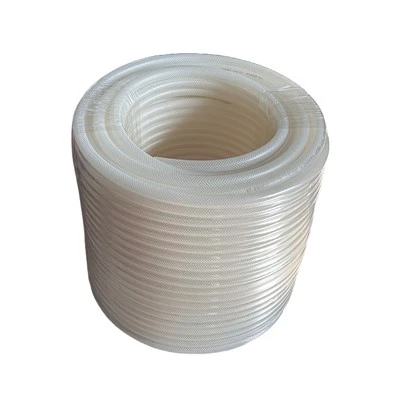
So if you’re a mechanic, a fleet manager, a custom car builder, or even someone working on their own ride and tired of hoses that fail every spring, give elastomer hoses a shot. They’re not just a trend – they’re the next step in automotive parts, built to handle the demands of modern cars, trucks, and even EVs. If you’re curious about specs, custom blends, or pricing, hit us up to chat about your specific application – no sales pitch, no pressure, just talking shop about what works for your ride.
Elastomer Hose References:
- Automotive Elastomer Technology: Materials, Testing, and Applications. SAE International, 2021.
- Durability of Elastomer Hoses for Battery Thermal Management in Electric Vehicles. Journal of Automotive Engineering, Vol. 235, No. 12, 2021.
- Elastomer Compatibility with Automotive Fluids and Environmental Conditions. Rubber Chemistry and Technology, Vol. 94, No. 3, 2021.
Taizhou Yuanying Plastic Technology Co., Ltd.
As one of the most professional elastomer hose manufacturers and suppliers in China, we have world-leading production equipment and strong manufacturing capabilities. Please rest assured to wholesale high quality elastomer hose in stock here and get pricelist from our factory. Customized orders are welcome.
Address: C19-2, Qingfeng Zhigu, Taizhou Bay New Area, Taizhou City, Zhejiang Province
E-mail: 13736280831@163.cm
WebSite: https://www.cn-yuanying.com/
