Hey there, if you’re a procurement person, engineer, or supply chain lead scrolling around trying to wrap your head around what actually goes into the cost of those “other auto stamped welded components” you keep sourcing for your line—stick with me. I’ve been on the ground making these exact parts for over a decade, not some corporate suit spouting generic numbers. I see the queries: “Why is that bracket $0.80 from one shop and $1.50 from another? Is someone marking up garbage?” Let’s break this down like I’m sitting across from you at a coffee shop, no jargon, no hidden fine print. Other Auto Stamped Welded Components
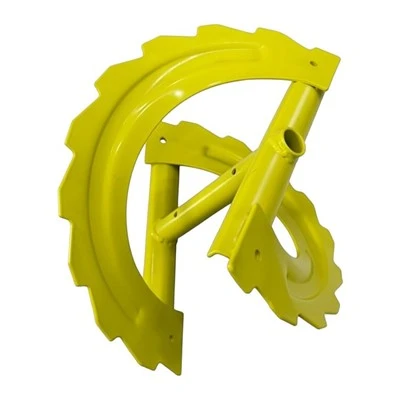
First, let’s clarify what I’m talking about here—these aren’t the flashy stuff like engine blocks or door hinges that everyone points to. They’re the random, unglamorous parts that hold cars together: the tiny welded brackets that secure your car’s wiring harness along the chassis, the stamped reinforcement plates that bolt the fuel tank to the frame, the small sub-assemblies that connect the rear bumper beam to the frame rail. “Other” because they don’t fit into the big, pre-defined component categories auto OEMs list in their master lists. These are the parts that, if you skip the cost checks, add up way faster than you think—we’ve all seen a $10k component budget blow to $15k because 20 small brackets each jack up a quarter.
Let’s start with the upfront metal cost, because that’s the base. Most of these parts are made from mild steel, right? But not all mild steel is the same. Wait, you can pay $0.65 per pound for basic commercial-grade steel that’ll rust if you look at it wrong, or $0.90 per pound for formable, corrosion-resistant steel that meets OEM’s strict adhesion specs for welds and paint. Now, scaling matters too. If you’re ordering 5,000 parts a month, a supplier can get bulk steel at a better rate. If you’re ordering 50,000, that per-pound rate drops even more. Last year, a client of mine switched from ordering 2,000 of a floor pan bracket a month to 20,000, and their raw steel cost per unit dropped 18% right off the bat—no markup, just bulk leverage. Also, material waste from stamping: bad stamping = scrap, which is a hidden cost. If a shop runs a cheap, old stamping die and 8% of parts come out cracked or misshapen, that 8% scrap gets added to the unit cost. A newer die that cuts scrap to 2% might seem like it costs more upfront, but per unit it’s cheaper. I always joke, “You don’t save money buying a die that eats half your parts.”
Next, the stamp and weld labor—this is where most people get blindsided. Stamping lines aren’t one-size-fits-all. A simple L-bracket that only needs a single stamp and a spot weld? That’s fast. But if your part has 3 bends, 2 different stamp operations, and a MIG or TIG weld that needs to be precise enough to pass vibration tests during highway drives? That adds time. Welding skill is a big one too—basic spot welds are easy, but if it’s a high-tension component that needs a continuous weld along a curved edge, you need a welder who knows how to avoid porosity or cracks. Cheap, inexperienced welders might cut corners, but then you get 2% failure rates in the field, which leads to recall costs no one wants to talk about. A lot of the lowball quotes you see come from cutting labor hours here. For example, a quote I saw last month for a small reinforcement bracket: one shop said $0.72 per unit, another said $1.15. When I asked why, the lowball shop was only counting 30 seconds of labor per part, while we needed 50 seconds to get the welds consistent enough to pass ISO 3834 (that’s the standard for fusion welding in automotive, fyi). That 20 extra seconds per part doesn’t sound like much, but over 50,000 units, that’s 278 extra man-hours—no shop can do quality work that fast without cutting corners.
Then there’s tooling and setup costs, which are often buried in quotes or marked as a one-time fee that’s split into the unit price. Stamping dies aren’t cheap. A simple steel die for a small bracket might be $2,500. A more complex die with multiple stations, right angles, and curved cuts? That’s $15,000, easy. If a supplier is quoting you a part with a really low per-unit cost, they might be using a cheap die that only runs for 50,000 parts before it cracks, or they’re not factoring in future die maintenance. I once had a client come to me after 6 months of using another supplier’s brackets—each die change cost them $8,000, and each time the new die produced 10% more scrap. That “cheap” $0.80 part ended up costing them $0.95 per unit once they factored in maintenance, and that’s before the field failures started. Also, if you need custom tooling for a part that’s not a standard auto component, that cost has to be spread across your order. If you order 100 parts of a custom sub-assembly, that $15k die adds $150 per unit. Order 10,000, and that’s $1.50 per unit—way more manageable.
Now, compliance and quality—this is the secret cost most procurement teams forget about. Automotive parts don’t fly off the line; they need to meet IATF 16949 certification, ISO weld quality standards, and specific material traceability rules. Smaller suppliers or those cutting corners might skip audits, or use steel from a mill that doesn’t track material origins. If you get audited by an OEM, that gap in traceability can get your line suspended. I’ve seen that happen: a tier 2 supplier got audited, and 12 of their parts didn’t have full traceability, so they lost a $2M annual contract. That’s a huge hidden cost, and it gets passed down if you’re buying parts from them. Also, testing: every batch of parts needs to be tested for weld strength, material thickness, corrosion resistance. A basic tensile test for a weld is $50 per batch, but if you skip that, you might get a batch that fails because the welder set the current wrong. Last year, a client of mine had a truck line down because a weld on their rear frame bracket failed—turns out the “cheap” supplier didn’t do any testing. The downtime cost them $200,000 in lost production, way more than the difference in part cost.
Wait, let’s talk about volume and lead time too, because that ties directly to cost. If you need parts in 2 weeks, not the standard 4, suppliers have to push their lines, pay overtime, and prioritize your order over others. That adds 10-15% to the unit cost. If you can plan ahead, give 8 weeks lead time, the shop can schedule your run during regular hours, no overtime premium. I had a client recently that changed their lead time from 2 weeks to 6 weeks, and their unit cost dropped 12%—no other changes, just timing. Also, minimum order quantities (MOQs). A lot of small suppliers will accept a MOQ of 1,000 parts, but if you go over 5,000, they can get better bulk rates on steel and labor. We always work with clients to adjust MOQs so they can save, not force them to stock 100k parts they don’t need.
Another thing: hidden add-on fees. Some suppliers will quote you a low base price, then hit you with extra charges for shipping, packaging, or rework. For example, I’ve seen suppliers charge $0.25 per part for “special packaging” when we use standard automotive-grade packaging that meets OEM specs for half that. Or they might charge a setup fee on top of the unit price, which isn’t disclosed in the initial quote. We don’t do that—all our costs are transparent. No hidden fees, no surprise charges. We list every cost: steel, labor, tooling, quality checks, shipping, so you know exactly what you’re paying for.
Let’s use a real example to make this concrete. Last quarter, a client came to us needing 20,000 of a small wiring harness bracket for an electric SUV project. The quote we gave them was $1.12 per unit. They had a quote from another shop for $0.78 per unit. Let’s break down why: the other shop was using commercial-grade steel (cheaper material), only running a single stamp and 2 spot welds without tensile testing, using a 5-year-old die that had a 7% scrap rate, and skipping ISO certification. Our quote: $0.90 for steel, $0.15 for labor, $0.05 for tooling spread, $0.02 for quality testing—total $1.12. But here’s the catch: their quote included a 3% risk of field failure, so over 20,000 parts, that’s $4,680 in potential repairs or recalls. Our quote included a 0.1% failure rate, so $220 in risk. By the end of the year, the client switched all their brackets to us—even though our per-unit price was higher, their total cost for that bracket line was 12% lower, plus they didn’t have to deal with the audit or downtime issues from the cheaper supplier.
Now, I know what you’re thinking: “But I’m on a tight budget, can I get a cheaper price?” Sure, but you have to ask the right questions. Don’t just look at the per-unit price. Ask: What grade of steel are you using? What’s your scrap rate? Do you have IATF 16949 certification? What’s the weld quality standard you follow? How do you test for defects? What’s your MOQ, and can I adjust it to get better rates? These questions will tell you way more about the actual cost than just the number on the page.
As a supplier who’s been in this game for years, I’ll be honest: there’s no magic number for the cost of other auto stamped welded components. It depends on so many factors: material grade, complexity, volume, lead time, quality requirements. But what I can tell you is that the cheapest price almost never is the best total cost. You end up paying for scrap, rework, failures, audit issues, and downtime. Our job isn’t just to sell you a part—it’s to give you a part that meets your specs, keeps your line running, and doesn’t cost you more in the long run.

If you’re looking to figure out the real cost of your specific parts, or if you’ve been comparing quotes and want to dive into the details, hit us up. We’ll send over a transparent quote, break down every cost, and even walk you through how we make the parts so you know exactly what you’re paying for. No sales pitches, no hidden fees, just honest answers to your questions.
Metal Mesh Cover Reference: Automotive Stamping and Welding: Processes, Materials, and Cost Optimization. Society of Automotive Engineers (SAE) International, 2022.
Suzhou Yehe Precision Stamping Co., Ltd.
With abundant experience, we are one of the most reliable auto stamped welded components manufacturers and suppliers in China. We warmly welcome you to buy customized auto stamped welded components at competitive price from our factory. If you have any enquiry about quotation, please feel free to email us.
Address: No.5, Beifang Road, Changshu City, Suzhou, Jiangsu Province, China.
E-mail: szyh06@yehejingmi.com
WebSite: https://www.yehe-precision.com/
