If you’ve ever walked through a manufacturing plant and watched a line of robots, conveyors, and integrated control systems work in perfect sync, you’ve seen a fully automatic production line in action. As someone who’s spent the last 18 years designing, installing, and maintaining these systems for small and mid-sized manufacturers, I’ve seen first-hand how a fully automatic line doesn’t just replace manual labor—it transforms every part of a production process. Too often, business owners hear “fully automatic” and immediately think it’s only for huge corporations with massive budgets. That’s a myth, and it’s one I’m eager to dispel. Over the years, I’ve worked with companies making everything from food packaging to automotive parts, and every single one has walked away with tangible, long-term benefits that far outweigh the initial investment. Let’s break down what those benefits really are, and why making the switch might be the best decision your team has ever made. Fully Automatic Production Line

First and foremost, a fully automatic production line delivers consistent quality that manual processes can never match. Think about it: a human worker might make a minor adjustment to a machine one day, rush a little to meet a deadline another, or simply get tired after 8 hours of repetitive motion. Even the most skilled, dedicated employee can’t maintain 100% precision day in and day out. Automatic systems? They operate on programmed parameters—temperature, pressure, speed, measurement tolerance—every single second, shift, and month. For example, a client of mine that manufactures pharmaceutical blister packs used to have a 3.2% defect rate, mostly from human error in sealing and aligning pills. After we installed their automatic line, that defect rate dropped to 0.18% in the first six months. That’s not just a small improvement; that cuts scrap costs by thousands of dollars a month, and more importantly, eliminates the risk of defective products reaching customers. In industries like food and medical devices, where even a tiny defect can lead to recalls, regulatory fines, or harm to consumers, that level of consistency isn’t just a benefit—it’s a requirement to stay in business. It also builds brand trust. When customers know your product is the exact same every time they buy it, they’re far more likely to become repeat buyers. I’ve seen small brands grow their market share by 15% in a year just because their product quality became reliable enough to compete with larger, established companies.
Next up, increased production capacity without needing to add more labor. A manual production line might run 8-10 hours a day, five days a week, because human workers can’t safely operate 12-hour shifts. A fully automatic line? It can run 24 hours a day, seven days a week, with only brief stops for maintenance and occasional quality checks. That means you can meet higher demand without hiring and training additional staff, which saves on recruitment costs, payroll taxes, and employee benefits. Let’s crunch the numbers for a mid-sized consumer goods manufacturer I work with: before their automatic line, they produced 12,000 units of their product per 8-hour shift, with a maximum of three shifts per week. After installation, their line produces 18,000 units per shift, and they added a night shift run entirely by the automatic system, no extra workers needed. That’s a 225% increase in weekly output—without hiring a single new line worker. What’s more, labor is often one of the most volatile costs for manufacturers. In many regions, wage increases, labor shortages, and turnover are making it harder and harder to find reliable line workers. I’ve had three clients in the last two years tell me they almost turned down a major order because they couldn’t staff their line fast enough. A fully automatic line eliminates that problem. It also frees up your existing staff to focus on higher-value tasks—things like monitoring the line, troubleshooting issues, improving processes, or working with customers. Instead of hiring people to do repetitive, physically demanding work, you can upskill your current team into roles that add more to your bottom line. That leads to higher employee satisfaction too, because no one wants to spend their days repeating the same motion 10,000 times a day. I’ve yet to meet a line worker who doesn’t prefer running an automatic line over manually assembling products.
Another often-overlooked benefit is improved workplace safety. Manual production lines are full of hazards: heavy lifting, repetitive motion injuries, exposure to chemicals or high temperatures, and close calls with moving machinery. According to data from manufacturing safety organizations, repetitive motion injuries (like carpal tunnel syndrome) account for over 30% of all workplace injuries in manual assembly lines. A fully automatic line removes workers from those high-risk areas. Robots handle heavy materials, repetitive assembly, and tasks that involve heat or hazardous substances. The line’s control systems have built-in safety features—like emergency stop sensors, barrier guards, and motion detection—that prevent accidents that would be impossible to avoid with manual work. One of my welding clients had 7 reported injuries in their manual line in 2021, including two that required surgery for burns from welding sparks. After installing their automatic welding line, they had zero recordable safety incidents in 2022 and 2023. That’s not just a win for your employees—it’s a win for your business. Workers’ compensation premiums drop, you avoid OSHA fines, and you don’t have to deal with the downtime and disruption of a workplace injury. I’ve had clients tell me that the safety improvement alone justified the cost of the line, even before they counted the production and quality benefits.
Cost savings are central to any manufacturing decision, and a fully automatic line delivers long-term savings in multiple areas. We already talked about lower scrap costs, reduced labor expenses, and lower workers’ comp, but there’s more. Automatic systems are often more energy-efficient than manual processes. They’re programmed to use exactly the right amount of power, material, and resources—no wasting electricity on idle machines, no overusing raw material because a worker miscalculates a cut, no extra water or chemicals used in processing. For a food processing client I worked with, their automatic mixing and packaging line cut water usage by 28% and electricity usage by 19% compared to their old manual line. That adds up to hundreds of dollars a month in utility costs. There’s also reduced waste of raw materials. A manual cutter might leave 5% of a material unused per run, but an automatic cutting system with precise measurement can reduce that to less than 1%. For a company working with expensive materials like metal, plastic, or specialty ingredients, that’s a huge saving. I’ve calculated that for a company producing automotive parts with a material cost of $1.20 per unit, a 1% reduction in waste adds up to $12,000 a year for every 10,000 units produced. Over the 10-year lifespan of a typical automatic production line, that’s $120,000 in pure savings. Of course, there’s the initial investment, but it’s important to look at the return on investment (ROI), not just the upfront cost. For most small to mid-sized manufacturers, the ROI on a fully automatic line is between 18 and 36 months. That means within 3 years, you’re not just breaking even—you’re starting to see profit from the line. And as the line ages, maintenance costs are relatively low, especially if you invest in regular service (which I always recommend) to prevent breakdowns.
Flexibility might seem counterintuitive for a fully automatic line—after all, a robot is programmed for a specific task, right? But modern automatic production lines are designed to be flexible, even for small production runs. Unlike old fixed automation systems that could only make one product, today’s lines use modular components, easy-to-update software, and quick-change tools that let you switch between products in minutes instead of hours or days. For example, a packaging line can be programmed to switch from bottling soda to bottling water with just a few adjustments to the control panel, no reconfiguring the entire line. That’s a game-changer for manufacturers that make multiple products, or that have to adapt to changing customer demands. I worked with a client that makes both ceramic mugs and plates; before their automatic line, switching between products required 2 hours of setup per run, and they often turned down small custom orders because the setup time wasn’t worth it. Now, they can switch in 15 minutes, and those custom orders add 10% to their monthly revenue. Flexibility also means you can adapt to market changes much faster. If a competitor launches a new product, you can adjust your line to make a similar one without shutting down production for weeks. That agility is critical in today’s fast-paced consumer market, where trends change overnight.
Data and visibility are another key benefit that many manufacturers miss. A fully automatic production line is integrated with digital systems that track every part of the process—production speed, defect rates, material usage, downtime, and more. That data isn’t just numbers on a screen; it’s actionable insights that let you improve your process even more. For example, if the data shows that a specific part of the line is stopping every Tuesday at 2 PM, you can schedule maintenance for that time instead of losing production time unexpectedly. If defect rates go up when the line runs at a certain speed, you can adjust that speed to balance output and quality. I work with a manufacturing analytics tool that partners with our automatic lines, and one client used that data to identify that they were overproducing a slow-selling item, so they adjusted their production schedule, reducing inventory holding costs by $8,000 a quarter. That kind of visibility is impossible to get with manual processes, where data is collected at the end of the day, if at all. It also helps with compliance, especially in regulated industries. Automatic systems log every step of production, so you can easily prove to regulatory bodies that you’re meeting standards for food safety, medical device manufacturing, or environmental regulations. That reduces the time and cost of audits, and eliminates the risk of non-compliance fines.
I know what you’re thinking: “This sounds great, but my business is too small, or too complex, to switch to a fully automatic line.” Let me tell you—we design lines for companies with as few as 10 employees, all the way up to large corporations. We don’t sell a one-size-fits-all system; we work with you to understand your specific production needs, your product, your budget, and your growth goals, and build a line that fits exactly what you need, not what someone tells you you should have. I’ve had clients tell me, “We thought we could never afford this,” only to show them that the savings from labor, scrap, and increased production mean the line pays for itself faster than they expected. The key is to not look at a fully automatic production line as a cost, but as an investment in the future of your business. In a market where competitors are already using automatic lines to make better products faster and cheaper, falling behind isn’t an option.
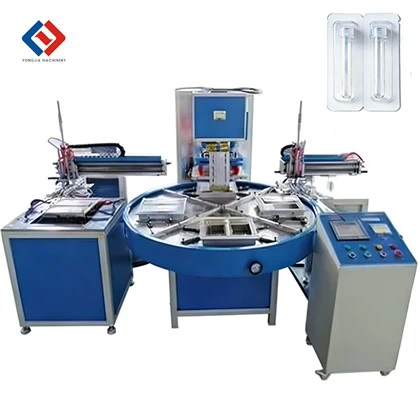
If you’re ready to stop dealing with inconsistent quality, labor shortages, high scrap costs, and missed production goals, let’s talk. We’ve helped dozens of manufacturers across industries streamline their operations and grow their business with custom fully automatic production lines tailored to their unique needs. There’s no obligation to chat through your current challenges, ask questions about how a line would work for you, and get a clear breakdown of potential costs and savings. Don’t wait until you lose a customer, turn down an order, or deal with a workplace injury—take the step that will make your business more efficient, profitable, and safe for years to come.
Blister Packaging Machine References
- Occupational Safety and Health Administration (OSHA). (2022). Musculoskeletal Disorders (MSDs) in the Workplace. U.S. Department of Labor.
- Manufacturing Extension Partnership (MEP). (2023). The ROI of Automation for Small and Medium Manufacturers. National Institute of Standards and Technology.
- Food and Drug Administration (FDA). (2021). Quality Systems Regulation for Pharmaceutical Goods. U.S. Department of Health and Human Services.
- International Organization for Standardization (ISO). (2022). ISO 9001:2015 Quality Management Systems Requirements. International Organization for Standardization.
- National Safety Council (NSC). (2023). Workplace Safety Trends in Manufacturing. National Safety Council.
Dongguan Yongjia Machinery Equipment Co., Ltd.
We are one of the most reliable fully automatic production line manufacturers and suppliers in China, specialized in providing high quality customized service. Please feel free to wholesale advanced fully automatic production line at low price from our factory. For quotation, contact us now.
Address: No.240, Chashan South Road, Chashan Town, Dongguan City, Guangdong Province, China
E-mail: info@yjwelding.com
WebSite: https://www.yjhighfrequencymachine.com/
