If you’ve ever been around a vibrating sorter line at a food processing, pharmaceutical, or mineral handling plant, you might’ve glanced at the setup and wondered one thing: does this thing run on air? I get it—so many industrial machines rely on compressed air for power, from pneumatic conveyors to small actuation tools. As a vibrating sorter supplier, I hear this question all the time from new plant managers, maintenance techs, and even young operators just learning the ropes. Today, let’s cut through the confusion and break down exactly what vibrating sorters need to work, when air is (and isn’t) part of the equation, and how that matters for your bottom line. Vibrating Sorters
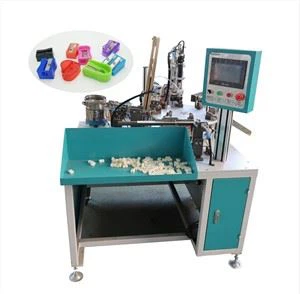
First, let’s start with the basics of what a vibrating sorter actually does, because that context makes the whole air question make way more sense. A vibrating sorter is used to separate materials by size, shape, or density—think sorting flour lumps from fine powder, separating whole fruits from stems, or sizing gravel for construction. The core mechanism here is vibration: when the machine runs, a motor (usually an electric motor) drives unbalanced weights on the shafts, which generate a consistent, controlled vibration. That vibration makes the material travel across the screen deck, with smaller particles falling through openings and larger ones moving along to the next step of the process.
So why would anyone think air is required? Well, a lot of people mix up vibrating sorters with other sorting equipment that does use air. Like air classifiers, which blow air to separate lightweight dust from heavy granules, or pneumatic screens that push air through the mesh to prevent clogging. Those are totally different machines—they’re designed for dry sorting via air flow, not mechanical vibration. That mix-up is where most of the questions come from, and it’s totally understandable, especially if you’re new to industrial processing equipment.
Now, let’s get to the hard numbers and science: most standard vibrating sorters don’t need compressed air or any external air supply to operate. Their entire power source is that electric motor I mentioned earlier. The unbalanced weights, called eccentric masses, are mounted on the motor’s shaft (or sometimes on separate shafts driven by the motor via a belt) and spin at a specific speed, usually between 700 and 1800 RPM. The force from those spinning masses creates the vibrational amplitude and frequency that moves material. For example, if you’re sorting delicate food items like dried berries, you might use a lower amplitude (less force) to avoid damaging the fruit; for heavy minerals like crushed stone, you’d crank up the amplitude to get the material moving fast enough. None of that requires air—just consistent electricity.
But wait, that’s not the whole story. There are some cases where air does play a role with vibrating sorters, and those are important to know because they can save you headaches later. Let’s talk about the most common one: deblinding or screen cleaning. Even with perfectly sized materials, fine particles can get stuck in the screen mesh, which clogs the openings and slows down or stops sorting. If you’re running a vibrating sorter with really fine material—like pharmaceutical powders, or 100-mesh metal powder—sometimes mechanical screen cleaners (like rubber balls or ultrasonic transducers) don’t work as well. That’s where air comes in: low-pressure air jets (usually 5 to 15 PSI, way lower than the 100+ PSI compressed air used for other tools) blast through the mesh to dislodge stuck particles. In that case, the air is just an add-on feature for screen maintenance, not a power source for the sorter itself.
Another case: enclosed vibrating sorters for dusty or hazardous materials. If you’re processing things like grain dust, or flammable chemicals, you might need a sealed machine to prevent material from escaping, and sometimes a small ventilation fan (which uses air) to keep the air inside circulating and prevent dust buildup. But again, that’s ventilation, not powering the vibration. The core motor is still electric.
Now, let’s get practical—what does this mean for your operation? If you’re considering adding a vibrating sorter to your line, skipping the air requirement is a big plus. Compressed air systems are expensive to install, maintain, and run. Think about it: you need compressors, piping, filters, and regular upkeep to keep air dry and clean. If your vibrating sorter doesn’t need that, you’re cutting down on capital costs, energy bills, and maintenance time. For example, a small to mid-sized vibrating sorter for a craft bakery might only draw 1 to 5 horsepower from electricity, versus a compressed air system that could cost $1,000 or more a year just to run.
I’ve seen plenty of plant managers regret buying a sorter that required air because they didn’t account for that extra cost. A few years back, we worked with a small craft spice company that was using an air-powered classifier and switching to a vibrating sorter. They initially asked if they needed to keep their 10-horsepower air compressor running 24/7 for the sorter. When we explained that the standard model didn’t need air, they saved $1,200 a year on their energy bill alone. That’s a big win for a small business with tight margins.
But let’s not act like air is never useful. If you’re dealing with extremely fine, sticky materials, the air screen cleaning feature is a game-changer. We have a customer that processes cocoa powder, which is super fine and tends to clump in humid conditions. Their vibrating sorter without air kept clogging every 20 minutes, so they added a low-pressure air jet system. Now they only need to clean the screen once a shift, instead of every 20 minutes, which has cut their downtime by 80%. So it’s not that air is bad—it’s just that it’s a secondary feature, not a requirement.
Another common myth: some people think vibrating sorters use air to move material, but no—vibration does all the work. The angle of the screen deck (usually 1 to 5 degrees, depending on the material) and the vibration’s direction (either circular, linear, or elliptical) control how the material moves. Circular vibration is good for round items like berries or nuts, linear is better for flat or elongated items like pasta or metal parts, and elliptical is a middle ground for most general sorting. None of that uses air.
So how do you know if a vibrating sorter you’re looking at needs air? It’s pretty simple: check the power requirements listed in the spec sheet. If the main power source is an electric motor (look for a “kW” or “HP” rating, not a “SCFM” or “PSI” rating), it doesn’t need air. If the spec sheet mentions a compressed air connection as part of the core operation, that’s a specialized model for a specific use case. For most applications, standard vibrating sorters are air-free.
Let’s also clear up a common mix-up with other equipment: vibratory feeders, which are often paired with vibrating sorters, also don’t need air. They use the same unbalanced weight motor to feed material into the sorter. Same with vibrating tables, which are used to compact material—no air required there either. The only time air comes into play with this category of equipment is for screen cleaning, ventilation, or specialized air classifiers, which are a different machine.
Now, let’s talk about what this means for your maintenance. Since most vibrating sorters don’t rely on air, your maintenance load is simpler. You just need to check the motor bearings, the unbalanced weights, and the screen mesh on a regular basis (every 3 to 6 months, depending on usage). No air lines to leak, no compressors to service, no dryers to replace. That’s less downtime and less money spent on parts.
But wait, there are a few exceptions. For example, some industrial vibrating sorters designed for underwater sorting (like sorting wet gravel) might use air to create a barrier around the screen deck to keep water out, but those are very specialized models for mining or dredging applications. For 99% of food, pharmaceutical, or general processing uses, air is not required.
I’ve been in this game for over a decade as a vibrating sorter supplier, and the most common mistake I see customers make is assuming that all industrial sorting equipment uses air. That’s why I always make a point to explain the difference between mechanical sorting (vibrating sorters, vibratory feeders) and air-based sorting (air classifiers, pneumatic screens) upfront. Saving a customer from buying unnecessary air equipment or overlooking a critical add-on like air screen cleaning is what makes my job worth it.
If you’re in the market for a vibrating sorter, don’t let the air question stress you out. First, figure out your core needs: what material are you sorting, what size ranges do you need, and how much downtime can you afford? If you’re sorting dry, non-sticky materials like grains, nuts, or crushed stone, a standard air-free vibrating sorter will save you money and hassle. If you’re dealing with fine, sticky, or humid materials, look for a model with optional air screen cleaning—most good suppliers will offer that as an add-on, not a requirement.
I know choosing the right sorting equipment can feel overwhelming, with so many terms and features to sift through. That’s why I’m always here to walk through your specific use case, no sales pressure attached. Whether you’re a small craft business looking to upgrade your sorting line, a mid-sized plant expanding operations, or a large manufacturer needing high-volume sorting, I can help you figure out if air is even something you need to factor in, or if a standard air-free model will check all your boxes.

At the end of the day, the short answer to “do vibrating sorters require air for operation?” is almost always no. Air is a useful add-on for specific scenarios, but not a core part of how most of these machines work. Don’t let outdated myths or mix-ups with other equipment make you spend money on something you don’t need. Reach out when you’re ready to talk through your options, and we can help you find the right vibrating sorter that fits your needs and your budget.
Tapping Machine References
- Industrial Vibrating Sorters: Design and Operation Guidelines, National Materials Handling Association, 2022.
- Screening Equipment Performance: A Comparative Analysis of Mechanical and Air-Assisted Models, Journal of Industrial Processing, Vol. 47, No. 3, 2021.
- Compressed Air Cost Analysis for Industrial Processing Equipment, U.S. Department of Energy, Industrial Technologies Program, 2020.
Ruian Hensen Automatic Machinery Co., Ltd.
Ruian Hensen Automatic Machinery Co., Ltd. is well-known as one of the leading vibrating sorters manufacturers and suppliers in China, featured by quality products and good price. Please feel free to buy customized vibrating sorters made in China here from our factory. Contact us for quotation.
Address: No.199, 3rd Kaifa road, Dongshan industrial area, Ruian, Zhejiang China
E-mail: ymy3562@vip.163.com
WebSite: https://www.hensen-machine.com/
