As a graphite carbon ring seal supplier, I get this question all the time when I’m talking to engineers, plant managers, and maintenance teams: “Do graphite carbon ring seals require water to work?” It’s a fair question because I’ve seen a lot of misinformation out there—some people swear by water cooling, others say it’s unnecessary, and a few even think water is mandatory. Over the 12 years I’ve been in this business, I’ve worked with everything from small-scale pump applications in food processing to heavy-duty compressors in oil and gas, so I’ve seen first-hand how the answer isn’t a simple yes or no. Let me break this down based on what we’ve learned from real-world use, testing, and working directly with clients across industries. Graphite Carbon Ring Seal

First, let’s start with the basics: what is a graphite carbon ring seal, and what does it do? Unlike elastomeric seals or metal gasket seals, graphite carbon ring seals (often called carbon ring seals) use rings of impregnated carbon—usually with materials like resin, metal, or polymers—to create a dynamic seal between a rotating shaft and the stationary housing. Their job is to prevent leakage of process fluids or gasses, while also helping to lubricate and dissipate heat from the friction between the carbon rings and the shaft. Friction is unavoidable here; when the shaft spins, even at low speeds, the contact between the carbon ring and the shaft generates heat. That’s where the confusion about water comes in.
Back in the early days of carbon seal technology, most applications were in steam turbines and large process pumps that operated at high speeds and high temperatures. Back then, water was the go-to cooling and lubrication medium. We’d see engineers pipe in clean, filtered water to circulate around the seal housing, which would carry away the heat from friction and any heat from the process fluid itself. That made sense at the time—water was cheap, readily available, and effective at both cooling and acting as a light lubricant between the carbon and the shaft. But as materials science advanced, we developed impregnated carbon blends that could handle heat without relying on external cooling.
Let’s talk about when water is actually required, because that’s the part most people miss. Water isn’t a requirement for all graphite carbon ring seals—it’s a requirement for specific operating conditions. If your application involves high rotational speeds (over 3,000 RPM), high process temperatures (above 250°C), or high-pressure gasses that create significant heat buildup, water is often necessary. For example, in a natural gas compressor running at 10,000 RPM, the friction from the carbon rings pressing against the shaft can easily push seal temperatures past 300°C, even if the process gas is cool. In that case, water cooling isn’t optional—it’s critical to prevent the carbon rings from wearing out too fast, cracking, or seizing up on the shaft. We had a client in the petrochemical industry a few years back who tried running their new compressor without water cooling, and the carbon rings wore through in 120 hours instead of the expected 18,000. They ended up needing a full seal replacement, which cost them over $50,000 in downtime and parts—so that’s a case where water was non-negotiable.
Another scenario where water might be required is if the process fluid is dry, meaning there’s no inherent lubricity. For example, some industrial dry air compressors or vacuum pumps run on air that’s been stripped of all moisture and oil. In those cases, even at moderate speeds, the friction between the carbon rings and the shaft can be too high without a tiny amount of lubrication. A lot of times, we recommend a small water flush—usually 1-2 gallons per minute of clean, filtered water—to act as a lubricant layer between the carbon and the shaft, preventing excessive wear. We’ve seen clients try to use oil instead, but oil can contaminate the process fluid (a big no-no in food and pharmaceutical applications) or break down at high temperatures. Water is often the best choice here because it’s inert, easy to filter, and works well with carbon.
Now, the flip side: when graphite carbon ring seals do NOT need water, and adding it can actually cause problems. This is the part that surprises a lot of first-time users. If your application is low-speed (under 1,500 RPM), moderate temperature (under 180°C), and the process fluid has inherent lubricity (like water, oil, or even some gasses), you can often run a dry carbon seal with no water at all. Dry carbon seals are a big deal for industries where water isn’t available, or where adding water would contaminate the process. For example, in a food and beverage pump that runs on juice or syrup, adding water cooling would dilute the product, which is a violation of FDA regulations. We supply a lot of dry carbon seals for these applications, and they work perfectly without any water. I have a client in a craft brewery who uses our dry carbon seals on their beer transfer pumps—they’ve been running those seals for 7 years now without a single issue, no water needed. That’s the kind of application where adding water would be a problem, not a solution.
Another issue with unnecessary water cooling is corrosion. If you’re using water in a seal housing that’s made of carbon and metal components, hard water can leave mineral deposits that build up between the carbon rings and the shaft, causing the rings to stick. We had a client in a textile manufacturing plant who used unfiltered tap water for their pump seals, and within 6 months, the mineral buildup had worn grooves into the shaft. Replacing the shaft and seals cost them more than if they’d just used dry seals in the first place. Soft, filtered water works, but even then, if you don’t need it, it’s an extra cost—for piping, filtration systems, and maintenance. Over the lifetime of the seal, the cost of water can add up to more than the seal itself in some small applications.
Let’s also talk about the advancements in carbon technology that have changed this equation. 20 years ago, almost all carbon seals required some form of external cooling, but modern impregnated carbons—like copper-impregnated graphite or polymer-impregnated carbon—have higher thermal conductivity and better wear resistance. Copper-impregnated carbon, for example, can dissipate heat 5 times better than traditional carbon, so it can handle more friction without needing water cooling. We tested a copper-impregnated carbon seal against a traditional resin-impregnated seal in a 2,000 RPM pump last year: the traditional seal needed a water flush to keep temperatures under 150°C, while the copper-impregnated seal ran at 120°C dry, with 30% less wear. That’s the kind of innovation that’s made water optional for so many applications now.
I want to be clear here: I’m not saying water is bad, or that you should never use it. It’s a tool, like any other, and it has its place. The key is to match the seal type to your operating conditions, not the other way around. Too often, I see engineers default to water cooling because “that’s how we’ve always done it,” even when it’s unnecessary. That leads to extra costs, downtime, and even damage. Conversely, trying to run a high-speed, high-temperature application with a dry seal will lead to premature failure, which is just as bad.
So how do you know if your graphite carbon ring seal needs water? Here are a few questions to ask:
- What’s your rotational speed? If it’s over 3,000 RPM, water is almost always needed.
- What’s your process temperature? If it’s over 250°C, external cooling (which water provides) is necessary.
- Is your process fluid dry? If there’s no inherent lubricity, a small water flush might be needed.
- Is contamination a risk? If water would damage your product or process, go with a dry carbon seal.
I’ve found that the best approach is to work with a supplier who understands both the technology and the specific needs of your industry. At our company, we don’t just sell seals—we help clients figure out what works for their application. Last year, a client in the pharmaceutical industry came to us saying their old carbon seals kept failing, and they’d been told they needed to add water cooling. We tested their existing seal, found that it was the wrong type for their low-speed, sterile application, and recommended a polymer-impregnated dry seal instead. They’ve been using it for 10 months now, no water, no failures, and saved over $2,000 a year in water and maintenance costs. That’s the kind of result we’re proud of.
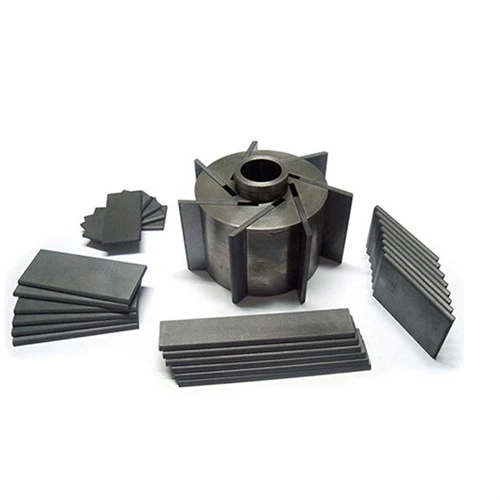
If you’re currently having issues with your graphite carbon ring seals—whether they’re wearing out too fast, leaking, or you’re not sure if you need water cooling—we’re here to help. We work with all industries, from food and beverage to oil and gas, and we can test your application, recommend the right seal type, and make sure you’re not wasting money on unnecessary water or dealing with seal failures. Don’t wait for a breakdown to fix the problem—reach out to us to discuss your requirements, and we’ll help you find the right solution for your operation.
Impregnated Carbon Graphite References
- Adams, J. (2019). Carbon Seals for Dynamic Applications. Industrial Press.
- International Organization for Standardization. (2020). ISO 21048: Sealing Devices for Rotating Shafts – Carbon Ring Seals.
- Smith, A. L. (2021). Heat Management in Graphite Carbon Seals: Advances in Impregnation Technology. Journal of Tribology, 143(6), 061702.
- Food and Drug Administration. (2022). Guidelines for Sealing Components in Food and Pharmaceutical Processing Equipment.
Shanghai IUGIS Carbon Industry Co., Ltd.
With abundant experience, we are one of the most professional graphite carbon ring seal manufacturers and suppliers in China. Please feel free to buy high quality graphite carbon ring seal made in China here from our factory. Good service and quality products are available.
Address:
E-mail: sales@iugiscarbon.com
WebSite: https://www.iugis-carbon.com/
