If you’ve ever walked through a public garden, stood by a backyard fountain, or admired a courtyard water wall, you’ve probably noticed that the stones around those features don’t just fill space—they shape the whole feel of the water. As a supplier of water feature stones, I work with designers, landscapers, and DIY homeowners every day, and one question comes up more than any other: “What shape should I use?” Water Feature Stones
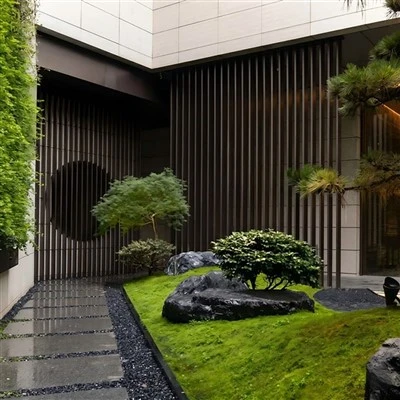
It’s not a trivial question, either. The right shape can turn a simple trickle into a calm focal point, or a bold statement piece into something that draws guests in to lean closer. The wrong shape? It can make water splash too loudly, collect stagnant debris, or clash with the style of a space entirely. Over the years, I’ve seen which shapes fly off our shelves for different projects, and why each works so well. Let’s break down the most popular ones, why they matter, and how to pick the right one for your next water feature.
Flat Slabs: The Workhorse of Modern Water Walls and Rill Features
If you’ve seen a sleek, wall-mounted water feature where water spreads evenly across a smooth surface, chances are it uses flat water feature stones. These are large, cut or naturally flattened slabs—think 2 to 6 feet across, with a uniform thickness, usually 3 to 6 inches. They’re the most versatile shape in our inventory, and for good reason.
Flat slabs create the perfect “sheet flow” effect: when water runs over the edge, it stays smooth and consistent, no splashing, no uneven drips. That makes them ideal for minimalist modern spaces, like rooftop terraces or contemporary office lobbies, where a clean, uncluttered look is key. We also supply thinner flat slabs for rill features—long, shallow water channels that wind through gardens. When laid edge-to-edge, these slabs form a tight, smooth channel that water can flow through without getting trapped.
From a practical standpoint, they’re also easy to install. Unlike irregular stones, flat slabs can be cut to custom sizes on-site, so they fit even the most odd-shaped wall plans. A note for buyers: not all flat stones are equal. We source our flat water feature stones from quarries where natural erosion has smoothed large bedrock layers, but we also offer precision-cut options for projects that demand perfect uniformity. The biggest mistake people make here is choosing too thin a slab—water weight can cause it to crack over time, so we always recommend a minimum 3-inch thickness for any feature that will hold more than a few gallons of water.
Boulders: The Organic Showstoppers of Natural Water Features
If flat slabs are the workhorse, water feature boulders are the showstoppers. These are large, irregularly shaped stones—usually 1 to 3 feet in diameter, though we’ve supplied ones over 5 feet for large park projects—with rough, unpolished surfaces. They’re the go-to for anyone wanting a natural, almost wild feel, like a small pond’s edge, a standalone bubbling rock, or a rustic water wall.
The magic of boulders is their irregularity. No two are exactly alike, so each water feature ends up feeling one-of-a-kind. When you carve a small hole in the top (a process we can do for customers at an extra, nominal cost), water bubbles up through that hole and spills over the sides in thin, gentle rivulets, or sometimes in a small cascade, depending on the boulder’s shape. That soft, uneven flow feels way more natural than the sheet of a flat slab, and it pairs perfectly with native plants, wood furniture, and other organic materials.
Practical tip for boulder buyers: look for stones with a naturally sloped top if you want bubble flow. A flat top works if you’re adding a pump to the center, but a slight tilt will make water spread more evenly down the sides. We also sort our boulders by “roundness” (measured by how much they’ve been smoothed by river or glacial movement) because rounder tops mean better, more consistent flow. Avoid super angular boulders, though—sharp edges can make water splash violently, which is not only noisy but can cause water waste.
Stepping Stones: Functional and Decorative for Shallow Water Features
Stepping stones aren’t just for garden paths—they’re a staple in water features too. These are medium-sized, flat or slightly rounded stones, usually 12 to 24 inches across, designed to sit half-submerged in shallow water, like in a small backyard pond or a decorative stream. They serve two purposes: they give people (or wildlife) a safe place to walk across, and they break up the expanse of water to add visual interest.
What makes stepping stones popular for water features is their dual role. Instead of building a separate path, you integrate it into the water, so the whole space feels cohesive. For kids’ ponds or bird baths, we even use smaller stepping stones as perches for birds—their rough surfaces give birds a grip, and they add texture to the otherwise smooth water. We also sell “low-profile” stepping stones that sit only 2 to 3 inches above water level, so they don’t block the view of the fish or plants below.
One common mistake with stepping stones: using stones that are too thin. If a stone is less than 2 inches thick, it can tip when stepped on, especially if there’s any water current in the pond. We always test our water feature stepping stones for weight capacity, and label them accordingly—for example, “light use” for bird baths, “heavy use” for backyard ponds where adults might walk across.
Pebbles: The Tiny Details That Tie a Feature Together
For smaller, intimate water features—tabletop fountains, small bird baths, or the base of a larger waterfall—pebbles are the shape to go for. These are small, rounded stones, usually less than 4 inches across, smoothed by natural water movement. They’re not just decorative, either: they serve a functional role in holding pumps in place, filtering out debris, and preventing soil from eroding around the base of a feature.
Pebbles add a layer of depth that other shapes can’t. In a tabletop fountain, lining the basin with small pebbles makes the water feel like it’s sitting on a bed of stones, not just in a plastic or concrete bowl. In a waterfall base, a layer of pebbles softens the sound of falling water, turning a loud crash into a gentle gurgle. We sort our water feature pebbles by size (from 1-inch to 4-inch) and color, so you can match them to your space—neutral grays for modern designs, earthy browns for rustic gardens, or even soft blues for a coastal feel.
A pro tip from our team: don’t use generic landscaping pebbles for water features. Many landscaping pebbles have sharp edges or are treated with chemicals that can leach into water, which is bad for fish, plants, and even pump performance. All our water feature pebbles are naturally river-smoothed, no chemicals, so they’re safe for any water feature. We also recommend rinsing them once before installation to get rid of loose sediment.
Irregular Cobbles: The Middle Ground for Custom Designs
Sometimes, you want something between the uniformity of flat slabs and the wildness of boulders—enter irregular cobbles. These are stones that are larger than pebbles (4 to 10 inches across) but not big enough to be considered boulders, with varied, uneven shapes but still enough flat surfaces to sit securely. They’re super popular for custom water walls, stream beds, and retaining walls around ponds, because they offer more texture than flat stones but are easier to work with than full boulders.
What makes irregular cobbles special is their versatility. You can mix and match their sizes to create a natural-looking stream that winds through a garden, or use them to build a dry stack wall around a pond’s edge. The uneven shapes catch water flow in small pockets, which creates tiny, playful splashes that feel lively without being distracting. We often work with landscape designers to source custom batches of irregular cobbles in specific sizes and colors to match the other elements of a project, like a house’s exterior or existing garden stones.
What Shape You Should Pick: It’s All About the Vibe and Function
Now that you know the main shapes, how do you choose? Let’s break it down by common use cases:
- Modern minimalist water features: Flat slabs or precision-cut boulders, for clean lines and uniform flow.
- Natural, rustic ponds or streams: Boulders and irregular cobbles, for organic texture and unique character.
- Small tabletop fountains or bird baths: Pebbles, for intimate detail and soft flow.
- Backyard ponds with foot traffic: Stepping stones, for safety and functionality.
No matter the shape, there are two non-negotiables for water feature stones: durability and compatibility with water. All the shapes we work with at our supply are sourced from hard, dense stone (like granite or sandstone) that resists cracking from freeze-thaw cycles, absorbs less water, and doesn’t leach chemicals into the feature. We also test every batch to make sure their shape supports good water flow—no sharp edges that cause splashing, no hollow spots where debris can get trapped.
If you’re planning a water feature and still unsure which shape fits your space, our team is here to help. Whether you need to send photos of your backyard, discuss the size of your fountain, or get advice on installation, we can walk you through the best options. We’ve supplied stones for everything from 10-inch tabletop fountains to 50-foot park water features, so we know what works for every scale.

Don’t waste time guessing which shape will work. The right stone shape turns a simple water feature into a space you’ll love for years—one that’s functional, beautiful, and perfectly tailored to your style. Reach out to us today to talk through your project, get a custom quote, and pick the stones that will make your water feature stand out.
Japanese Garden Water Basin References:
- "Landscape Design: The Impact of Stone Shape on Water Feature Performance," Journal of Hardscape Architecture, 2022.
- "Water Feature Materials: Durability and Flow Dynamics of Natural Stone Shapes," National Association of Landscape Professionals, 2021.
- "Natural Stone Sourcing for Water Features: Best Practices for Shape and Function," Stone Industry Association, 2023.
Orin International Trade Co., Ltd.
With abundant experience, we are one of the most professional water feature stones manufacturers and suppliers in China. We warmly welcome you to wholesale custom made water feature stones from our factory. If you have any enquiry about cooperation, please feel free to email us.
Address: No.3-1, Shangzhongdi Natural Village, Hexian Village, Shuangta Sub-district, Jiangshan City, Quzhou City, Zhejiang Province
E-mail: atlas@orinstone.com
WebSite: https://www.orinstone.com/
