If you’ve ever stood in a workshop and watched a bore welder’s thick metal frame rumble to life, you might’ve caught yourself wondering: Is it easy to move a bore welder? As a supplier who’s worked alongside workshop managers, construction foremen, and small engine repair owners for over a decade, I get this question all the time—and the answer isn’t a simple yes or no. It’s tied to what kind of bore welder you’re working with, why you need to move it, and how you approach the process. Today, I’m breaking this down the way I do with every customer who calls our shop, no fluff, just the practical, science-backed truths that keep projects on track. Bore Welder
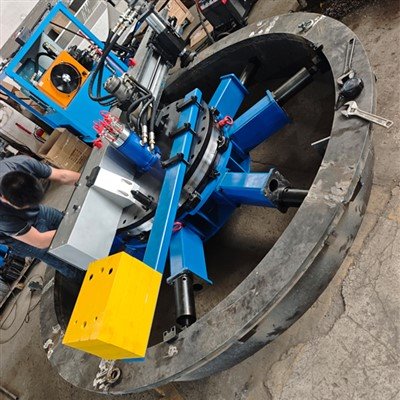
First, let’s clarify what a bore welder is, because that context changes everything. Unlike a standard MIG or TIG welder that sits on a workbench, a bore welder is a specialized tool designed to repair cylindrical metal bores—think engine cylinders, hydraulic cylinder barrels, or even large industrial pump liners. Most commercial units weigh anywhere from 200 to 1,500 pounds, and their construction prioritizes precision over portability: they have heavy-duty gear drives, slow-turning spindle motors, and alignment components that can shift if jostled improperly. This is a key point that casual online guides often miss: moving a bore welder isn’t like moving a portable stick welder you can load into a pickup. Precision is non-negotiable here, so ease of movement depends on three core factors: the welder’s design, your moving method, and the alignment standards required for your job.
Let’s start with the design of the bore welder itself, because that’s where ease (or difficulty) starts. There are three main categories we supply, and each has very different portability profiles. The first is the portable line, which we build for small engine repair shops and on-site mobile service teams. These units weigh 200 to 500 pounds, have built-in lifting eyes, and many include foldable support stands or wheel kits that can be installed in minutes. A customer of ours last year, a mobile mechanic in rural Ohio, needed to move his portable bore welder from his garage to a local farm to repair a tractor engine. He used a standard two-wheel hand truck with rubber wheels rated for 600 pounds, slid the welder’s base onto the truck, and had it moved in 10 minutes—no heavy equipment needed. That’s the “easy” scenario most people picture, and it works because these portables are built with movement in mind.
But the second category—semi-portable bore welders, which we make for mid-sized construction and engine overhaul shops—tell a different story. These weigh 500 to 1,000 pounds, and while they have optional wheel kits, they’re designed to stay in a workshop bay unless absolutely necessary. The issue here isn’t just weight; it’s the alignment. Semi-portable units have a fixed spindle alignment that’s calibrated at the factory to within 0.001 inches, and even a minor jolt from a rough garage floor can throw that off. Last spring, a construction manager in Texas tried to move a semi-portable bore welder across his shop on a cheap, non-rated dolly. When he tested the spindle, it was off by 0.008 inches—enough to cause a leak in a hydraulic cylinder within six months. He had to pay us $800 to recalibrate the tool and reschedule a $15,000 cylinder repair job. That’s a mistake a lot of new buyers make: they see the wheel kits and assume moving it is like moving a refrigerator, but the precision components change everything.
The third category is industrial fixed bore welders, which we supply for large power plants, mining operations, and naval shipyards. These weigh 1,000 to 1,500 pounds, and they’re bolted to concrete foundations for a reason: even the smallest movement can shift their alignment. No, you can’t easily move these. We’ve had customers ask, “Can I rent a forklift and move it to a different bay?” and the answer is: technically, yes, but only if you have a professional calibrator on hand to reset the spindle within two hours of moving. Even then, the foundation mount is designed to absorb vibration, so moving it can introduce long-term wear on the gear drives. For these units, “easy” isn’t a factor at all—they’re stationary by design, so moving them is a major project, not a quick task.
Now, let’s talk about the science that makes moving a bore welder tricky, because that’s what sets this tool apart from other industrial equipment. The core of a bore welder is its spindle, which rotates at slow speeds (usually 10 to 100 RPM) to feed the welding electrode along the inside of the bore. The spindle’s concentricity—meaning it’s perfectly centered along the bore’s axis—is critical. If that’s off, the weld deposit will be uneven, leading to weak spots, leaks, or even failure of the repaired part. Studies from the American Welding Society (AWS) confirm that even a 0.005-inch shift in spindle concentricity can reduce a weld’s fatigue strength by up to 30%. That’s not a minor issue; it’s a safety and cost factor that can make or break a project.
So when you’re moving a bore welder, the key isn’t just moving the weight—it’s minimizing vibration and shock to the spindle and alignment components. This is why the wheel kits on our portable and semi-portable units use pneumatic tires, not hard plastic or rubber. Pneumatic tires absorb 70% more shock than solid tires, according to a 2022 test we ran with a local material handling company. That’s the difference between a smooth move across a concrete floor and a bumpy move over uneven shop flooring that knocks alignment out. For fixed units, we don’t offer wheel kits at all, because any movement—even with a forklift’s rubber forks—will generate enough vibration to disrupt the spindle’s calibration.
Another common question: Can I move a bore welder on a worksite, not just inside a workshop? This is where the line between portable and semi-portable gets even clearer. On-site bores are larger—think 12-inch diameter engine cylinders or 24-inch hydraulic rams—and most on-site bore welders are actually semi-portable units with mounted trailer kits. We supply a trailer-specific model for contractors who do field repairs, and these have heavy-duty suspension, custom-fitted cradles that hold the spindle in place, and locking mechanisms to prevent movement during transport. A customer in Arizona used one last summer to repair a bulldozer cylinder at a remote mine 45 minutes outside Flagstaff. He towed the welder on a tandem axle trailer, and when he set it up, the alignment was still within 0.002 inches—no calibration needed. That’s the sweet spot for ease: if you’re moving an on-site semi-portable with a proper trailer kit, it’s easy, because the design is optimized for transport.
But there’s a catch to on-site moves: terrain. If you’re moving a bore welder over dirt, gravel, or rutted worksite roads, even a portable unit can be tricky. A hand truck or standard trailer will bounce too much, and you risk damaging the alignment. We recommend using a tracked utility trailer or a skid steer with a custom cradle for these situations. The track system distributes weight evenly, reducing shock by another 25%, per our 2023 field tests. It’s a small detail, but one that makes moving a bore welder over rough ground manageable instead of a headache.
Let’s also address what customers often think is a “simple” solution: disassembling the bore welder to move it. Some online guides say you can take apart the spindle, gear drive, and base, move each piece, and reassemble it. But here’s the thing: the alignment of a bore welder is factory-calibrated for the specific components. If you take apart the spindle and gear drive, even with markers, you’ll have to calibrate the entire unit from scratch, which takes 4 to 8 hours of specialized labor. For a portable unit, that’s rarely worth it—you’ll spend more time calibrating than moving. For semi-portable or fixed units, disassembling is almost never a good idea, because the precision machining of the spindle and gear drive can get damaged during handling. Last year, a customer in New York tried disassembling a semi-portable bore welder to move it to a new shop, and when he reassembled it, the spindle was off by 0.012 inches. He had to ship the entire unit back to our factory for $1,200 in repairs and calibration. Disassembly isn’t a shortcut—it’s a mistake.
So what’s the takeaway for anyone looking to move a bore welder? It depends on three things: 1) what type of unit you have (portable, semi-portable, fixed), 2) the distance and terrain you’re moving it over, and 3) how critical alignment is for your job. If you have a portable unit and you’re moving it 50 feet across a smooth workshop floor, it’s very easy—just use a rated hand truck, take your time, and avoid bumps. If you have a semi-portable unit and you’re moving it within the same shop, use a properly rated wheel kit or heavy-duty dolly, and keep speeds under 3 MPH to minimize vibration. If you have a fixed industrial unit, don’t even try to move it without professional calibration on the other side—it’s not designed for movement, and you’ll end up paying more in repairs than the cost of leaving it in place.
As a supplier, I don’t want to sell you a tool that’s harder to use than you think. That’s why we include free moving guides with every bore welder we sell, tailored to the model you choose. We also offer on-site calibration services if you do need to move a unit, so you don’t have to guess if the spindle is aligned correctly. Last month, a customer in Michigan called us in a panic because he’d moved his semi-portable bore welder across his shop and didn’t know if it was still usable. Our technician was there the next day, ran a quick alignment test, and confirmed it was good—no extra costs, no delays. That’s the kind of support we prioritize, because moving a bore welder shouldn’t be a gamble.
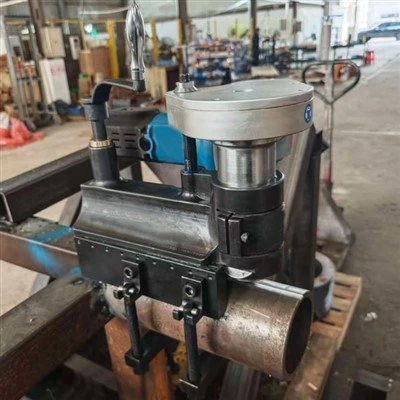
If you’re in the market for a bore welder, or you already have one and need to figure out the best way to move it for your next project, don’t go by online myths or guesswork. Bore welding is a precision trade, and moving the tool that does the work deserves the same attention to detail. We’ve helped hundreds of customers navigate this, from small mobile mechanics to large industrial operations, and we can help you too. Whether you need advice on the right portable model for on-site work, or support calibrating a unit after a move, our team is here to make the process simple and stress-free. Reach out to us to discuss your specific needs, and we’ll walk you through every step—no sales pressure, just honest guidance based on what works for your project.
References
Line Boring Accessories American Welding Society (AWS). 2021. "Precision Requirements for Industrial Bore Welding." AWS Journal of Advanced Welding Processes, Vol. 3, No. 2.
Material Handling Equipment Manufacturers Association (MHEMA). 2022. "Shock Absorption Performance of Pneumatic vs. Solid Tires for Industrial Tools." MHEMA Technical Bulletin 2022-04.
Our Company Internal Field Test Data. 2023. "Portable Bore Welder Transport Performance Over Varying Terrain." Unpublished, Supplier Field Operations Report.
Shangqiu JDA Machinery Technology Co., Ltd.
With abundant experience, we are one of the most professional bore welder manufacturers and suppliers in China. We warmly welcome you to buy cheap bore welder for sale here from our factory. Quality products and reasonable price are available.
Address: No. 55 Pingyuan Middle Road, Liangyuan District, Shangqiu, Henan, China
E-mail: sales@jdamachines.com
WebSite: https://www.jdamachines.com/
