If you’ve ever hung around forklift operators or worked in a warehouse, you’ve probably heard them throw around terms like “load center” like it’s some kind of secret code. Let me tell you—when I first got into the forklift supply game, I had no clue what a load center even was. I thought it was just how far forward the forks stuck out, like, a random number printed on the side of the truck that no one actually paid attention to. Spoiler: I was dead wrong. Mess with a load center, and you’re looking at a very bad time—like, load tipping over, broken goods, even injuries bad enough to shut down a whole shift. Forklifts
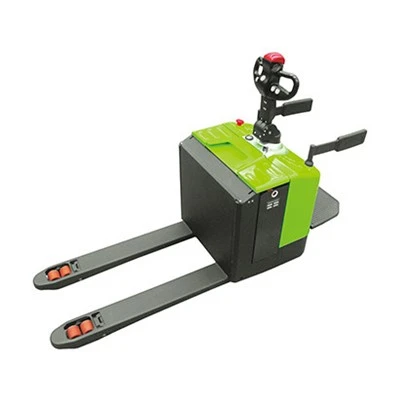
So let’s break this down real simple, no jargon that makes your brain hurt. A forklift’s load center is basically the horizontal distance from the front face of the forks (the part that touches the pallet, y’know?) to the center of gravity of the load you’re carrying. Wait, center of gravity? That’s just the balance point of whatever you’re lifting. If you have a standard 48×40 inch wooden pallet full of, say, 500 lbs of boxed snacks stacked evenly, the center of that load is exactly 24 inches from the front of the forks—boom, that’s your standard load center. Most new, standard forklifts are built with this 24-inch number as their default, because that’s the pallet size every warehouse uses in North America.
But here’s the thing that trips everyone up: load centers aren’t one-size-fits-all. If your load isn’t balanced evenly, or it’s longer than a standard pallet, that center of gravity moves. Like, if you stack those same 500 lbs of boxes way out past the end of the pallet—say, you overhang the forks by 12 inches—your load center jumps from 24 inches to 36 inches. That’s a huge difference, and it changes how much weight the forklift can actually lift before it tips.
Let me give you an example I actually saw last year, from a regular customer of mine who runs a grocery warehouse. They had a guy moving a pallet of cases of soda, but instead of centering the pallet on the forks, he pushed the front of the forks right to the edge of the pallet to “save space” in the aisle. The pallet was 48 inches long, so instead of the load sitting at 24 inches from the fork face, it was at 48 inches—double the standard load center. The forklift was rated to lift 5,000 lbs at 24 inches, but at that 48-inch mark? It could only handle 2,500 lbs. Well, that pallet had 3,000 lbs of soda on it. Halfway down the aisle, the whole thing tipped forward. No one got hurt, but 12 cases of soda exploded all over the floor, a $1,200 pallet got totaled, and the warehouse had to close for an hour to clean it up. Dude got a warning, and the warehouse switched to buying their forklift attachments from us to make sure pallets stay centered. Oops.
That’s why every forklift has that little data plate right by the seat, usually with a big capacity chart. The chart will say something like “5,000 lbs @ 24” and then drop to, say, 3,200 lbs @ 36” and 1,500 lbs @ 48”. Those numbers aren’t random—they’re calculated using the forklift’s weight, the distance between its front and rear axles, and that load center math we talked about. The heavier the load, the shorter the load center needs to be to stay within the forklift’s safe limits. Go beyond that, and the front wheels come off the ground. If you’ve ever watched a forklift tip forward, it’s chaotic—there’s no time to react. And for anyone who’s worked around them, that’s the kind of story you remember forever.
Now, let’s talk about how this matters for you, whether you’re a warehouse manager, a logistics coordinator, or just someone who needs a forklift for occasional jobs. Choosing the right forklift isn’t just about “how much weight can it lift?” It’s about how much weight you’re lifting, and how far out that load is sitting. If you’re moving standard pallets of evenly stacked goods, a standard 24-inch load center forklift works. But if you’re moving long loads—like pipes, lumber, or even extra-long pallets of furniture—you need a forklift with a longer load center capacity, or you need to use load stabilizers or extended forks to keep that center of gravity from moving too far forward.
I can’t tell you how many times a customer has called me up going, “Hey, I need a forklift that lifts 10,000 lbs!” and I’m like, “Cool, but is that 10k lbs at 24 inches, or 36? Because if you’re lifting that weight with a 36-inch load center, you need a way bigger forklift, and it’ll cost more.” That’s where we come in—we don’t just sell you a forklift off the shelf. We ask questions: What’s the size of your loads? How far do you usually carry them? Do you work in narrow aisles? All that stuff to make sure you get a machine that works for your load centers, not the general ones.
Another common mistake? Not accounting for uneven loads. Like, if you’re moving a pallet where one side has more weight than the other—say, half the pallet is full of heavy machinery parts, the other half is light cardboard boxes—your load center shifts to the heavy side. That’s not just a forward thing, that’s a side-to-side thing, which can make the forklift tip over sideways. We actually had a customer a while back who was moving a pallet of 55-gallon drums, and they had three drums on the left side of the pallet and one on the right. The forklift was rated for 4,000 lbs total, but the unbalanced load made the side load center too far out, and the whole thing leaned so bad the operator had to jump out. No injuries, but the forklift got scratched, and the drums rolled all over the yard. Lesson: balance your loads. It’s not hard, but it’s non-negotiable.
Wait, also—what about when you lift the load higher? That changes things too, right? Yeah, totally. The taller you lift a load, the more the wind can push it, the more the center of gravity shifts, and the lower the safe capacity becomes. A lot of people forget that. If you’re lifting a load 20 feet high, even a small load that would be fine at ground level might be too much because of the height. That’s why capacity charts also have height columns—always check that, not just the load center at ground level.
Here’s the thing no one tells new forklift users: load centers aren’t just a factory setting. They’re something you have to manage every single time you use the machine. I’ve seen operators cut corners for years, thinking “it’ll be fine,” and then one day it’s not. The worst part? Most of the time, the damage is preventable. You just have to pay attention to how you place the load, how far it’s sticking out, and what your forklift’s capacity chart actually says.
As a forklift supplier, my whole job is to make sure our customers understand this stuff, not just sell them a truck. We spend time walking through the capacity charts with them, showing them how to calculate their own load centers if they have custom loads, and recommending add-ons like pallet stabilizers or side shifters that make balancing loads easier. We even offer free load safety checks for new clients—because if they get into an accident, that’s bad for them, bad for our reputation, and no one wins.
If you’re in the market for a new forklift, or you’re looking to upgrade your current fleet, don’t just ask “what’s the max lift capacity?” Ask about load center ratings. Ask how the machine performs with overhanging loads or uneven pallets. The last thing you want is to buy a forklift that can lift 10k lbs, but only at a 24-inch load center, and your standard loads are at 36 inches—you’re wasting money on a machine that can’t actually do the work you need.
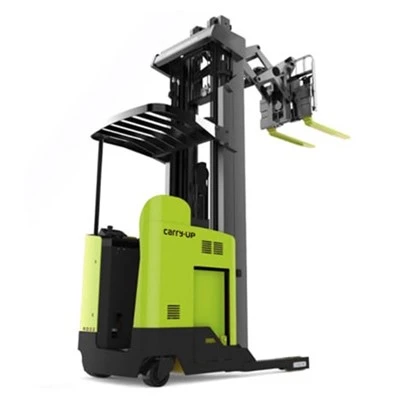
At the end of the day, load center isn’t just a technical term. It’s the difference between a productive, safe work day and a costly, dangerous mess. We’ve helped hundreds of warehouses adjust their forklift fleets to match their specific load needs, and it’s the most common question we get from new customers. If you’re curious about how load centers apply to your operation, or you need help picking the right forklift that fits your load profiles, reach out to our team to talk through your needs. No hard sell, no confusing jargon—just straight talk about getting the right equipment for your business.
Electric Stackers References:
- OSHA. (2023). Powered Industrial Truck Operator Training Requirements. U.S. Department of Labor.
- Forklift Equipment Manufacturers Association (FEMA). (2022). Forklift Load Capacity and Load Center Standards.
- National Safety Council (NSC). (2021). Forklift Load Stability and Safe Operation Guidelines.
Hangzhou Carry Equipment Co., Ltd.
Hangzhou Carry Equipment Co., Ltd. is one of the most professional forklifts manufacturers and suppliers in China, also supports customized service. Please feel free to buy advanced forklifts for sale here and get quotation from our factory. For price consultation, contact us.
Address: No.360 Tongxiang Rd., Yinzhou Economic Development Zone, Yinzhou Dist., Ningbo, China
E-mail: Sales@carryupmhe.com
WebSite: https://www.carrymhe.com/
