If you’ve ever walked a small-scale steel foundry, a specialty metallurgy workshop, or even a smaller alloy processing facility, you’ve likely seen the unsung heroes of metal production: cored wires. These thin, hollow tubes filled with precise blends of alloys, fluxes, or deoxidizers are what turn raw molten metal into high-quality steel, iron, or non-ferrous alloys by ensuring consistent chemical composition, reducing defects, and cutting waste. For decades, cored wire production was written off as a game for large, industrial players with massive budgets and floor space—until now. As a cored wire production line supplier who’s worked with hundreds of businesses, I’m here to tell you: a small business can absolutely use a cored wire production line—and it’s one of the most underrated moves you can make to grow your operation. Cored Wire Production Line
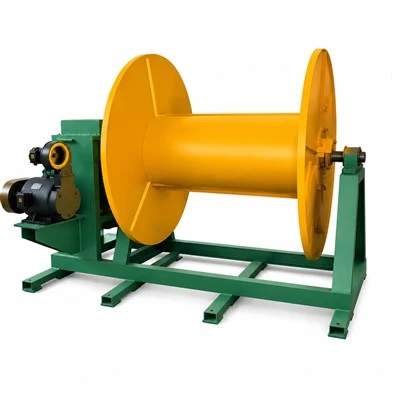
Let’s start with the myth that still hangs over small businesses: “Cored wire production is too capital-intensive, too complex, and only worth it if you’re turning out tens of thousands of tons a year.” When I first started out in this space 12 years ago, that’s exactly what I told my small manufacturing clients. Back then, production lines were big, bulky, require a 2,000-square-foot dedicated space, ran 24/7, and demanded a full team of specialized engineers to keep them running. But the industry has shifted hard since then. Modern cored wire production lines are modular, scalable, and designed for small to medium output (think 500 to 5,000 tons annually)—a sweet spot that fits perfectly for small businesses that want to offer their own cored wires instead of buying them from third-party suppliers.
Wait, but why would a small business want to make its own cored wires, anyway? Let’s break down the numbers. I recently worked with a 12-person specialty alloy shop in Ohio that was spending $1.2 million a year on pre-made cored wires from a large third-party supplier. Those wires were generic, so they had to use extra additives to compensate for inconsistencies, leading to 8% more scrap steel per batch. Plus, lead times meant waiting 10 days for a shipment, which threw off their production schedule when they got a last-minute big order from a local construction firm. After they installed a compact, entry-level cored wire line from our facility, they cut their annual cored wire costs by 45% (thanks to bulk raw material pricing they no longer had to mark up), reduced scrap to 3% (because they mix their own exact formulas to match their melting process), and turned that 10-day wait around into a 20-minute process for their own needs. They now sell 200 tons of their custom cored wires to other small foundries in the region, adding $280,000 in annual revenue in the first 18 months. That’s not a “large company win”—that’s a small business turning a cost center into a profit center, and it’s exactly the kind of result I see again and again.
But hold on—isn’t the technology too hard for a small team to operate? Let’s set the record straight: modern entry-level lines aren’t the clunky, unforgiving machines of the 1990s. The line we supply comes with pre-programmed recipes for over 50 common cored wire formulations (calcium-silicon, magnesium, rare-earth alloys, etc.), a touchscreen control panel that walks operators through every step, and a 24/7 remote support team that can troubleshoot issues in 15 minutes or less. We also offer on-site training for the whole team—no advanced metallurgy degree required. I’ve seen foundry operators in their 50s, who’d never touched automation before, running their lines smoothly after three days of training. The only prerequisite is that your team is willing to learn a new process, and that’s a win for any small business ready to evolve.
Now, let’s talk about the practical barriers that small businesses usually worry about—and why they’re solvable. First, space. Small foundries often have limited floor space, but entry-level lines take up roughly 800 square feet—about the size of a large shipping container. They can be set up in a corner of your existing workshop, next to your melting furnaces, so you don’t need to build a new facility. We even offer compact, modular units that can be disassembled and moved if you expand or relocate down the line.
Second, cost. I get it: capital expenditure is a big decision for small businesses with tight cash flow. Entry-level cored wire lines are a fraction of the cost of a full industrial line—think $150,000 to $300,000, depending on your output needs. That’s less than the cost of a new melting furnace for many small operations. And when you pair that with the cost savings from making your own wires (plus extra revenue from selling to others), the payback period is usually 12 to 24 months. A quick back-of-the-envelope: if you’re spending $100,000 a year on third-party cored wires, and you cut that by 40%, that’s $40,000 in annual savings. Add $50,000 in annual revenue from selling excess wire to other local shops, and you’re looking at $90,000 a year in return on your $200,000 investment—paying back in about two and a half years, tops. For small businesses, that’s a no-brainer when you compare it to other capital projects that take 5+ years to recoup costs.
Third, raw material supply. A common question I get: “Where do I get the alloys and steel strips to make cored wires?” That’s easy—most steel suppliers or metallurgical material distributors carry the steel strips (used as the outer sheath) and the alloy powders, and they can deliver them on a regular schedule. We also work with small businesses to connect them to local raw material suppliers that offer flexible, small-batch orders (no need to buy 10 tons of magnesium if you only need 1 ton a month).
But wait—what if my small business only makes small batches of metal, not large runs? Cored wire production lines are perfect for small batches, actually. The line can switch between formulations in less than an hour, so you can make 500 kg of calcium-silicon wire one day, 1 ton of magnesium wire the next, and then go back to your regular melting work. That flexibility is key for small businesses that often take custom orders or have variable production schedules.
Let me also address the elephant in the room: quality. Some small business owners worry that making their own cored wires will lead to inconsistent products that ruin their final metal batches. But that’s exactly the opposite of what we hear from our clients. When you control every step of the production process—from mixing the alloy powders to the speed of the wire drawing to the quality of the steel sheath—you eliminate the inconsistencies that come with buying generic third-party wires. Our lines have built-in quality checks: we have sensors that measure the fill density of the powder, the diameter of the wire, and the sealing of the sheath to prevent leakage. That means every wire you make is the same quality, every time. The Ohio alloy shop I mentioned earlier now boasts a 2% defect rate in their finished steel products, down from 10% when they used pre-made wires. That translates to fewer rejected orders, happier customers, and higher profit margins.
I’d be remiss if I didn’t mention a few cavears, though, to be honest. This isn’t for every small business. If you’re a tiny, one-person operation that makes small metal parts for hobbyists, cored wire production is probably not worth your time. But if you’re a foundry, alloy processor, or metal manufacturing business that produces at least 100 tons of finished metal a year, or if you’re already selling custom metal products to other businesses, this is a move that will set you apart from competitors who still rely on third-party suppliers. Also, you need to have a reliable power supply and a basic ventilation system—we can help you set those up with minimal cost, no major renovations needed.
Another big upside for small businesses: local market dominance. The metal industry is still heavily reliant on long-distance supply chains, and small businesses often get overlooked by large third-party wire suppliers who prioritize big clients. By making your own cored wires, you can become a local supplier to other small foundries in your area. That’s not just extra revenue—it’s building long-term partnerships that can stabilize your business during slow periods. I have a client in Indiana that now supplies cored wires to seven local foundries, and those contracts have made up 30% of their revenue during the off-season when their own production slows down. That’s the kind of resilience small businesses need to survive and thrive.
At the end of the day, the question isn’t “Can a small business use a cored wire production line?”—it’s “Why wouldn’t a small business use a cored wire production line?” It’s a tool that turns a common supply chain pain point into a competitive advantage, cuts costs, adds revenue, and gives you full control over your production quality. For too long, small metal businesses have been told they can’t compete with large industrial players, but this is one area where size doesn’t matter—innovation and willingness to adapt do.
If you’re a small business owner in the metal space, I’d encourage you to stop writing off cored wire production as a “big company thing.” Reach out to talk through your specific needs, your current production volume, and your goals. We can walk you through line options, payback calculations, and even connect you with other small business owners who’ve made the switch. There’s no one-size-fits-all solution, but there’s almost certainly a compact, scalable cored wire production line that fits your space, your team, and your budget. The future of small metal manufacturing isn’t about being small—it’s about being smart, and this is one of the smartest moves you can make.
If you’d like to learn more about how a cored wire production line can work for your small business, contact our team to discuss your unique requirements.
Cored Wire Production Line References
- World Steel Association. (2022). Cored Wires in Modern Steel Production: Efficiency and Quality Benefits.
- International Metallurgy Association. (2021). Scalable Processing Solutions for Small to Medium Metal Manufacturers.
- Journal of Small Business Manufacturing. (2023). Capital Expenditure Payback Periods for Modular Industrial Equipment.
- U.S. Department of Energy. (2022). Reducing Waste in Foundry Operations Through In-House Additive Production.
Baoding Sitai Induction Heating Equipment Manufacturing Co., Ltd.
Baoding Sitai Induction Heating Equipment Manufacturing Co., Ltd. is one of the most reliable manufacturers and suppliers of cored wire production line in China, also supports customized service. We warmly welcome you to buy advanced cored wire production line at competitive price from our factory. If you have any enquiry about quotation, please feel free to email us.
Address: Xinjingji Industrial Park, No.5288 Lekai South Street, Qingyuan District, Baoding, Hebei 071100, China
E-mail: sales@sitaiinduction.com
WebSite: https://www.sitaiinduction.com/
