If you’ve ever watched a construction site rise from bare ground, helped build a bridge that spans a river, or even stood beneath a high-rise as it takes shape, you’ve probably spotted a large, fixed crane standing tall in the distance. Chances are, that wasn’t a mobile crane or a tower crane—it was a static boom crane, the unsung workhorse of heavy lifting that keeps countless infrastructure projects on schedule. As a boom crane supplier who’s spent more than a decade matching the right lifting equipment to jobs big and small, I’ve lost count of how many clients have walked into our yard, not sure exactly what a static boom crane is, or why it’s often the better choice over more popular crane types like mobile or tower cranes. Today, I want to break down what a static boom crane actually is, how it works, where it shines, and why it might be the exact lifting solution your next project needs. Boom Crane
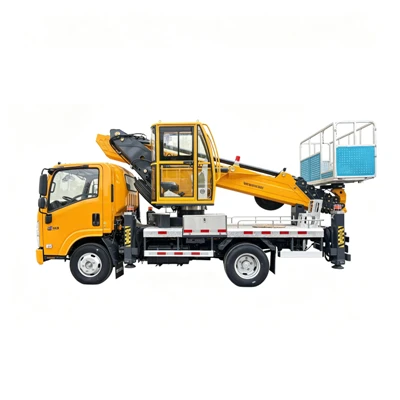
First, let’s get the basics straight. A static boom crane is a fixed-location lifting machine designed to handle heavy loads at set job sites, unlike mobile cranes that can drive from one site to another or tower cranes that are erected vertically as a structure grows. Its core is a horizontal or slightly angled boom—the long, arm-like structure that does the actual lifting—mounted to a rigid, stationary base, usually secured directly to the ground, a concrete pad, or a steel foundation built specifically for it. The key word here is “static”: once it’s set up, it doesn’t move. It stays in that spot for the entire duration of the project, which is why it’s called static.
But don’t let the word “static” fool you into thinking it’s a simple, one-size-fits-all tool. Static boom cranes come in a range of sizes and configurations, tailored to different load capacities and reach needs. The smallest models we supply, for example, are often used for smaller commercial projects like factory expansions or warehouse roof installations. These cranes typically have a boom length of 20 to 50 feet and can lift loads of up to 10 tons, perfect for moving heavy steel beams or HVAC units without the need for a large, temporary crew. For larger projects—like bridge construction, port cargo handling, or mining operations—we provide heavy-duty static boom cranes with boom lengths exceeding 200 feet and load capacities of 100 tons or more. These workhorses can lift massive concrete segments, industrial machinery, or even pre-fabricated building components with precision that’s hard to match with mobile alternatives.
So, how does a static boom crane actually work? Let’s break down its key components, because understanding these parts is what makes it easy to see why it’s such a reliable piece of equipment. At the very bottom is the base, or substructure, which is the anchor that keeps the crane stable. Unlike mobile cranes that use outriggers to distribute weight, static boom cranes rely on a fixed foundation. For ground-mounted units, that means pouring a reinforced concrete pad that’s calculated to support the crane’s total weight, plus the weight of the maximum load it will lift. Some static boom cranes are also mounted to existing structures, like the deck of a ship or the top of a tall building, for specialized jobs.
Next comes the superstructure, the rotating part of the crane that sits on top of the base. This is where you’ll find the operator’s cab, the hoist mechanism, and the counterweights that balance the load. The operator controls the crane from the cab, using joysticks to extend or retract the boom, lift or lower the load, and rotate the entire superstructure 360 degrees (in most models) to move items exactly where they need to go. The boom itself is made of durable steel, usually in sections that can be extended or retracted—called telescopic booms—for flexible reach. Lifting cables, made of high-tensile steel, run through the boom and connect to the hoist, which reels in or lets out the cables to control load height. Counterweights, located on the opposite side of the superstructure from the boom, are critical for safety: they offset the weight of the load, preventing the crane from tipping over when lifting heavy items at long reach.
Now, let’s talk about when a static boom crane is the right choice, because that’s what really sets it apart from other crane types. I’ve had clients ask me, “Why not just use a mobile crane? They can move around the site.” And that’s a fair question, but mobile cranes have their limits. For one, static boom cranes are typically more load-efficient than mobile cranes. Because they don’t have to be road-legal or have the ability to move under their own power, they can be built with a simpler, heavier design that can lift much more weight at longer reaches, for a lower cost per lift than a comparable mobile crane. For example, if you’re lifting a 50-ton steel beam 150 feet high, a static boom crane will often handle that job faster and cheaper than a mobile crane, which would need to position itself just right, extend its outriggers, and may have a lower maximum capacity at that reach.
Another big advantage is stability. Since static boom cranes are fixed to a concrete foundation, they don’t have to deal with the uneven ground or weight limits that can affect mobile cranes, especially on soft or uneven construction sites. That makes them ideal for long-term projects where the crane will stay in the same spot for weeks or months. They’re also easier to maintain in many cases: because they’re not being driven around on public roads or across rough terrain, there’s less wear and tear on their engines, tires, and moving parts, leading to lower long-term maintenance costs and less downtime.
Static boom cranes also shine in specialized environments. Think of a port, where they’re used to unload and load heavy cargo from ships: a static boom crane mounted to the dock can lift entire shipping containers without the need for multiple moves, and it’s positioned to reach the full length of the ship’s hold. Or a mining site, where these cranes are used to move heavy mining equipment and raw materials across large, flat plots of land. Even on construction sites in dense urban areas, where space is tight, static boom cranes can be set up in a small section of the site, out of the way of other work, while tower cranes (which are more common in high-rise construction) might not be feasible due to zoning restrictions or site height limits.
But of course, static boom cranes aren’t the right fit for every job, and it’s important to know their limitations too. The biggest one is obvious: since they’re static, they can’t move. That means they’re only useful for projects that stay in one location for the duration of the lift work. If you need to move heavy materials across multiple sites, a mobile crane or a crawler crane would be a better choice. They also require a proper foundation, which means upfront time and cost to design and pour the concrete pad, or prepare the mounting structure. For small, one-off lifts like moving a hot tub to a backyard deck, a static boom crane would be overkill, and a small mobile crane or even a forklift would be more practical.
As a boom crane supplier, I work closely with every client to assess their specific needs, and that’s one of the most important parts of the job. I’ve had a small contractor come to me for a 10-ton static boom crane to help build a small storage facility, and a large engineering firm come to me for a 150-ton unit for a highway overpass project. No two jobs are the same, so matching the right crane to the right project is what ensures it’s a success. That’s why I always take the time to ask questions: how much weight do you need to lift? How high do you need to get it? How long will the crane be in place? What’s the site like in terms of space and ground conditions? Those answers make all the difference in choosing between a static boom crane and another type of lifting equipment.
Another key point to mention is safety, because that’s non-negotiable in the crane industry. Static boom cranes are designed with strict safety standards in mind, from their load limits to their emergency stop systems. All of our cranes undergo regular inspections, both during installation and throughout their use, to make sure every part is in working order. Operators also need specialized training to run these cranes, as even a small mistake can lead to serious accidents. We work with every client to connect them with certified operators or offer training for their teams, because we don’t just sell cranes—we help our clients use them safely and effectively.
Over the years, I’ve seen static boom cranes adapt to new technologies too, which makes them even more useful today. Modern static boom cranes come with telematics systems that let you monitor load limits, boom position, and crane performance in real time, right from a phone or computer. That helps prevent overloading, which is one of the most common causes of crane accidents, and it also makes maintenance easier by alerting you when a part needs to be serviced before it becomes a problem. Some models also have remote control capabilities, so operators can move loads with even more precision, especially in tight or hazardous environments.
If you’re in the construction, mining, port, or heavy machinery industry, and you’re planning a project that requires heavy lifting at a fixed location, a static boom crane is almost certainly worth considering. It’s reliable, cost-effective, and powerful enough to handle some of the toughest lifting jobs out there. As a supplier, we offer a range of static boom cranes in different sizes and capacities, so we can match your exact needs, no matter how big or small your project is. We also provide full installation, maintenance, and operator support, so you don’t have to worry about a thing—you can focus on getting your project done on time and on budget.

If you’re ready to learn more about how a static boom crane can work for your project, or if you have questions about load capacities, setup requirements, or pricing, don’t hesitate to reach out. We’re here to help you make the right choice for your lifting needs.
Knuckle Boom Crane References
- Crane Manufacturers Association of America. (2022). Static Boom Crane Safety Standards and Operational Guidelines.
- American Society of Civil Engineers. (2021). Heavy Lifting Equipment for Infrastructure Projects.
- International Organization for Standardization. (2020). ISO 10243: Cranes – Static Boom Cranes – Safety Requirements.
- Construction Equipment Association. (2023). Comparative Analysis of Static vs. Mobile Crane Performance for Large-Scale Lifts.
Voyantek Intelligent Equipment Co., Ltd.
As one of the most professional boom crane manufacturers and suppliers in China, we’re featured by quality products and good service. Please rest assured to wholesale advanced boom crane from our factory. We also accept customized orders.
Address: zhongde Plaza, Jining, Shandong, China
E-mail: james@voyantek.com
WebSite: https://www.voyantek.com/
