If you’ve ever worked on electronics design, whether you’re a seasoned engineer, a tech hobbyist, or someone who just grabs a replacement part for a broken device, you’ve probably run into Flexible Flat Cables—FFCs for short. But if you’ve dug a little deeper, you might have seen the term “multi-conductor FFC” pop up in datasheets or supplier catalogs, and wondered what makes it different from a regular FFC, or why it matters for your project. As someone who’s been in the flexible flat cable supply game for over a decade, I get that this stuff can feel like jargon until you connect it to the actual work you’re doing day in and day out. Let’s break down what a multi-conductor FFC is, how it works, where it’s used, and why picking the right one could save you headaches (and money) down the line. Flexible Flat Cable

First, let’s start with the basics: what is an FFC in the first place? A flexible flat cable is a thin, flat, insulated cable made up of multiple parallel conductors, usually copper, encased in a single layer of plastic insulation—most often polyimide or polyester. The flat, ribbon-like shape is its defining feature, which is way different from round, twisted-pair cables or coaxial cables you might be used to seeing. Regular FFCs come in all sizes, with anywhere from 2 to dozens of conductors, each serving a specific purpose in carrying power or signals between components. A multi-conductor FFC is just an FFC that has more than, well, a handful of conductors—usually 10 or more, depending on the application. But it’s not just a longer ribbon of copper; there’s a lot of engineering that goes into making multi-conductor FFCs work reliably, especially in tight spaces.
Let’s get into the structure to make this concrete. Every multi-conductor FFC has three core layers, and the spacing between those conductors is precision-engineered, not random. The conductors themselves are typically thin, stranded or solid copper—stranded is more flexible, so it’s better for cables that bend repeatedly, while solid is stiffer and good for static connections. They’re aligned in straight, parallel lines along the entire length of the cable, with a uniform gap between each one; that gap is called the pitch. For example, a common pitch for multi-conductor FFCs is 0.5mm, 1.0mm, or even 2.0mm, depending on how much space you have on your connector. The insulation on top and bottom is a thin, tough plastic that keeps the conductors from touching each other (which would cause a short circuit) and protects them from dust, moisture, and minor abrasion. Some multi-conductor FFCs also have a ground conductor woven in or a separate shield layer if they’re carrying sensitive signals, like data for a display.
Wait, so why not just use multiple single-conductor cables if you need more connections? That’s a question I hear all the time from first-time designers, and it’s a great one. Let’s do a quick side-by-side. If you need 12 separate connections between a laptop’s motherboard and its display, you could use 12 individual wires, but those would be round, bulky, and hard to route through the tiny gaps inside a laptop’s chassis. They’d also tangle easily, which would make assembly a nightmare for manufacturers. A multi-conductor FFC, on the other hand, is a single, flat ribbon that’s thin enough to snake around hinges, ports, and other components without tangling. It takes up 50-70% less space than the same number of round wires, which is why it’s been the go-to for compact electronics for decades. Another big plus: multi-conductor FFCs are pre-tinned at the ends (meaning the copper is coated in a thin layer of solder) so you can easily attach them to FFC connectors, which are super common in consumer and industrial electronics. No need to strip each individual wire, which saves time on assembly and reduces the chance of human error.
Now, let’s talk about what makes a multi-conductor FFC different from other types of FFCs that have fewer conductors. A 2-conductor FFC, for example, is basically just a power cable for small devices like phone chargers or portable speakers. A 4-conductor FFC might be for a simple audio connection or a sensor link. Multi-conductor FFCs start at around 10 conductors and go up to 100 or more, depending on the application. That higher conductor count means they can carry more data, more power, or more combinations of both at once. For example, a 30-conductor multi-conductor FFC might carry HDMI signals, power for a display’s backlight, and control signals for touch sensors all in one cable—something you couldn’t do with a small-conductor FFC.
But it’s not just about quantity of conductors; the quality of a multi-conductor FFC matters a lot. I’ve seen cheap, knockoff multi-conductor FFCs from overseas that fail within a year because they use thin copper that oxidizes quickly, or insulation that tears when bent a few times. Here at our company, we test every batch of multi-conductor FFCs for things like bending life (how many times it can be flexed before a conductor breaks), insulation resistance (to make sure no shorts happen), and current carrying capacity (so it doesn’t overheat when carrying power). For example, a multi-conductor FFC used in a robot’s joint might need to bend 10,000 times without failing, so we use stranded copper conductors and a flexible polyimide insulation that can handle that kind of stress. If you were to cut corners on that, you’d end up with a robot that goes down for an unexpected repair, which costs way more than paying a little extra for a quality FFC.
Let’s get into real-world applications to make this feel less abstract. Multi-conductor FFCs are everywhere, even if you don’t notice them. They’re in every smartphone: the cable that connects the display to the motherboard is a multi-conductor FFC, sometimes with 40 or more conductors carrying touch data, display pixels, and power. They’re in laptops, too—connecting the keyboard, trackpad, and webcam to the main board. In the automotive industry, multi-conductor FFCs are used in infotainment systems, dashboard displays, and even in electric vehicle battery management systems, where they need to be lightweight and flexible to fit around the tight spaces under the dashboard. Medical devices use them as well: things like MRI machines, portable ultrasound scanners, and even wearable health monitors rely on multi-conductor FFCs to connect sensors without adding bulk that would make the device uncomfortable for patients.
Another growing area for multi-conductor FFCs is in industrial automation. Factory robots use these cables to connect their grippers, sensors, and control modules, since they need to move quickly and repeatedly without breaking. And as more and more devices get connected to the internet (the Internet of Things, or IoT), multi-conductor FFCs are becoming even more important—they let compact IoT devices carry multiple signals and power without taking up space.
Now, let’s talk about things to consider when you’re choosing a multi-conductor FFC for your project, because not all are created equal. First, pitch size: if your connector is rated for 0.5mm pitch, you can’t use a 1.0mm pitch multi-conductor FFC, no matter how many conductors it has. That’s a common mistake, especially for designers switching from round cables to FFCs. Next, flexibility: if your cable is going to be bent or moved regularly (like in a robot joint or a laptop hinge), you need a flex-grade multi-conductor FFC with stranded copper and a thin, flexible insulation. If it’s going to be static (like a connection inside a control box), a stiffer, cheaper solid copper FFC will work fine. Current carrying capacity is another big one: each conductor in a multi-conductor FFC can only carry so much current before it overheats. If you’re running high-power devices, you’ll need a thicker conductor or fewer conductors, or you might have to use a multi-conductor FFC with a higher current rating. And don’t forget about shielding: if you’re carrying sensitive data (like in medical devices or industrial sensors), you’ll want a multi-conductor FFC with a metal shield to block electromagnetic interference (EMI), which can cause data errors.
I’ve seen too many projects fail because someone picked the wrong multi-conductor FFC. A few years back, we had a customer who was making a line of portable point-of-sale (POS) terminals. They tried to save money by buying a cheap, low-grade multi-conductor FFC from a non-specialized supplier. Within six months, they started getting returns because the FFCs would break after a few hundred flexes when the terminal was opened and closed. The cheap FFC used solid copper conductors, which don’t handle bending well, and thin insulation that tore at the hinge point. We worked with them to redesign their cable with a flex-grade stranded copper multi-conductor FFC, and their failure rate dropped to almost zero. That saved them hundreds of thousands of dollars in returns and repairs.
Another customer was a startup making a small wearable glucose monitor. They needed a multi-conductor FFC that was super thin, could be worn against skin for days, and was flexible enough to move with the body. Off-the-shelf multi-conductor FFCs were too thick, so we worked with them to custom-design a cable with 12 conductors, a 0.3mm pitch, and a thin, skin-safe polyester insulation. That custom multi-conductor FFC was small enough to fit on the back of the monitor, flexible enough to not irritate the user’s skin, and reliable enough to handle daily use. It’s now a key part of their product, which is used by thousands of diabetes patients.
So, to wrap this up: a multi-conductor FFC is a specialized flexible flat cable with 10 or more parallel conductors, designed to carry multiple signals or power connections in a compact, flexible, easy-to-assemble package. It’s not just a longer ribbon of wire—it’s engineered for specific applications, with precision spacing, conductor types, and insulation tailored to how it will be used. From smartphones to robots to medical devices, multi-conductor FFCs are the unsung heroes of compact electronics, making it possible to build smaller, lighter, more reliable devices.
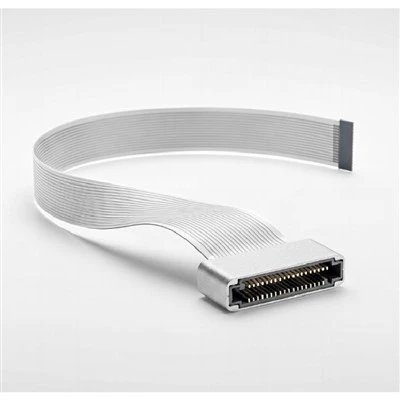
If you’re working on a project and need a multi-conductor FFC, whether it’s a standard off-the-shelf part or a custom design, we have the expertise to help. Our team has been supplying flexible flat cables to engineers and manufacturers for years, and we can guide you through choosing the right pitch, flexibility, and conductor count for your specific needs. Whether you’re a small startup working on a new idea or a large manufacturer scaling production, we can provide high-quality, reliable multi-conductor FFCs that fit your budget. Contact our team to discuss your requirements today.
Flexible Flat Cable References
Flexible Flat Cables: Design and Application Guide. IPC Association Connecting Electronics Industries.
Automotive Flexible Flat Cable Standards. International Organization for Standardization (ISO) 10303-238.
Flexible Conductor Materials and Performance Testing. IEEE Transactions on Components, Hybrids, and Manufacturing Technology.
Tennrich Electronics Technical Development (Kunshan) Co., Ltd.
As one of the most professional flexible flat cable manufacturers and suppliers in China, we’re featured by quality products and low price. Please rest assured to buy cheap flexible flat cable for sale here from our factory. We also accept customized orders.
Address: NO.159 South Wusongjiang Road ,Kunshan Economic Technical & Development zone,Suzhou city,Jiangsu province, China.
E-mail: foreigntrade@tennrich.net
WebSite: https://www.china-ffcs.com/
