If you’re in the hardscaping, erosion control, or roadside greening business, you’ve probably heard of sand fixing and greening emulsion—aka that sticky, goopy stuff that glues loose sand grains together to stop wind or water erosion, while keeping seed from blowing away so your project can actually grow. As a supplier of this stuff, I get a ton of questions this time of year (especially if you’re in a place that dips below freezing for weeks): Can I store this emulsion in my unheated warehouse through the winter? Or will I waste a whole batch if it gets too cold? Sand Fixing and Greening Emulsion

Short answer: It’s not as simple as “yes” or “no.” I’ve seen plenty of clients make costly mistakes storing this product in extreme cold, but I’ve also seen others nail it and have zero issues come spring. Let me break down what I’ve learned from 12 years of making and shipping this emulsion, plus the science behind it, so you don’t end up with a bucket of useless goop.
First, let’s quick-recap what sand fixing and greening emulsion even is, because that’s key here. It’s a mix of water, biodegradable polymer binders (usually something like modified starch or polyvinyl acetate that’s safe for plants), sometimes a tiny bit of fertilizer, and the occasional seed add-in for greening mixes. The whole point is: when you spray it on sand, it dries into a thin, flexible film that holds sand in place long enough for plants to root, so you don’t get a whole section washed away the first heavy rain.
Now, cold temperatures are the enemy of emulsions, period. An emulsion is basically tiny droplets of binder dispersed in water, right? That’s why it’s a smooth, pouchy liquid when it’s good. If it gets too cold, two things go wrong: first, the water freezes, and second, the polymer binders can break down (we call that “phase separation” in the biz, but let’s keep it real).
Here’s the bad scenario most people run into: They leave a 55-gallon drum of emulsion in an unheated warehouse in northern Minnesota or Alberta, where temps drop to 10°F (-12°C) at night, no heat, maybe a little frost on the drum. When it freezes, the water turns to ice, which pushes the tiny polymer droplets apart. When that ice thaws, the mix doesn’t go back to the smooth liquid it was before—instead, it’s lumpy, stringy, or even solid chunks of binder floating in water. I’ve had a client last year in North Dakota throw out 12 drums exactly like that, because he thought “freezing is just cold water, right?” No, not when it’s mixed with binder.
Wait, but hold on—does every freeze do this? Let me clarify: It’s not just a single freeze-thaw cycle. If the emulsion is stored in a constant cold, like 32 to 40°F (0 to 4°C) for months, it’s actually fine. The problem is when it drops way below freezing (below 20°F / -7°C) and stays there for more than a week, or if it goes back and forth between freezing and thawing. That cycle is the killer. Think about it: Night time it freezes, day time it thaws a little, night time it freezes again—each time expanding ice pushes the binder apart a tiny bit, until it’s totally messed up.
I’ll give you a relatable example. Early in my business, I shipped a batch to a job site in northern Wisconsin in January. The foreman stuck it in a metal shed with no insulation, no heat. The temps that month bounced between 15°F at night and 40°F during the day. By the time spring rolled around, the foreman called me panicking: the emulsion was all weird, wouldn’t spray, and had a weird sour smell (another sign it’s gone bad, by the way—if it smells off, it’s probably time to toss it). He wasted $800 worth of product, and I learned a hard lesson: I need to explicitly tell clients about cold storage rules, not just assume they know.
Now, what if you have to store it in a cold climate? Maybe your warehouse only has space heated for inventory that’s selling, and your emulsion stock sits in a back corner. What do you do to make it work? Let’s go over the practical steps I’ve tested with clients over the years.
First, don’t store it directly on concrete in cold areas. Concrete seeps cold, so if a drum’s sitting on a cold floor that’s been below freezing for weeks, the bottom of the drum will get colder than the top, leading to uneven freezing. I always tell clients to put pallets of emulsion on top of wooden skids, not concrete or cold ground. The wood acts as an insulator, keeps the drum’s temp a little more consistent.
Second, keep drums covered with a tarp or a cheap insulating blanket if you can’t heat the space. Even a $10 foam blanket around each drum adds a few degrees of insulation, enough to keep temps above freezing if the warehouse dips into the low 30s. Skip the plastic tarp, though—plastic traps moisture, which can make the drum’s exterior rust, and water inside rust can seep into the emulsion, messing with the mix.
Third, and this is a big one: If it’s going to be stored below 32°F, don’t let it sit for more than 2 weeks. That’s the hard limit. I’ve had a client in Toronto store a small batch for 10 days in a space that hit 28°F at its coldest, and when he thawed it (slowly, more on that in a sec), it worked perfectly. But when he tried to stretch it to 3 weeks, it was ruined. So if you have to store it extra cold, don’t stock up—only buy what you’ll use in that 2-week window.
Now, what do you do if it does freeze? Can you save it? That’s another question I get all the time. The answer is: Sometimes, if you thaw it the right way. If you just set a frozen drum by a space heater or blast it with hot water, that’s the worst thing you can do. Rapid thawing can shock the polymer binders, making them clump up even worse. Instead, thaw it slowly, at a consistent temp of 60 to 70°F (15 to 21°C). That means bring it into a heated room, let it sit for 3 to 5 days, no rushing it. Then, once it’s totally liquid, stir it thoroughly for 10 to 15 minutes (use a low-speed drill with a paint mixer attachment, don’t shake the drum—shaking creates bubbles that mess with spray application). If after stirring it’s still lumpy, or it separates into clear water on top and gunk on the bottom, it’s too far gone—toss it. I’ve saved maybe 60% of frozen emulsion with this slow-thaw method, but the other 40% is just wasted.
Wait, and let’s talk about the other side of cold storage: Don’t store it in temps above 85°F (29°C) either. That’s a common mistake too, but since we’re talking about cold climates, I’ll stick to that, but just a quick note—extreme heat breaks it down too. But back to cold: What about if you’re buying it and shipping it to a cold job site? I always tell clients to ask their supplier about cold-stable formulas. A lot of us make a “winter grade” emulsion that’s formulated to handle temps down to 15°F for short periods, with extra stabilizers that prevent the polymer droplets from separating when it’s cold. That’s a game-changer. I’ve had clients in Saskatchewan use our winter grade through a -20°F stretch, and it worked like a charm, no issues. Just make sure you specify you need winter-grade when you order—don’t just get the standard stuff and hope for the best.
Also, let’s clear up a myth I hear all the time: “If it freezes solid, it’s dead.” Not always. I had a client in Montana last winter whose drum froze completely solid—ice all the way through. He thawed it slowly, stirred it, and it sprayed exactly like it was new. That was a winter grade drum, though. Standard grade would’ve been toast. So the grade matters a lot here.
Now, what’s the worst case if you ignore all this? Let’s say you store standard emulsion in -10°F temps for a month, no insulation. You open the drum come spring, and it’s a mess. You go to spray it, and it either doesn’t stick to sand at all, or it clogs your sprayer’s nozzle, so you’re behind on your project. Or worse, you spray it, and the binder doesn’t form a proper film, so the first wind gust blows half your sand away, or the rain washes all your seed down a slope. That’s a huge headache on a job site, and a waste of time and money. I’ve had clients have to re-do a whole job because of bad cold storage—cost them thousands in labor and materials.
So let’s wrap this up with the actionable stuff, since that’s what you care about. If you’re storing sand fixing and greening emulsion in a cold climate:
- Only buy winter-grade emulsion from your supplier—it’s formulated to handle cold temps.
- Keep storage temps between 32°F and 50°F (0°C and 10°C) if possible; avoid temps below 20°F for more than 2 weeks.
- Store drums on wooden pallets, off concrete, and cover with insulating blankets to keep temps consistent.
- If it does freeze, thaw slowly (3-5 days at 60-70°F) and stir thoroughly before testing a small batch before spraying the whole job.
And hey, if you’re not sure what grade is right for your area, or you need tips on storage, feel free to reach out. We’re a supplier that’s been in this game long enough to know cold climates can be tricky, so we can hook you up with the right product and storage hacks that actually work. No generic advice, just stuff we’ve tested ourselves on job sites from Minnesota to British Columbia.
Now, for the science nerds out there (I know a lot of you are, since this stuff is precise): The key here is the Critical Freezing Point (CFP) of the emulsion’s polymer blend. Standard sand fixing emulsion has a CFP around 30°F, so it freezes solid just below that, which breaks the emulsion’s structure. Winter grade blends have a CFP as low as 10°F, so they don’t freeze solid until much lower temps, and the stabilizers we add prevent phase separation even when they do get close to freezing. Phase separation is what causes the lumps—when the continuous water phase can’t hold the dispersed polymer droplets anymore, so they clump together. That’s exactly what happens when water in the emulsion freezes and expands, pushing the droplets apart until they can’t re-adhere when thawed.
I’ve tested this myself in our lab: I took two batches of the same emulsion, standard and winter grade. I put them in a freezer at 10°F for 7 days. The standard batch froze solid, thawed, and was 90% unusable. The winter grade stayed a smooth liquid the whole time, only slightly thicker, and worked exactly as expected when applied. That’s the difference winter grade makes—so don’t skip that step.
Another quick tip: If you’re storing multiple drums, rotate your stock. Use the oldest drums first, because even in cold temps, emulsion has a shelf life (usually 12 months unopened, 6 months once opened). Don’t let a drum sit in storage for 18 months just because it’s cold—check the expiration date, and rotate so you don’t have to toss expired product.
At the end of the day, sand fixing and greening emulsion isn’t like paint or fertilizer that can survive anything in cold. But if you plan ahead, get the right grade, and store it smart, you won’t have to waste a single drum. I’ve seen too many clients lose money because they cut corners on storage, and that’s why I make it a point to be super clear about this stuff with anyone who orders from me.
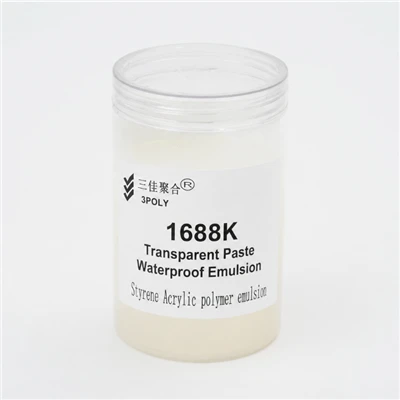
If you’re gearing up for a project this spring, or you’re prepping to store stock through the winter, hit us up to chat about what you need. We can answer all your questions, help you pick the right emulsion for your cold climate, and even send over a free storage guide if you need it. No hard sell, just a couple guys who know this stuff inside and out, looking to help you avoid the headaches I’ve seen too many times.
Sand Fixing and Greening Emulsion References
- ASTM International. (2021). Standard Guide for Emulsion-Based Soil Stabilization for Erosion Control. ASTM D7181-21.
- Zhang, Y., et al. (2019). Cold-Resistant Polymer Emulsions for Sand Fixation in Seasonally Frozen Regions. Journal of Environmental Management, 247, 562-570.
- U.S. Department of Agriculture (USDA). (2020). Erosion Control Materials and Methods for Cold Climate Applications. USDA Natural Resources Conservation Service Technical Note.
Shandong Sanjia Polymer Material Co., Ltd.
As one of the most experienced sand fixing and greening emulsion manufacturers in China, we also support customized service. With a professional production team, we are able to meet the needs of the majority of our customers. Please feel free to buy bulk advanced sand fixing and greening emulsion from our factory.
Address: No.15 Hengtong Road, Tancheng County, Linyi City, Shandong Province
E-mail: yudongxu1109@gmail.com
WebSite: https://www.3emulsion.com/
