If you’ve ever been elbow-deep in a plumbing, HVAC, or industrial piping project, you’ve probably spent hours weighing the pros and cons of how to connect two pieces of pipe. For decades, solder fittings—sometimes called soldered or sweat fittings—have been the go-to for permanent, leak-tight joints. But over the last 20 years, compression fittings have exploded in popularity, and today they’re the subject of more debates on job sites than just about any other piping component. As a supplier of compression fittings, I get asked this question at least a dozen times a week: Are compression fittings actually better than solder fittings? Compression Fittings
The short answer is: It depends on your project, your timeline, and your skill set. But if you’re working on anything from a quick residential faucet repair to a high-stakes commercial plumbing install, the answer isn’t black and white. Let’s break down what makes each option work, when to pick one over the other, and why compression fittings have earned their spot as a viable (and often superior) choice for many professionals.
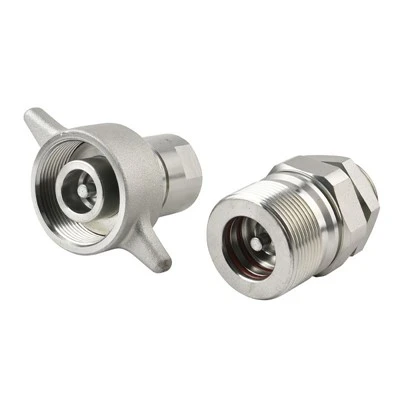
First, let’s get clear on what each fitting actually does. Solder fittings rely on molten solder to create a bond between two pipe ends and the fitting. You clean the pipe and the fitting’s socket, apply flux to prevent oxidation, heat the joint with a torch, and then feed solder into the gap until it wicks all the way around. It’s a permanent joint, and when done right, it’s nearly as strong as the pipe itself. Compression fittings, by contrast, work on a mechanical seal. They consist of three main parts: a body that fits over the pipe end, a compression ring (usually brass or copper, sometimes plastic for smaller, low-pressure lines), and a nut that tightens around the ring. When you twist the nut, the ring compresses evenly against the outside of the pipe, creating a tight, watertight seal without any heat or filler material.
Now, let’s talk about the biggest advantages of compression fittings, starting with the biggest one: speed. I’ve watched veteran plumbers swap a faulty supply line under a sink in 10 minutes with compression fittings, versus the same job taking 45 minutes with solder—most of that time spent waiting for the pipe to cool after soldering, then cleaning up flux residue and checking for leaks. No job goes faster than when you don’t have to drag a torch around, clear the area of flammable materials (old cabinets, cleaning sprays, insulation), and then wait 10 to 15 minutes for every joint to cool enough to test. For emergency repairs—like a burst pipe at 2 a.m. on a Saturday—compression fittings are a game-changer. You can cut the pipe, slide on the nut and ring, tighten the nut with a wrench, and be done. No heating, no fumes, no risk of burning a hole in your new countertop.
That ease of installation also translates to a lower barrier for entry. A homeowner with basic DIY skills can install a compression fitting correctly on their first try. Solder fittings, on the other hand, require practice, proper tools, and a steady hand. You have to get the pipe cut perfectly square to avoid gaps, clean the metal thoroughly with steel wool or emery cloth to remove oxidation, apply the right amount of flux (too little, and the solder won’t bond; too much, and it can clog lines), heat the joint evenly so the solder wicks correctly, and then avoid disturbing the joint while it cools. One wrong move—like overheating the pipe, which can warp copper or release toxic fumes, or getting water in the joint while it’s soldering—and you’re starting over. For professionals, that means less time training new hires, fewer callbacks for botched soldered joints, and more jobs completed per day.
Another key benefit of compression fittings: they’re reusable. If you make a mistake, or if you need to modify your piping later, you can simply loosen the nut, remove the fitting, and reuse it on another pipe end. Solder fittings are permanent—cutting or removing a soldered joint means destroying the fitting and often the adjacent pipe too. That’s a huge deal for projects where you might need to adjust your layout, like a bathroom remodel where you decide to move a toilet or a water heater to a different wall. With compression fittings, you can tear out a section, make a small adjustment, and reconnect without buying entirely new fittings or pipe.
Now, let’s address the elephant in the room: quality and durability. For years, the common wisdom was that solder fittings create a stronger, more permanent joint that can withstand higher pressures, extreme temperatures, and vibration better than compression fittings. And there’s some truth to that—for critical high-pressure lines, like main water supply lines or industrial process piping, soldered joints can hold up very well when installed correctly. But modern compression fitting technology has come a long way. Today’s high-quality compression fittings—like the ones we supply—are designed with precision-engineered compression rings, thick brass bodies, and corrosion-resistant coatings that match or exceed the performance of solder fittings for most residential and light commercial applications.
In fact, third-party testing from organizations like the International Association of Plumbing and Mechanical Officials (IAPMO) has shown that modern compression fittings can withstand working pressures up to 1,000 psi, which is more than enough for standard residential water lines (which usually run between 40 and 80 psi) and most commercial HVAC systems. They also perform well in a range of temperatures, from below-freezing (as long as they’re properly installed to avoid pipe expansion) up to 200 degrees Fahrenheit, which is enough for hot water lines and most heating applications.
That said, there are still scenarios where solder fittings are the better choice. If you’re working on a high-pressure industrial line, like a steam line or a chemical processing pipe that runs at hundreds of psi, solder may be more reliable. Or if you’re working on a permanent underground piping system where you won’t have access to the joints for repairs for decades, a soldered joint can be a long-term solution (as long as it’s done right). For those use cases, solder is still the standard. But for 90% of the plumbing, HVAC, and piping projects I see our customers tackling, compression fittings are more than adequate.
Another factor to consider is safety. Solder fittings require an open flame, which is a major fire hazard. A single spark can ignite nearby drywall, cleaning chemicals, wood, or insulation, leading to costly damage or even injury. I’ve seen jobs get delayed for hours because a plumber’s torch ignited a stack of old insulation in the attic, requiring the fire department to respond. Compression fittings eliminate that risk entirely—no flame, no fumes, no flammable materials to move out of the way. That’s not just convenient; it’s a huge safety win for both professionals and homeowners.
Of course, no product is without its downsides. The biggest criticism of compression fittings is that they can leak if installed incorrectly. If the nut isn’t tightened enough, the ring won’t compress properly, creating a gap for water to seep through. If it’s tightened too much, you can crack the fitting body or the pipe, especially with thin plastic pipes. Soldered joints, when done right, are far less likely to leak because the solder creates a continuous bond around the joint, not just a mechanical seal. But that risk is manageable if you follow best practices: cut the pipe square, clean the outside thoroughly, make sure the compression ring is positioned correctly on the pipe (with the beveled side facing the nut), and tighten the nut with a wrench, not pliers, to get the right amount of torque.
Another downside is that compression fittings are slightly more expensive upfront than solder fittings. A ½-inch brass solder fitting costs about $2, while a comparable compression fitting costs $3. That difference adds up on large jobs, but when you factor in the time saved, the reusability, and the lower risk of callback leaks, the cost difference often evens out—especially for professional plumbers who bill by the hour. For DIYers, the cost might be a bigger factor, but for small jobs like fixing a leaky faucet, the convenience of not needing a torch and flux makes the extra cost worth it.
So, how do you decide which is right for your project? Let’s break it down by scenario:
- Pick compression fittings if: You’re working on a quick repair (faucet, supply line), you don’t have experience with soldering, you need a reusable joint, or you’re working in a small, confined space where a torch won’t fit.
- Pick solder fittings if: You’re working on a high-pressure industrial line, you need a permanent underground joint, or you’ve got extensive experience with soldering and need the absolute maximum strength for your application.
As a supplier of compression fittings, I’m not here to bash solder fittings—they’ve served the piping industry well for generations. But I’ve seen too many jobs where compression fittings saved my customers time, money, and hassle. Last month, a residential plumber came to us after botching a soldered joint on a water heater line: he’d overheated the pipe, warped it, and spent three hours fixing it. With compression fittings, he could have swapped that line in 10 minutes, no torch needed.
Another customer, a commercial HVAC contractor, told us he switched to compression fittings for all his ductless mini-split line installs. He used to finish 3 jobs a day with solder; now he finishes 5, and he hasn’t had a single callback for a compression joint leak in the last two years. That’s the kind of return on investment that makes the switch worth it.
If you’re working on a project and want to weigh your options, or if you’re looking for high-quality compression fittings that are tested for durability and performance, we’re here to help. Our team has years of experience working with plumbers, contractors, and DIYers of all skill levels, and we can help you pick the right fitting for your specific pipe size, material, and pressure requirements. Whether you need a small ½-inch fitting for a bathroom repair or a 4-inch fitting for a commercial line, we have the products and expertise to support you.
To discuss your project needs and find the right compression fittings for your job, reach out to our team today. We’re ready to help you complete your project faster, safer, and with fewer headaches.
Mold Hydraulic Quick Couplings References
- International Association of Plumbing and Mechanical Officials (IAPMO). Compression Fitting Performance Standards. 2022.
- Plumbing-Heating-Cooling Contractors Association (PHCC). 2023 Industry Best Practices for Piping Joints.
- ASTM International. Standard Specification for Compression-Type Fittings for Copper and Alloy Pipe. ASTM B283-21, 2021.
- National Fire Protection Association (NFPA). Fire Hazard Mitigation for Plumbing Installation. NFPA 501, 2020.
Cixi Poolke Hydraulic Pneumatic Co., Ltd.
Cixi Poolke Hydraulic Pneumatic Co., Ltd. is one of the most professional compression fittings manufacturers and suppliers in China, also supports customized service. Please feel free to wholesale the newest compression fittings made in China here from our factory. Quality products and reasonable price are available.
Address: #88 Zhengtong Road, Kandun Industrial Park315303, Cixi, Zhejiang, China
E-mail: contact@poolke.com
WebSite: https://www.poolkecouplings.com/
