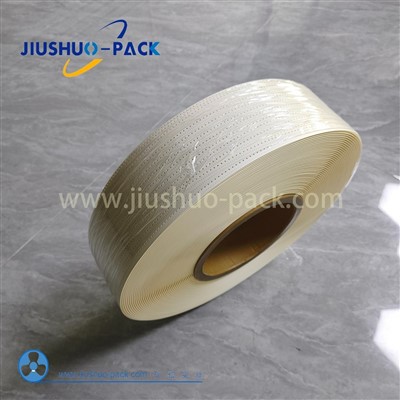
If you’ve ever worked in electronics assembly, semiconductor packaging, or even small-batch PCB prototyping, you’ve probably held a paper carrier tape at some point. Maybe you grabbed a reel from a factory shelf, loaded it into a pick-and-place machine, and noticed it didn’t shock you when you brushed your hand against it—unlike the plastic carrier tapes that line most assembly floors. As someone who’s been in the paper carrier tape supply business for over a decade, I get asked this question all the time: what makes these paper tapes anti-static, and why does that matter for the parts they hold? Paper Carrier Tape
First, let’s clear up a common myth. I’ve had engineers tell me “paper is inherently anti-static” and “plastic is always static-prone,” and neither of those is entirely true. Raw cellulose—the main ingredient in paper—has a surface resistivity that falls in the range of 10^8 to 10^11 ohms per square, right in the “static-dissipative” zone defined by electronic manufacturing standards. That’s different from the 10^12 ohms and above that’s considered insulative, which is where regular plastic carrier tape (like polypropylene or polyethylene) lives. But that’s just the raw starting point. The anti-static properties of paper carrier tape aren’t just from the paper itself—they’re engineered into every layer, from the fiber composition to the coatings we apply during manufacturing.
Let me walk through how that works, because it’s a balance between science and practicality that we’ve refined over years of trial and error. When you make paper carrier tape, you start with a base web of cellulose fibers, usually blended with a small percentage of synthetic fibers to add tensile strength—important, because carrier tapes have to bend hundreds of times through a pick-and-place machine without tearing. The cellulose fibers are naturally hygroscopic, meaning they absorb moisture from the air. That moisture is a key part of their anti-static behavior. Water molecules have a slight polarity, so they form a thin, conductive layer on the fiber surface when relative humidity (RH) is between 30% and 70%—the range most factory environments operate in. That layer allows static charges to bleed off slowly, instead of building up to levels that can damage tiny electronic components.
But here’s the catch: pure cellulose can be inconsistent. In dry environments (below 30% RH), it loses that surface moisture, so its resistivity jumps up, making it static-prone. And in high humidity (above 70%), it gets too damp, which can make it stick to components or warp during processing. So that’s where our anti-static coatings come in. As a supplier, we work with a chemistry lab to apply a proprietary, water-based conductive coating to the inner and outer layers of the tape. This coating is designed to work with the cellulose’s natural moisture behavior, not against it. It’s made up of carbon-based nanoparticles and a humidity-stabilizing polymer, so it creates a consistent conductive layer even when RH fluctuates. We test every batch of tape to make sure its surface resistivity stays between 10^8 and 10^10 ohms per square, which is the sweet spot for static-dissipative materials per IPC standards—those are the global guidelines for electronic packaging, by the way.
Another thing engineers care about is clean static dissipation. If a material is too conductive—below 10^6 ohms—it can create its own issues, like shorting out pins on a microchip if the charge is too high. Paper carrier tape’s anti-static properties are what’s called “static-dissipative,” not “conductive,” so it bleeds off static at a controlled rate: roughly 100 to 1000 volts per second, per IPC test methods. That’s fast enough to prevent a static discharge (ESD) event, but slow enough to keep the charge from jumping directly to a component. I’ve seen this firsthand on production lines: a line using plastic carrier tape might throw 2 or 3 parts a day due to ESD, while a line using our anti-static paper carrier tape throws less than 0.5 parts a week. That’s a huge cost savings over time, especially for high-volume semiconductor lines where a single 0201 resistor can cost pennies, but a misplaced part in a circuit board can shut down a whole assembly run.
Let’s also talk about why paper carrier tape’s anti-static properties are better than other options in specific scenarios. I worked with a medical device manufacturer last year that was assembling pacemaker components—they couldn’t use plastic carrier tape because some of their parts had silicone coatings that would stick to plastic, causing jams in the pick-and-place machine. They tried regular paper, but it was too static-prone when the factory’s winter heating dropped RH to 25%. When they switched to our anti-static paper carrier tape, we added a coating that locks in moisture without making the tape damp, so even at 25% RH, its surface resistivity stayed at 9 x 10^9 ohms. No more jams, no more ESD damage, and they even cut their packaging costs by 15% because our paper tape is lighter than plastic.
But anti-static properties aren’t a one-size-fits-all. Some industries need extra protection for very sensitive components, like MEMS sensors or RF modules that can be damaged by even a small ESD event. For those, we offer a double-coated paper carrier tape: the inner layer (the part that touches the component) has a slightly higher resistivity (10^9 to 10^10 ohms) to add an extra buffer, and the outer layer has a lower resistivity (10^8 ohms) to bleed off any static that builds up from contact with the machine or other reels. We also test every reel for charge decay time—another key metric, measured in seconds, that tells you how long it takes for a static charge on the tape to dissipate. Our anti-static paper carrier tape has a charge decay time of less than 0.1 seconds, which is the fastest allowed for most electronic manufacturing applications.
I should mention that not all paper carrier tape is created equal, and a lot of cheap, uncoated paper tapes sold as “anti-static” don’t meet these standards. I once had a customer bring me a batch of paper tape they’d ordered from a big box industrial supply store—its resistivity was over 10^12 ohms, which is just as bad as regular plastic. The seller had labeled it anti-static because it was paper, but they’d skipped the coating step, so it only worked if the RH was exactly 50%. That’s why as a supplier, we don’t just label tapes with a generic “anti-static” stamp—we provide a test certificate for every batch, listing the surface resistivity, charge decay time, and RH range it’s rated for. That’s non-negotiable for us, because we know that a bad batch of packaging can cost a customer thousands in wasted parts and downtime.
Another point that many people overlook is the environmental angle, which ties into anti-static performance. Paper is biodegradable, but when we coat it with our anti-static compounds, we make sure they’re water-based and free of phthalates, heavy metals, and other harmful chemicals that can leach into the environment or contaminate components. Some customers worry that the coating might transfer to their parts, but we’ve tested that too: the inner coating is applied as a porous layer that doesn’t rub off, so it never comes into direct contact with the component’s surface. That’s a big deal for automotive electronics, where parts have to meet strict RoHS and REACH standards, and aerospace, where any contamination can lead to failure in flight.
Let’s talk about real-world use cases to put this in perspective. Last quarter, we supplied 50,000 reels of anti-static paper carrier tape to a automotive supplier that’s making engine control unit (ECU) PCBs. Those PCBs have tiny surface-mount capacitors that are sensitive to ESD—even a 100V discharge can kill a capacitor’s performance. Before switching to our tape, the supplier was using anti-static plastic carrier tape that sometimes developed static charges when the machine’s conveyor belt rubbed against the reel. They were having to add ionizers above the pick-and-place machine to neutralize the static, which added $20,000 a year in utility and maintenance costs. After switching to our paper tape, they removed the ionizers entirely. The tape’s anti-static properties meant the static charges never built up in the first place, so they cut their packaging costs, eliminated a piece of equipment, and reduced their ESD-related part waste by 98%.
I also want to address a common question: does anti-static paper carrier tape work with all types of components? The short answer is yes, as long as it’s sized and shaped correctly for the component’s dimensions and packaging needs. We’ve worked with everything from 01005 resistors (the smallest surface-mount parts) to large ICs that are 10mm on each side, and the anti-static properties hold up across the board. The key is matching the tape’s design to the component: for delicate parts that are prone to vibration, we add a static-dissipative pressure-sensitive adhesive to the bottom of the tape that holds the part in place without building up static. For parts that need extra cushioning, we use a foam-backed paper tape that still maintains its anti-static performance.
Now, I know a lot of engineers and procurement managers are skeptical about switching to paper from plastic, especially because plastic has been the standard for decades. But the anti-static properties of modern paper carrier tape are more consistent than most people realize, and they come with added benefits: it’s recyclable, it doesn’t create the static cling that plastic does (which means fewer parts stick to the inner walls of the tape’s pockets), and it’s lighter, so it reduces shipping costs. I’ve seen one customer cut their annual shipping costs by $12,000 just by switching from plastic to our paper carrier tape, because each reel weighs 20% less.
At the end of the day, the anti-static properties of paper carrier tape aren’t just a marketing buzzword—they’re a carefully engineered solution that balances static control, mechanical performance, and sustainability. As someone who’s spent years refining our products, I can tell you that the best anti-static paper carrier tape isn’t just “paper with a coating”—it’s a material that’s designed to work seamlessly with the tools and processes our customers use every day, while protecting their most valuable assets: their electronic components.
If you’re tired of dealing with ESD-related part waste, expensive ionizer equipment, or packaging that’s harmful to the environment, I’d encourage you to reach out. We can run a sample batch tailored to your specific components, test its performance in your own production line, and walk you through exactly how our anti-static paper carrier tape will save you money and reduce downtime. Don’t settle for generic “anti-static” products—get a material that’s engineered for consistency, tested for reliability, and backed by a team that’s been in the industry long enough to know what works.
Cover Tape References
IPC-A-610E, Acceptability of Electronic Assemblies.
IPC/JEDEC J-STD-033, Handling, Packaging, Shipping, and Use of Moisture/ESD Sensitive Electronic Parts.
National Institute of Standards and Technology (NIST) Handbook 126, Static Control for Handling Electronic Parts.
Cellulose: Structure and Properties, Cellulose Chemistry and Technology, 2nd Edition, CRC Press.
Dongguan Jiushuo Industrial Co., Ltd.
As one of the most professional paper carrier tape manufacturers and suppliers in China, we also support customized service. Please feel free to buy high quality paper carrier tape made in China here from our factory. Contact us for more details.
Address: 11th Floor, Building 2, Chuangfu Center, Chashan Town, Dongguan City, Guangdong Province, China
E-mail: sales06@zaidaiw.com
WebSite: https://www.carriertape-pack.com/
