Pavement air voids play a crucial role in the performance and durability of road surfaces. As a pavement testing equipment supplier, I have witnessed firsthand the importance of accurate measurement of these air voids. In this blog, I will delve into how our pavement testing equipment measures pavement air voids, exploring the underlying principles, methods, and the significance of these measurements. Pavement Testing Equipment
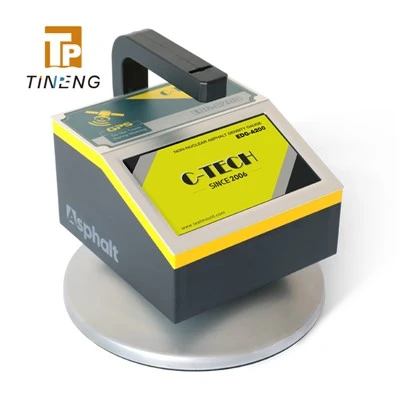
Understanding the Importance of Pavement Air Voids
Before we discuss how the measurement takes place, it’s essential to understand why pavement air voids matter. Air voids are the small spaces or gaps within the pavement structure. These voids can significantly impact the pavement’s properties. For instance, an appropriate amount of air voids is necessary to allow for the expansion of the asphalt mixture during compaction and under high – temperature conditions. However, excessive air voids can lead to a variety of problems. They provide pathways for water to penetrate the pavement, which can cause damage through freeze – thaw cycles, stripping of the asphalt binder from the aggregates, and eventually lead to premature cracking and potholing. On the other hand, too few air voids can make the pavement less flexible and more prone to rutting under heavy traffic loads.
Measuring Pavement Air Voids: Core Sampling and Laboratory Analysis
One of the most common and accurate methods for measuring pavement air voids involves core sampling in the field and subsequent laboratory analysis using our advanced equipment.
Core Sampling
The process begins with core sampling on the pavement surface. A core drill, a part of our comprehensive testing equipment set, is used to extract cylindrical samples of the pavement. The core drill is carefully guided to ensure that the sample is representative of the pavement’s structure. Parameters such as the diameter and depth of the core sample are standardized to ensure consistent results. Usually, core samples are taken at multiple locations across the pavement area of interest to account for any variability in the pavement composition.
Laboratory Analysis: Bulk Specific Gravity and Theoretical Maximum Specific Gravity
Once the core samples are obtained, they are transported to the laboratory for analysis. Our laboratory equipment is designed to measure two key parameters: the bulk specific gravity (Gmb) and the theoretical maximum specific gravity (Gmm) of the asphalt mixture.
The bulk specific gravity of the asphalt mixture is determined by measuring the mass of the dry core sample and its volume. The volume can be measured using different methods. One common approach is the water displacement method. The core sample is immersed in water, and the volume of water displaced is measured. This volume is then used to calculate the bulk specific gravity using the formula (G_{mb}=\frac{M_{dry}}{V}), where (M_{dry}) is the mass of the dry sample and (V) is its volume.
The theoretical maximum specific gravity represents the specific gravity of the asphalt mixture if there were no air voids. It is determined by measuring the mass of a loose sample of the asphalt mixture in a container of known volume. Our specific gravity measuring devices are highly precise, allowing for accurate determination of (G_{mm}).
Calculating Air Voids
Once the bulk specific gravity ((G_{mb})) and the theoretical maximum specific gravity ((G_{mm})) are known, the air voids in the pavement sample can be calculated using the following formula:
[V_V=\left(1-\frac{G_{mb}}{G_{mm}}\right)\times100%]
where (V_V) is the percentage of air voids in the pavement sample.
Non – Destructive Testing Methods for Measuring Air Voids
In addition to the core sampling and laboratory analysis method, we also offer non – destructive testing (NDT) equipment for measuring pavement air voids. These methods are beneficial as they do not cause damage to the pavement during testing and can provide real – time results.
Ground – Penetrating Radar (GPR)
Ground – Penetrating Radar is one of our advanced NDT tools. GPR works by emitting electromagnetic waves into the pavement. These waves interact with the pavement materials, and the reflected waves are detected and analyzed. The presence and distribution of air voids affect the dielectric properties of the pavement. Air has a much lower dielectric constant compared to asphalt and aggregates. By analyzing the reflected radar signals, our GPR equipment can identify areas with different dielectric properties, which can be correlated to the presence and quantity of air voids.
The GPR system consists of a transmitter, a receiver, and a data processing unit. The transmitter emits the electromagnetic waves at a specific frequency range, typically in the range of 100 MHz to 2 GHz. The receiver captures the reflected waves, and the data processing unit analyzes the signals to generate a profile of the pavement structure, including information about the air voids.
Infrared Thermography
Infrared thermography is another non – destructive method in our testing arsenal. This method is based on the principle that the thermal properties of the pavement are affected by the presence of air voids. Air has a lower thermal conductivity than asphalt and aggregates. As a result, areas with higher air void content will have different surface temperatures compared to areas with lower air void content.
Our infrared thermography equipment consists of an infrared camera that captures the infrared radiation emitted from the pavement surface. The camera converts the infrared radiation into a visual image, where different temperatures are represented by different colors. By analyzing these thermal images, we can identify areas with abnormal temperature patterns, which may indicate the presence of air voids.
The Role of Standardization and Quality Control
As a pavement testing equipment supplier, we understand the importance of standardization and quality control in the measurement of pavement air voids. All our equipment is designed and calibrated according to international standards such as those set by the American Society for Testing and Materials (ASTM) and the International Organization for Standardization (ISO).
Calibration is a critical step to ensure the accuracy and reliability of our testing equipment. Regular calibration of our core drills, specific gravity measuring devices, GPR systems, and infrared thermography cameras is carried out to maintain their performance. Quality control checks are also performed during the measurement process. For example, when taking core samples, multiple samples are often taken from the same area and analyzed to ensure consistency in the results.
Significance of Accurate Air Void Measurement for Pavement Design and Maintenance
Accurate measurement of pavement air voids is of great significance for both pavement design and maintenance.
In the design phase, knowledge of the appropriate air void content helps engineers select the right asphalt mixture and compaction methods. By ensuring that the air voids are within the recommended range, the pavement can be designed to withstand the expected traffic loads and environmental conditions, reducing the risk of premature failure.
During pavement maintenance, measuring air voids can help identify areas that are at risk of damage. If the air void content in a particular section of the pavement is found to be too high or too low, appropriate maintenance measures can be taken. For example, if there are high air voids, a surface treatment may be applied to seal the pavement and prevent water penetration.
Conclusion and Call to Action

In conclusion, measuring pavement air voids is a complex but essential task for ensuring the quality and durability of road surfaces. Our pavement testing equipment, whether it’s for core sampling and laboratory analysis or non – destructive testing methods, is designed to provide accurate and reliable measurements. By using our state – of – the – art equipment, you can precisely determine the air void content in pavements, enabling better pavement design and more effective maintenance strategies.
Specimen Preparation Equipment If you are involved in pavement construction, engineering, or maintenance, and are interested in obtaining high – quality pavement testing equipment for measuring air voids, we invite you to contact us to discuss your specific needs. Our team of experts is ready to assist you in selecting the most suitable equipment and providing comprehensive support.
References
- ASTM D3203 – Standard Practice for Determining Theoretical Maximum Specific Gravity and Density of Hot – Mix Asphalt (HMA).
- ASTM D7063 – Standard Test Method for Bulk Specific Gravity of Compacted Hot – Mix Asphalt (HMA) Using Automatic Vacuum Sealing Method.
- International Organization for Standardization. ISO standards related to pavement testing and materials characterization.
Zhuozhou Tianpeng Imp. and Exp. Trade Co., Ltd.
Zhuozhou Tianpeng Imp. and Exp. Trade Co., Ltd. is one of the most professional pavement testing equipment manufacturers and suppliers in China, featured by quality products and good price. Please rest assured to buy advanced pavement testing equipment made in China here from our factory. Customized orders are welcome.
Address: Building C28, Hegu Technology Industrial Park, Development Zone, Zhuozhou, Hebei, China
E-mail: zhangdajing@testmould.com
WebSite: https://www.testmould.net/
